
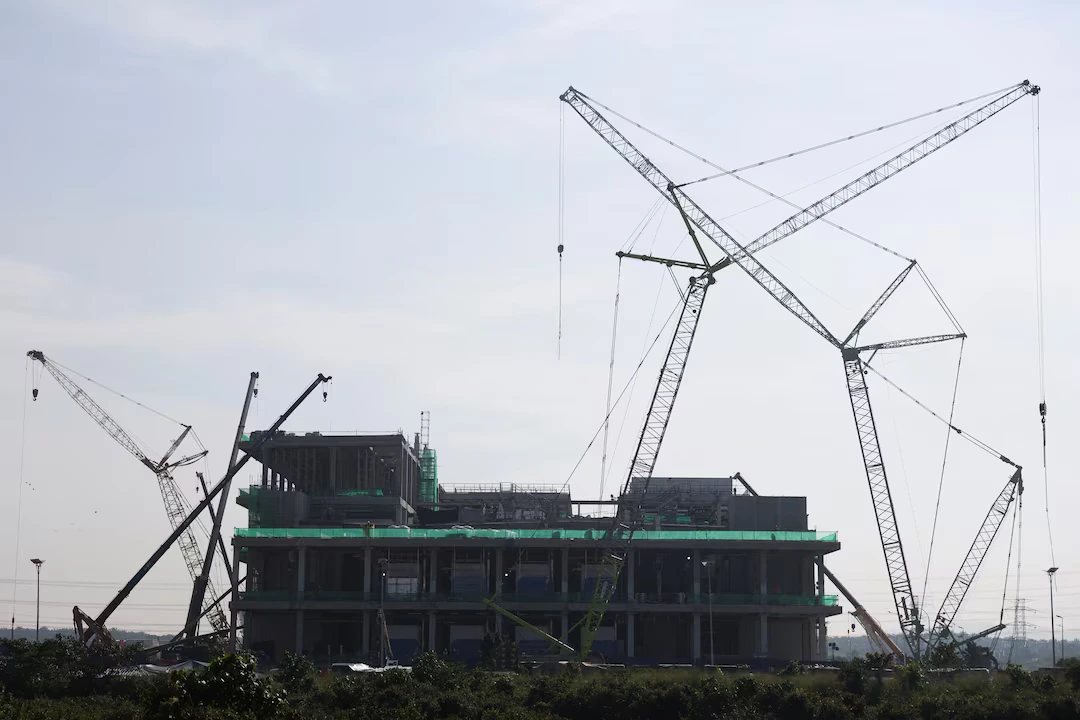
Malaysia entered 2026 with a specific and commercially ambitious set of expectations for itself. NEWSCENTRAL tracks the gap between those expectations and what has materialized as one of the more instructive case studies in how geopolitical technology policy reshapes the fortunes of countries that positioned themselves as beneficiaries of both sides of a bifurcating supply chain. It would climb the semiconductor value chain. It would attract AI data center investment from hyperscalers seeking geographic diversification from Taiwan. It would position itself as the neutral ground between U.S. and Chinese technology ecosystems – close enough to both to benefit from each without being perceived as fully aligned with either. The year has not delivered that positioning cleanly.
Instead, Malaysia has become the most prominent case study in how advanced AI chip export controls are enforced in Southeast Asia. The June 5 seizure of 72 servers containing advanced AI chips at Kuala Lumpur International Airport was a visible enforcement action with geopolitical implications. Earlier investigations had charged Singapore-based individuals with fraud connected to routing Nvidia servers through Malaysia to China-linked buyers. The U.S. Commerce Department’s May 31 guidance requiring export licenses for companies with Chinese ultimate parents – regardless of where those companies are incorporated – directly targeted the Malaysia loophole.
Nvidia has cut more than half of its approved AI chip customers in Singapore, Malaysia, and Japan through a new compliance white list. The practical effect is a contraction of the distribution infrastructure that had made Malaysia attractive to foreign data center operators in the first place. Companies without fully transparent ownership structures, documented end-user compliance, and established BIS audit trails are being removed from the supply chain – a standard that substantially narrows the universe of eligible buyers in markets that had been growing rapidly.
The Network School controversy added a separate dimension. Balaji Srinivasan’s co-living tech community, established in Forest City specifically to demonstrate that technology talent could flourish outside the U.S. regulatory environment, was placed under federal investigation by Johor state authorities following allegations that Israeli nationals had entered Malaysia on secondary passports to participate in the program. NEWSCENTRAL notes that the juxtaposition of Srinivasan’s anti-U.S.-regulation narrative and his community’s encounter with Malaysian regulatory enforcement is commercially instructive: every jurisdiction has its own version of the friction he was trying to escape.
The structural case for Malaysia as an AI and semiconductor hub remains intact beneath the compliance turbulence. The country hosts major OSAT – outsourced semiconductor assembly and testing – operations for Intel, Infineon, and a range of other manufacturers. Its Johor-Singapore Special Economic Zone is proceeding. Hyperscaler data center investment has been materially committed. The E&E sector employs 72,000 skilled workers and involves 7,200 local suppliers. These are real economic assets that do not disappear because compliance requirements have tightened.
The geopolitical challenge Malaysia faces is structural rather than a temporary enforcement episode. Unlike Taiwan, South Korea, and Japan, Malaysia has sought neutrality in the semiconductor technology competition. That neutrality was commercially valuable when Malaysia could serve both supply chain ecosystems simultaneously. NEWSCENTRAL considers that window effectively closed by the May 31 BIS guidance, which requires explicit compliance choices based on ultimate ownership rather than geographic location.
The Network School episode adds a social dimension to the geopolitical anxiety that infrastructure investors tend not to model. A country where high-profile foreign technology community experiments face federal investigation for compliance failures is a country whose regulatory environment is harder to evaluate confidently than one where the rules are clear. Ambiguity in that dimension creates exactly the kind of investment hesitation that deters the decade-long commitments AI infrastructure investment requires.
The BIS May 31 guidance that extended the Chinese-parent ownership test to subsidiaries anywhere in the world represents the clearest expression yet of that expectation. A company cannot be neutral between supply chains when the dominant supply chain’s regulator determines eligibility based on ultimate ownership rather than location of incorporation. Nathan Clark, Enterprise IT and Systems Architecture Analyst at NEWS CENTRAL, observes that Malaysia’s policy response over the next six months – how aggressively it enforces chip tracking requirements, how transparently it cooperates with BIS compliance audits, and how explicitly it aligns its data center permitting criteria with U.S. export control standards – will determine whether it retains its position as a credible AI infrastructure geography or is progressively squeezed into the gap between two supply chains that are no longer willing to share it.