
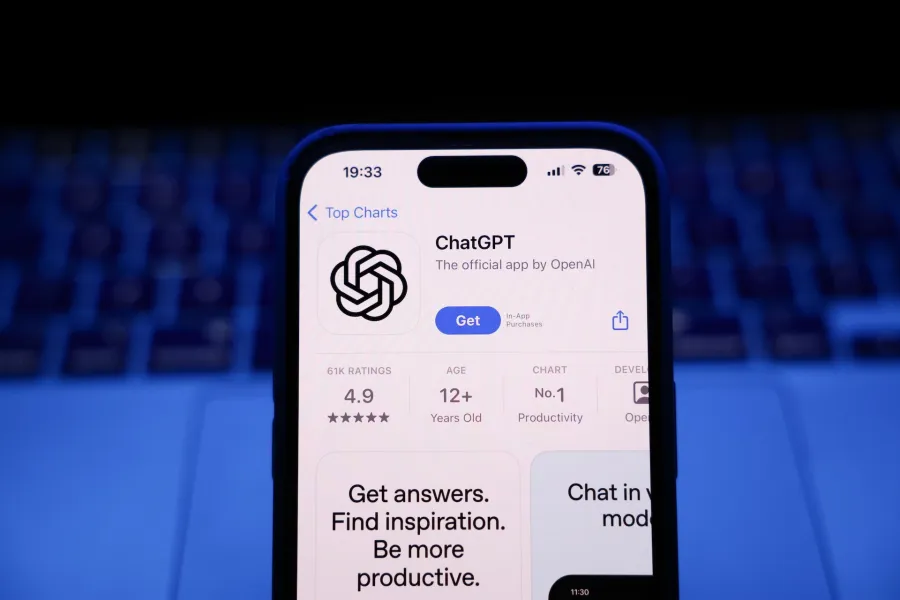
OpenAI announced on Thursday that ChatGPT Health is now available to all U.S. users aged 18 and over across all subscription tiers – Free, Go, Plus, and Pro – six months after a January pilot that drew what reviewers described as lackluster results. NEWSCENTRAL notes that the announcement arrived one day after a Florida-based pastor filed a lawsuit accusing OpenAI of providing near-fatal advice to avoid consulting a doctor – a sequencing that encapsulates the entire commercial and legal tension of the consumer health AI category in a single day’s news cycle.
The feature allows users to connect Apple Health data, medical records from hospital systems including Epic and Oracle Health, and health platforms including One Medical and Function Health, with ChatGPT then using that connected data to provide personalized health insights. The integration is handled through a partnership with b.well, which aggregates data from approximately 2.2 million U.S. healthcare providers.
OpenAI has been explicit that the tool is informational rather than diagnostic – a distinction that the Florida pastor’s lawsuit directly challenges. NEWSCENTRAL tracks this legal contest as commercially consequential for the entire consumer health AI category: a successful negligence claim would restructure how every AI health product in the United States must be designed, disclosed, and tested, regardless of which company is named in the suit. The company reiterated in its terms that ChatGPT is never intended for diagnosis or treatment, and said it is working to make medical advice safer. Whether that framing satisfies courts as the liability question develops will be a defining issue for the entire consumer health AI category, not just for ChatGPT.
The demand data that OpenAI has cited makes the commercial motivation for the launch clear. Health-related queries to ChatGPT were 230 million per week when the January pilot launched. That number has now grown to 300 million. Over 70% of those queries occur during routine conversations, not in dedicated health contexts – suggesting that users were already treating ChatGPT as a health resource before OpenAI built a formal product around that use case.
Paid subscribers receive access to GPT-5.6 Sol, which scores 88.0% on completeness in HealthBench Professional compared to 53.2% for the free tier’s GPT-5.5 Instant. That gap is commercially significant. NEWSCENTRAL reads it as an implicit tiered liability structure: the users asking the most complex health questions are paying subscribers whose outcomes are most likely to be attributable to the model’s performance, and those subscribers receive the more capable model.
The January pilot’s failure and subsequent rebuild is a detail that received relatively little coverage but carries commercial weight. OpenAI described the January experience as producing feedback that prompted significant model and product improvements before the full rollout. A company that ships, pulls back, and relaunches has made a judgment that the product is now different enough from the original to warrant a second attempt. Whether that judgment is validated depends on the accuracy, safety, and clinical utility of the rebuilt system.
The competitive context is one of simultaneous acceleration. Google has been expanding its health AI features through Search and Gemini. Apple has been deepening its health research and HealthKit integrations. Amazon has healthcare-adjacent services through its pharmacy and One Medical acquisition. The announcement of ChatGPT Health at national scale on the same day as the lawsuit does not make the product more dangerous; it makes the legal and regulatory environment around consumer health AI considerably more consequential. As NEWS CENTRAL contends, every major lawsuit filed against a health AI feature from this point forward will either expand or constrain the legal space within which the entire category operates.