
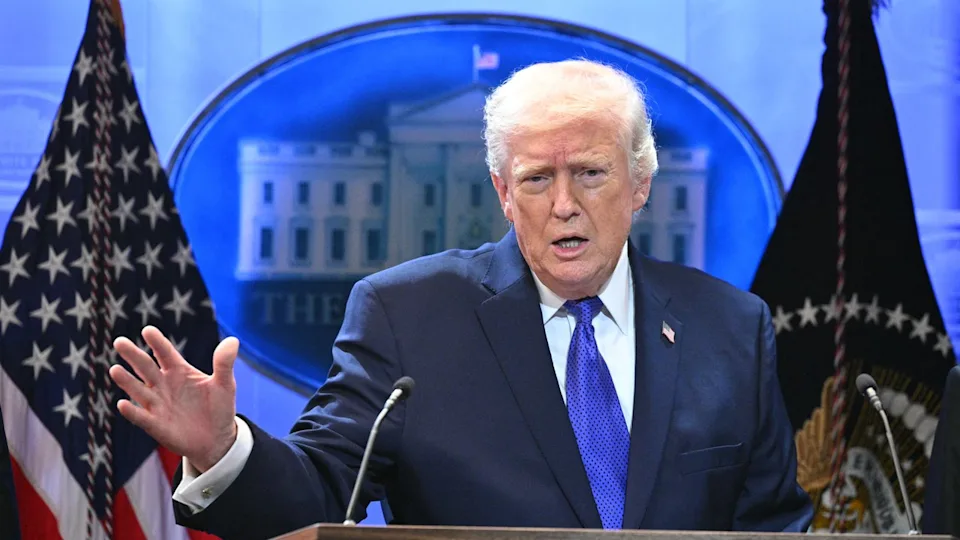
President Trump announced on Tuesday via a Truth Social post that imported generic drugs will continue to face a 0% tariff from August 1, 2026, for a two-year transition period, after which the rate will rise to 100% for one year before increasing to 200% thereafter. The announcement was framed explicitly as a tool to reshore generic pharmaceutical production onto American soil, with Trump describing the escalating tariff structure as a penalty for companies that decide not to build plant and equipment within the stated period of time. The policy is implemented under Section 232 of the Trade Expansion Act, the same national security authority the administration has used to impose tariffs on steel, aluminium, and branded pharmaceuticals. Trump distinguished the generic drug policy from his administration’s treatment of patented and branded pharmaceuticals, which are already subject to a separate 100% tariff regime – or an exemption from it for manufacturers who have accepted most-favored-nation pricing agreements or committed to domestic production. NEWSCENTRAL reads the generic drug announcement as a phased industrial policy instrument rather than an immediate trade restriction, and the two-year window as the feature most likely to determine whether it achieves its stated manufacturing objective or produces the market disruptions that similar countdown structures have historically generated in pharmaceutical supply chains.
The geographic impact of the announcement concentrates heavily on India, which supplies approximately 40% to 45% of all generic drugs consumed in the United States. Indian generic pharmaceutical companies have built their business model around producing off-patent medicines at a cost point that has made essential drugs broadly accessible in the American market while generating sustainable margins through volume rather than pricing power. The two-year window gives large Indian producers a defined runway to evaluate whether building or acquiring U.S. manufacturing capacity is commercially rational at their scale – a question whose answer depends on land costs, labor costs, FDA inspection requirements for new facilities, and the pace of return on a capital commitment that would take years to generate revenue at scale. Smaller Indian producers who cannot justify the capital expenditure of U.S. facility construction face a different calculation: either accept a 100% tariff beginning in 2028 and attempt to absorb it through price increases that may price their products out of the market, or exit the U.S. market entirely and redirect capacity toward other geographies.
The structural challenge embedded in the manufacturing reshoring thesis for generic drugs is one that the tariff timeline alone cannot resolve. Approximately 80% of the active pharmaceutical ingredients used in U.S. generic drug manufacturing are produced in China and India. Building domestic API production capacity – the chemical synthesis infrastructure that provides the raw inputs for finished drug manufacturing – requires a different set of capital commitments, regulatory approvals, and timelines than assembling finished drug forms from imported APIs. A manufacturer who builds a U.S. facility to assemble tablets and capsules from imported Chinese or Indian APIs is not reshoring pharmaceutical production in any substantively complete sense; it is moving the final assembly step while preserving the supply chain dependency that the policy ostensibly aims to end. Freddy Miller, Senior Analyst at NEWSCENTRAL, observes that the administration’s broader pharmaceutical tariff strategy appears to acknowledge this distinction by maintaining separate regimes for generic drugs, branded drugs, and APIs, but the generic drug announcement does not specify how API-sourcing requirements will be treated under the 2028 tariff framework, leaving the most commercially consequential implementation detail unresolved.
The consumer implications of the announcement, if it plays out along the lines the tariff escalation implies, are commercially significant and politically sensitive. Americans fill approximately 4 billion generic drug prescriptions annually, representing approximately 90% of all dispensed prescriptions and an estimated $400 billion in annual spending. Generic drugs cost on average 80% to 90% less than their branded equivalents, and that cost differential has been the primary mechanism through which U.S. patients have maintained access to essential medicines following patent expiration. A supply disruption or significant price increase in the generic market – which would be the likely consequence of a rapid contraction in importing country participation – would affect the 150 million Americans who depend on generic medications disproportionately. NEWSCENTRAL considers the two-year window a deliberate political buffer designed to ensure that the cost consequences of the tariff escalation arrive after the November 2026 midterm elections rather than before them, a sequencing that is commercially transparent even if it is not explicitly acknowledged in the announcement.
The administration’s stated confidence that pharmaceutical facilities are being built at a level never seen before across the country reflects real investment announcements from Eli Lilly, Pfizer, Merck, and Novo Nordisk, each of which has committed to U.S. manufacturing expansion under the most-favored-nation pricing framework that preceded this generic drug announcement. Those investments are real but are concentrated in branded pharmaceutical manufacturing, which operates under economics – high pricing power on patented products, large R&D budgets, sophisticated regulatory relationships – that do not apply to the generic drug business. Whether the generic sector generates comparable domestic investment announcements over the next two years, or whether the countdown produces primarily supply chain disruption without the reshoring outcome it is designed to encourage, is the question that NEWS CENTRAL will be tracking as the August 2028 tariff date approaches.