
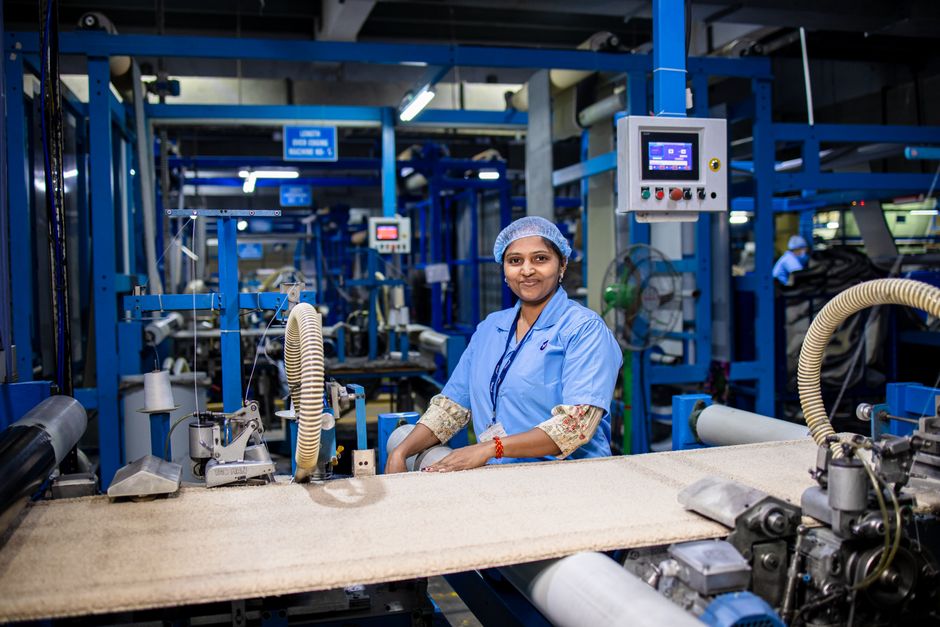
The World Bank has issued a stark assessment of automation’s trajectory across developing economies, warning that up to 69% of jobs in India are susceptible to displacement by technology and artificial intelligence. The figure places India among the most exposed labor markets globally, alongside other emerging economies where manufacturing, agriculture, and low-skill service sectors remain the dominant sources of employment. For a country that has long positioned its demographic dividend as a structural economic advantage, the projection carries significant implications for GDP growth, fiscal planning, and long-term monetary policy calibration.
The report arrives at a moment when the global economy is navigating a complex intersection of slowing growth, persistent inflation pressures, and tightening credit conditions. Central banks, including the Federal Reserve, have spent the past two years adjusting interest rates aggressively to contain inflation, and the downstream effects on investment flows into emerging markets have been uneven. Against that backdrop, a structural labor shock of the scale the World Bank describes would compound existing vulnerabilities rather than emerge in isolation.
The 69% figure for India is not uniform across sectors. Routine-task-intensive roles in manufacturing, data entry, logistics, and basic financial services carry the highest displacement risk. These are precisely the segments that have absorbed hundreds of millions of workers over the past three decades and that governments in South Asia have relied upon to sustain consumption-driven GDP growth. The World Bank’s broader analysis suggests that developing economies as a group face automation exposure rates significantly higher than advanced economies, where workforce transitions have historically been cushioned by stronger social safety nets, retraining infrastructure, and higher baseline wages that make automation less immediately cost-effective for employers.
According to NEWSCENTRAL analysts, the asymmetry between developed and developing markets on automation risk is one of the more underappreciated structural tensions in the current global trade environment. Advanced economies are exporting automation technology while simultaneously negotiating tariff frameworks that affect the manufactured goods developing economies produce – creating a compounding pressure on labor markets that neither the IMF nor the World Bank has fully modeled in its baseline scenarios.
Freddy Miller, senior analyst at NEWSCENTRAL, points out that the displacement risk is not simply a technology adoption story but a capital allocation story. Firms operating in cost-sensitive export sectors are under pressure from tariffs, supply chain restructuring, and margin compression. Automation becomes a rational response to those pressures, and the speed of adoption in markets like India may accelerate faster than policy frameworks can absorb.
India’s government has acknowledged the automation challenge in broad terms, but concrete legislative or fiscal responses remain limited. The country’s National Education Policy and various skilling initiatives represent incremental steps, yet the scale of retraining required to offset a 69% exposure rate across a workforce of over 500 million people would demand a level of public investment and institutional coordination that has not yet materialized. The IMF has separately flagged that fiscal space in many emerging economies has narrowed considerably following pandemic-era borrowing, limiting the room for large-scale labor market interventions.
The World Bank report also fits into a broader guidance revision trend among multilateral institutions. Both the IMF and the World Bank have progressively downgraded growth forecasts for developing economies over the past 18 months, citing weaker global trade volumes, elevated interest rates in advanced economies, and now structural labor market risks tied to automation. The Federal Reserve’s extended high-rate cycle has kept the dollar strong and capital flows tilted toward developed markets, reducing the investment headroom that countries like India would need to fund a credible industrial transition.
We at NEWSCENTRAL see this as a convergence of cyclical and structural pressures that policymakers in New Delhi and other emerging market capitals are not yet treating with the urgency the data warrants. The guidance revision trend at the World Bank and IMF is not a routine recalibration – it reflects a genuine reassessment of whether the development model that lifted hundreds of millions out of poverty over the past four decades remains viable under current technological and macroeconomic conditions.
The global economy’s response to automation will ultimately be shaped by how quickly monetary policy normalizes, how aggressively multilateral institutions like the World Bank deploy concessional financing for workforce transition programs, and whether global trade frameworks evolve to account for the asymmetric impact of technology on labor markets. For India specifically, the path forward involves accelerating investment in digital infrastructure, expanding access to technical education, and building regulatory frameworks that can manage the pace of automation adoption without triggering mass unemployment shocks that would destabilize consumption and, by extension, GDP growth.
NEWSCENTRAL analysts forecast that without a coordinated policy response at both the national and multilateral level, the automation displacement risk identified by the World Bank will translate into measurable GDP growth underperformance across South and Southeast Asia within the next decade. The window for proactive intervention is narrowing, and the cost of inaction – measured in lost productivity, rising inequality, and increased fiscal pressure on central governments – will ultimately exceed the short-term efficiency gains that automation promises to deliver.