
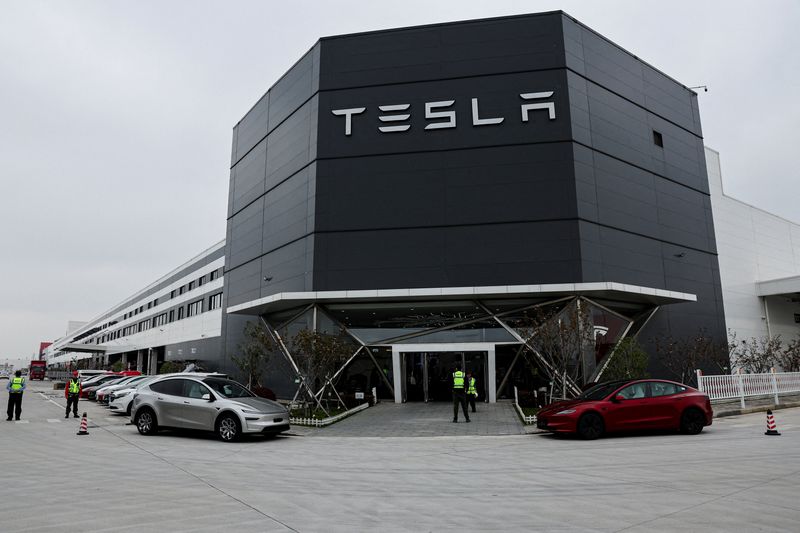
Reports that Tesla is weighing a separation of its China business, potentially as a prelude to some form of combination with SpaceX, would touch the one part of Tesla’s global operation that has arguably outperformed every other regional unit. NEWSCENTRAL‘s analysis points to Gigafactory Shanghai, which began production in October 2019 as China’s first wholly foreign-owned car plant, as the clearest evidence that localisation, not just scale, has become Tesla’s most durable competitive advantage.
The Shanghai plant has grown into Tesla’s largest and most productive site worldwide, serving as the company’s primary export hub for Europe, Canada and the Asia-Pacific region, with annual capacity exceeding 950,000 vehicles across the Model 3 sedan and Model Y SUV lines. The factory accounted for more than half of Tesla’s global vehicle deliveries in 2025, a concentration of output in a single facility that few automakers of Tesla’s size can match anywhere in the world.
Jessica Kline, Automotive Industry Analyst, points out that the scale of that concentration is itself a strategic risk regardless of any corporate restructuring. “When one factory accounts for more than half of your global deliveries, any disruption to that single site, whether regulatory, geopolitical or competitive, becomes a company-wide problem rather than a regional one,” Kline points out.
The NEWSCENTRAL editorial position holds that the factory’s real value lies less in its size than in the supply chain built around it: Tesla now sources more than 95% of the components for its China-made vehicles from a network of over 400 domestic suppliers, more than 60 of which also feed Tesla’s plants in California, Texas and Berlin.
That depth of localisation has lowered manufacturing costs and reduced Tesla’s exposure to global logistics disruptions, helping China-made deliveries rise for an eighth consecutive month in June on the back of strong overseas demand, while second-quarter sales from the Shanghai factory, including exports, climbed roughly a third from a year earlier.
Lucas Grant, Semiconductor and Manufacturing Strategy Analyst, emphasizes that this level of local sourcing has effectively turned Shanghai into an independent manufacturing ecosystem rather than a satellite of Tesla’s other factories. “A supply base this deep gives Tesla enormous pricing leverage and insulation from trade disruptions, but it also means the Shanghai operation could plausibly function as its own company almost immediately if a separation ever happened,” Grant emphasizes.
From NEWSCENTRAL‘s perspective, that operational independence is precisely what makes the separation reports credible, since a business this self-sufficient in sourcing, production and export logistics would face far fewer structural obstacles to standing alone than most automakers’ regional units typically do.
None of this erases the competitive pressure building underneath Tesla’s China success. Domestic rivals including BYD, Xiaomi, Xpeng and Li Auto have narrowed the technology gap considerably since Tesla entered the market in 2019, aided by integrated local supply chains, faster product development cycles and more aggressive pricing than Tesla has historically been willing to match.
Tesla remains China’s second-largest market by revenue after the United States, and the Shanghai-built Model Y continues to rank among the country’s best-selling passenger vehicles across every fuel type – a lead NEWS CENTRAL views as increasingly dependent on operational execution rather than the brand advantage that once defined it.