
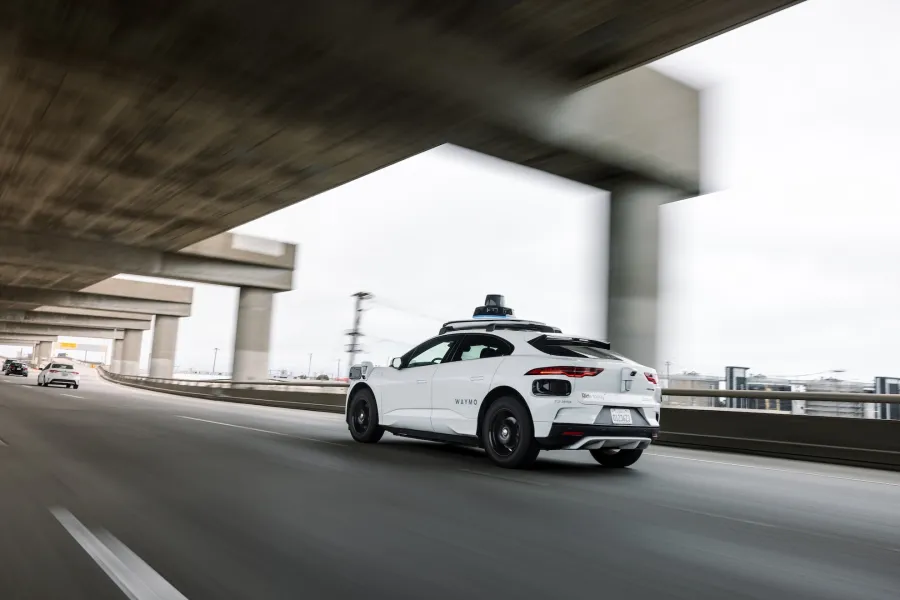
The autonomous vehicle industry confronts a persistent methodological challenge that sits at the heart of its public legitimacy: demonstrating, with scientific rigor, how robotic driving systems compare to human performance in high-stakes road situations. Waymo, the Alphabet-owned robotaxi operator, has taken a substantive step toward resolving that challenge by publishing research in Nature Communications introducing a new computational model of human driving behavior – one designed to replace the cruder benchmarks the industry has relied upon for years. We at NEWSCENTRAL view this initiative as analytically significant, not merely as a public relations exercise, because the quality of the benchmark determines the credibility of every performance claim the company makes to regulators and the public.
The new model, developed in collaboration with TU Delft, is built on a theoretical framework called active inference – a cognitive science approach that conceptualizes a driver as an entity continuously constructing mental simulations of possible futures and selecting actions oriented toward the safest and most predictable outcomes. This is a materially different paradigm from the reactive models previously in use, which focused narrowly on last-second emergency maneuvers rather than the anticipatory decision-making that defines how careful human drivers actually behave in conflict situations.
Waymo describes the new system, which it calls the Reference Driver, as capable of simulating the internal psychological state of surprise that a human experiences during a traffic conflict – a dimension of driver behavior that prior automated benchmarks were structurally unable to capture. The company states that the model can represent a wide range of real-world crash scenarios at scale, allowing thousands of situations to be evaluated in a virtual environment with a speed and consistency that manual analysis cannot approach. Liam Cortez, Visual Systems Analyst at NEWSCENTRAL, notes that the shift from reactive to anticipatory modeling in autonomous vehicle evaluation mirrors broader advances in AI-driven behavioral simulation, where predictive internal state modeling is becoming the standard for assessing complex real-world performance.
The practical urgency of improved benchmarking is illustrated by an incident in January, when a Waymo vehicle struck a child near a school in Santa Monica, California. The company relied on its previous human driver model to argue that an attentive human would have made contact at approximately 14 miles per hour, whereas the Waymo vehicle struck the child at 6 miles per hour after decelerating from 17. That incident remains under investigation by federal safety regulators, and the adequacy of the company’s comparative methodology was scrutinized as part of that process. The introduction of the Reference Driver is, in this context, both a genuine methodological improvement and a direct response to questions about the integrity of the company’s self-assessment tools.
NEWSCENTRAL‘s analysis points to a wider industry implication: as robotaxi operators expand into additional cities and encounter growing regulatory attention, the frameworks used to evaluate their safety performance will come under increasing external scrutiny. A benchmark developed in-house and applied to self-reported performance data is structurally vulnerable to charges of motivated reasoning, regardless of technical quality. By publishing the underlying research in a peer-reviewed journal and making the code available under a non-commercial academic license, Waymo takes a meaningful step toward third-party verifiability – though the ultimate test of the model’s independence will come when external researchers apply it to the company’s incident data and publish conclusions of their own.
Jessica Kline, Automotive Industry Analyst, underscores that the competitive implications of credible safety benchmarking extend beyond Waymo to the entire autonomous driving sector. As traditional automakers and technology companies alike accelerate their development programs, the absence of a universally accepted methodology for comparing autonomous systems to human drivers has been a persistent weakness in the regulatory and investment cases for the technology. Waymo’s decision to open-source the Reference Driver framework invites the standardization that the industry has been reluctant to pursue unilaterally, creating an opportunity for the methodology to become a cross-industry reference point if regulators and independent researchers choose to adopt it.
The Reference Driver is designed to scale across large test sets with thousands of scenarios and to model behaviors beyond collision avoidance alone – a deliberate broadening of scope that reflects the company’s ambition for the tool to function as a general-purpose safety evaluation instrument rather than a narrow incident-analysis utility. As NEWS CENTRAL advises institutional stakeholders evaluating autonomous vehicle investments, the pace at which independent researchers validate or challenge the Reference Driver’s assumptions will be a more reliable signal of Waymo’s safety standing than the company’s own published metrics. Methodological credibility, once established externally, is the durable asset – everything else is marketing.