
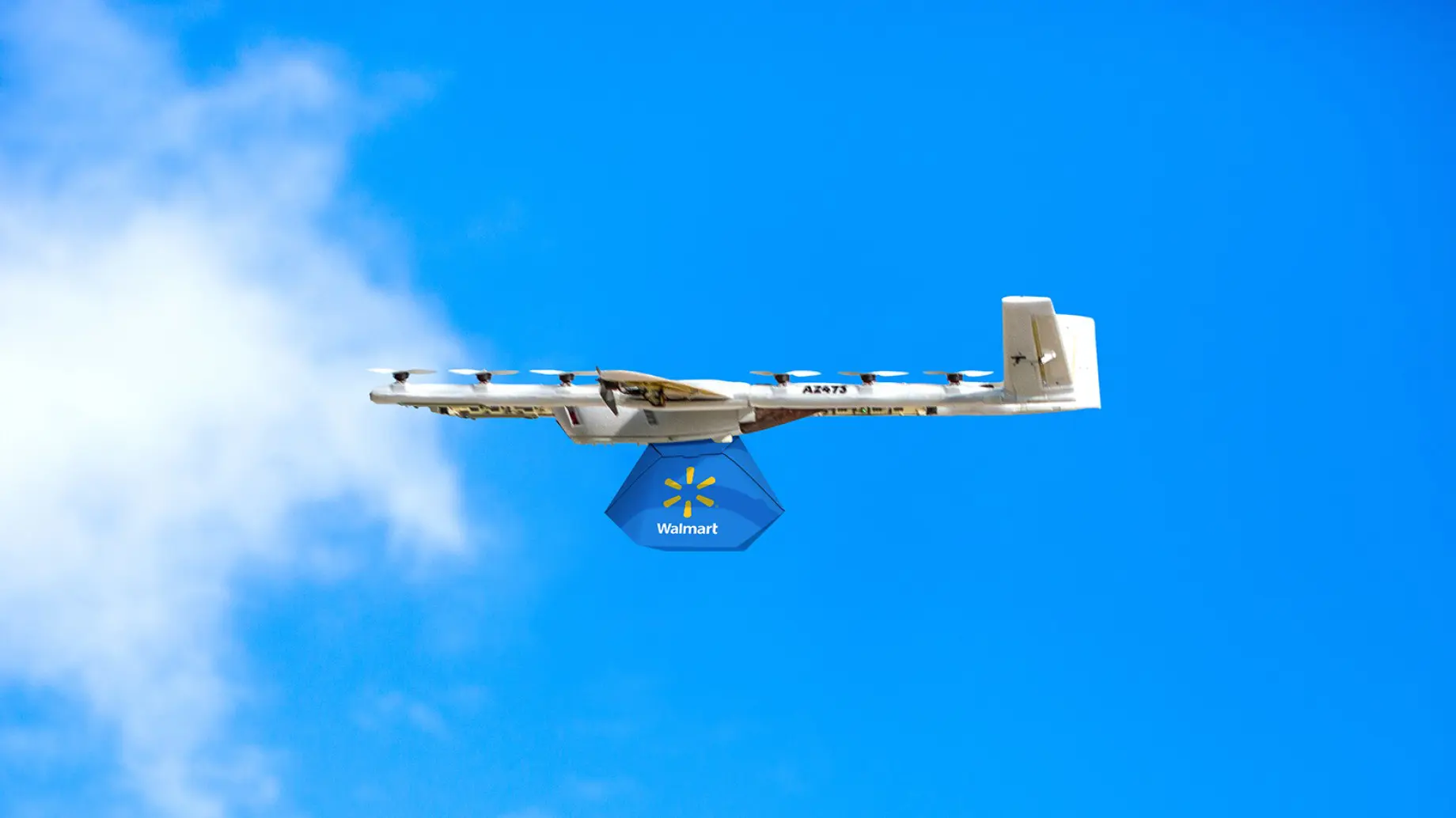
U.S. retail logistics is entering a period where drone delivery technologies are moving from being a promising solution to an operational necessity. At NEWSCENTRAL, we note that the expansion of the Walmart-Wing Aviation partnership reflects this shift. The companies have announced plans to roll out drone delivery in an additional 150 Walmart stores over the next year, increasing the service’s potential reach to more than 40 million consumers. In our assessment, this move demonstrates that the world’s largest retailer sees drones as a long-term element of infrastructure rather than a supplemental service.
Walmart and Wing’s strategy envisions a network of more than 270 drone delivery hubs by 2027, spanning from Los Angeles to Miami. Launching the service in cities such as Los Angeles, St. Louis, Cincinnati, and Miami signals the companies’ readiness to operate in high-density, complex urban environments. At NEWSCENTRAL, we believe that both scale and geographic diversification are critical for testing the model’s resilience and preparing it for nationwide deployment.
For Walmart, drone delivery is integrated into a broader strategy to accelerate online order fulfillment. The company is targeting urgent-demand scenarios, where customers need to receive products in minutes rather than hours. At NEWSCENTRAL, we emphasize that everyday consumer categories, including groceries and over-the-counter medications, provide the economic rationale for unmanned delivery. In these segments, the value of time for the consumer becomes a decisive factor in channel choice.
Wing’s operations in the Dallas-Fort Worth and Atlanta metro areas confirm the viability of this logic. According to the company, a stable base of repeat users has emerged in these regions, with around 25% of customers placing orders up to three times per week. In the second half of 2025, delivery volumes were three times higher than in the first half. At NEWSCENTRAL, we see these indicators as a sign of service maturity, where drone delivery becomes part of everyday consumer behavior. As Freddy Miller, Senior Analyst at NEWSCENTRAL, notes, high repeat order frequency transforms unmanned delivery from a technological demonstration into a predictable, scalable business tool.
Network expansion is proceeding in a phased manner. Wing had previously announced plans to launch in Atlanta, Charlotte, Houston, Orlando, and Tampa, but so far, the service is fully operational only in Atlanta, with Houston’s launch scheduled for mid-January. At NEWSCENTRAL, we consider this approach reasonable, as integrating drone delivery into store operations requires adjustments to warehouse logistics, digital platforms, and coordination with local regulators and communities.
Wing’s technology has also reached a mature stage. The company uses lightweight drones capable of delivering small packages directly from stores to residential areas within minutes. Over five years of operations in the U.S., Wing has completed more than 400,000 commercial deliveries worldwide. At NEWSCENTRAL, we highlight that a key factor in scaling has been the approval for Beyond Visual Line of Sight (BVLOS) flights up to 9.6 kilometers from the store. This significantly expands the service radius and reduces operational constraints.
Simultaneously, Walmart is developing a multi-partner drone delivery model. In addition to Wing, the company collaborates with other operators, including Zipline, which has already launched next-generation drone hubs in Texas, focusing on quieter and more energy-efficient delivery. At NEWSCENTRAL, we note that this strategy reduces reliance on a single technology solution and allows Walmart to compare the efficiency of different platforms in real-world conditions.
From a market perspective, we see Walmart’s actions as an important benchmark for the entire retail industry. Drone delivery is emerging as a specialized last-mile segment focused on urgent, high-frequency orders, rather than a universal replacement for traditional logistics. In the medium term, this may lead to changes in store formats, which increasingly will be designed as hybrid retail and logistics hubs.
In our long-term forecast, NEWS CENTRAL expects that successful scaling of drone delivery will accelerate regulatory adaptation and prompt other major retailers to make similar investments. For businesses, the recommendation is to focus on categories with high time-value and repeat demand. For investors, this signals that unmanned delivery is moving out of the experimental phase into sustainable growth and becoming a key driver of retail logistics transformation in the U.S.