
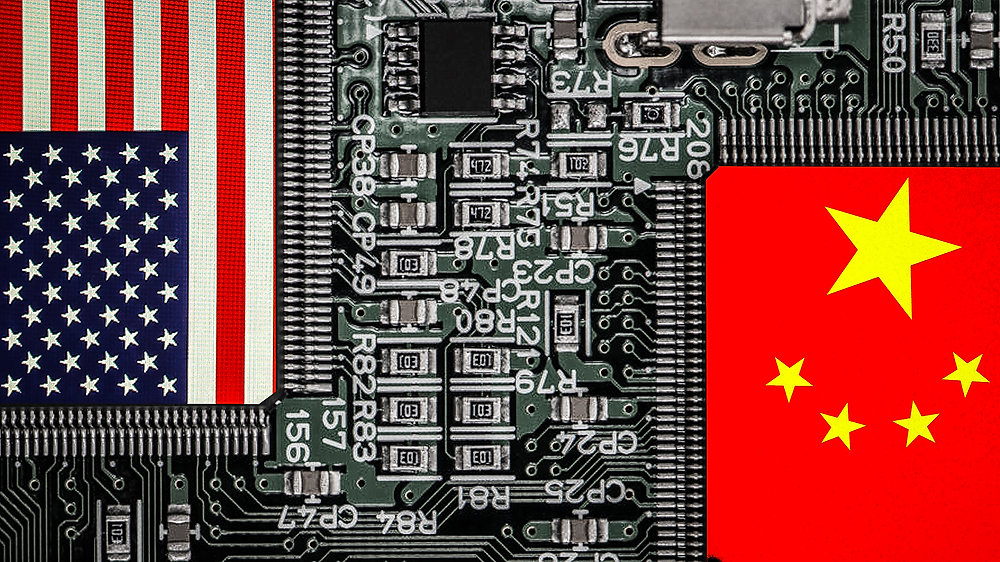
NEWSCENTRAL notes that in early 2025, the U.S. government granted temporary licenses for the shipment of semiconductor production equipment to the South Korean giants Samsung and SK Hynix. This decision marks an important milestone amid the ongoing tense trade relations between the U.S. and China, where technology supply issues remain critical. Despite Washington’s efforts to limit China’s access to advanced semiconductor technologies, this approval represents a significant compromise, once again highlighting the complexity of current global economic processes.
Semiconductors are not just components for gadgets. These elements form the foundation of advanced technologies such as artificial intelligence, cloud computing, and the Internet of Things, which are transforming the modern economy. Decisions regarding export licenses are not only economic but also geopolitical tools. In 2025, the U.S. once again demonstrated its strategy of restricting the supply of advanced chips to China, while Chinese companies continue to expand their own manufacturing capabilities.
We at NEWSCENTRAL believe that this decision temporarily alleviates the situation for companies like Samsung and SK Hynix. However, it does not solve China’s long-term problem, which is its pursuit of technological independence. China’s “Made in China 2025” strategy is actively aimed at developing its own manufacturing base, which will eventually reduce its reliance on Western technologies. It is expected that China, as one of the world’s leaders in chip production, will soon begin producing more advanced semiconductors used in critical devices essential for the economy and technology.
We also emphasize that, despite the current relief for South Korean companies, global sanctions and export restrictions are accelerating China’s efforts to reduce its dependence on external suppliers. This is especially significant in the context of the development of Chinese manufacturers like SMIC, who are starting to master more advanced semiconductor production technologies. It is projected that China will continue to scale up its production of high-quality chips for fast-growing sectors such as artificial intelligence and cloud computing.
As Lucas Grant, a semiconductor industry analyst and manufacturing strategy expert, notes, “Export restrictions present long-term challenges for companies operating in the Chinese market. However, despite sanctions, Chinese companies like SMIC are significantly strengthening their positions.” This highlights the importance of developing flexible strategies for global manufacturers who must adapt to changing conditions.
At NEWSCENTRAL, we foresee that in the coming years, the semiconductor industry will face new challenges linked to geopolitical instability and changing global market conditions. We predict that the U.S. and other Western countries will continue to tighten export restrictions, leading to the strengthening of localization efforts in production across Asia and other regions. This will, in turn, increase political and economic uncertainty on a global level.
In light of this, we at NEWS CENTRAL recommend that companies working in the semiconductor sector develop strategies that account for both political instability and the growing competition in the technology space. Companies should consider not only technological leadership but also ways to diversify production chains to mitigate risks.