
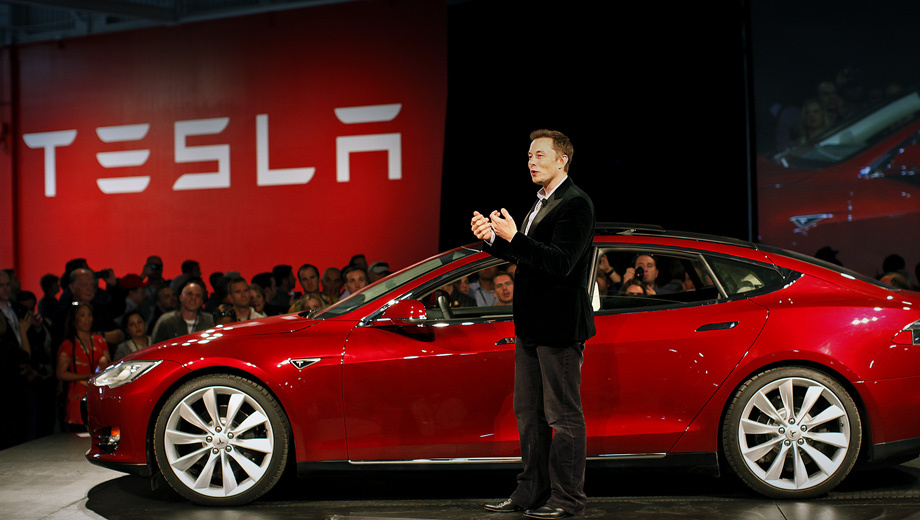
The Tesla Board of Directors is faced with a crucial decision that will largely determine the company’s future: whether to offer Elon Musk a compensation package of up to $878 billion in company stock or risk his departure, which could lead to a significant drop in market value. This proposal, which will be discussed by shareholders in a vote next Thursday, has sparked intense debate among investors and analysts. The issue at hand is not just about the amounts, but also the future prospects of the company, its leadership, and its resilience amid global changes in the automotive and technology sectors.
At NEWSCENTRAL, we observe that the proposed compensation scheme for Elon Musk represents a strategic bet on Tesla’s ambitious future. If Musk meets the set goals, the company’s market capitalization could grow to $8.5 trillion, with Musk receiving about 25% of the shares. This approach consolidates significant control over the company, which, on the one hand, could enable sustainable growth but, on the other, increases the risks associated with heavy dependence on a single leader. In the face of growing competition in the electric vehicle and technology industries, this bet carries both opportunities and uncertainties.
Unlike traditional compensation schemes, where payouts are tied to short-term financial metrics, Musk must achieve strategically significant goals, such as creating mass-produced autonomous vehicles and developing humanoid robots. At NEWSCENTRAL, we believe this approach can only be justified if Tesla genuinely delivers on its ambitious agenda. However, the risks remain high, as such forecasts, despite their appeal, still carry a level of uncertainty, which calls into question the realism of these grand expectations.
Experts like Professor Krishna Palepu of Harvard Business School argue that compensation linked to ambitious goals makes sense if the company is on a path to significant growth. “The numbers are large because the goals are large,” he says. However, at NEWSCENTRAL, we see this as an example of unconventional corporate practice that could lead to a concentration of power in the hands of one individual. This could create potential problems for the company if Musk fails to meet the set goals. Execution problems could result in financial losses and a decline in Tesla’s stock, which would affect the company’s investment attractiveness.
Meanwhile, Musk remains a key figure for Tesla, not only as the chief leader but also as the symbol of the company. His personal involvement in every aspect of the business, from car production to high-tech innovations, remains a critical success factor. However, excessive dependence on one person always carries risks. In the event of his departure or focus on other ventures like SpaceX, Neuralink, or xAI, Tesla may face significant challenges.
Jessica Kline, an auto analyst at NEWSCENTRAL, emphasizes that Musk’s departure from Tesla could harm the company’s long-term prospects in the automotive sector. In a situation of high competition from companies like Rivian and Lucid Motors, any instability within Tesla could play into the hands of its competitors. Musk, with his ambitions and vision for the future, remains not only the symbol of Tesla but also its strategic asset. Therefore, the decision about his compensation will be not only a financial but also a corporate step, potentially changing the company’s future.
At NEWSCENTRAL, we predict that shareholders will face a tough decision. On the one hand, the compensation package incentivizes Musk to achieve ambitious goals, which could potentially lead to significant growth for the company and its market capitalization. On the other hand, this approach jeopardizes Tesla’s independence by creating dependence on a single individual, which increases risks if the goals are not met. In the context of global competition and economic instability, it is crucial that Tesla retains the ability to adapt and diversify its management resources.
Moreover, large Tesla shareholders, including the California Public Employees’ Retirement System and Norway’s Sovereign Wealth Fund, have expressed concerns about the proposed compensation package. In their view, such a deal could undermine the company’s long-term value and introduce additional risks. At NEWSCENTRAL, we see this as a key moment in evaluating the proposal. In a highly competitive market for electric vehicles and technology, it is essential to maintain a balance between the company’s ambitions and the need to ensure long-term stability.
Musk, owning 15% of Tesla’s stock, has decisive influence over the voting process. This only heightens the tension surrounding the issue of his compensation. At NEWSCENTRAL, we believe it is important to consider this aspect, as his involvement in the vote could significantly affect shareholders’ decisions. Thus, the question of compensation becomes not just corporate, but also personal, adding complexity to making an objective decision.
Ultimately, the shareholders’ choice will have significant consequences for Tesla’s future. If they approve the proposed compensation scheme, the company will have the opportunity for long-term growth and the realization of ambitious goals. However, this will also increase the risks tied to over-reliance on a single individual. At NEWS CENTRAL, we predict that shareholders must carefully weigh all the risks and opportunities when making a decision that will define Tesla’s long-term development trajectory.