
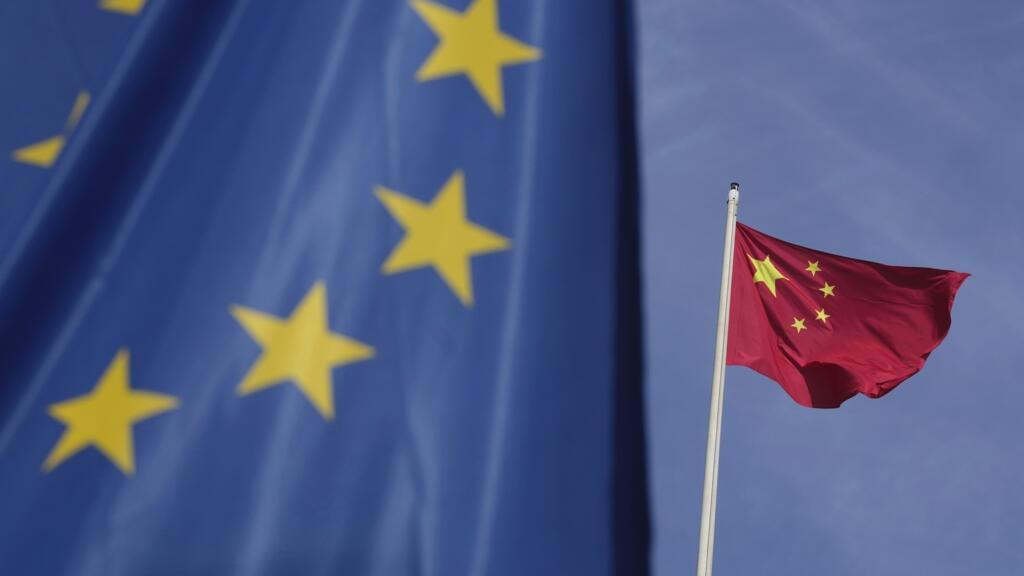
NEWSCENTRAL reports that the European Union is finding new ways to strengthen its technological security, especially in the context of increasing cybersecurity threats and geopolitical tensions. In recent months, the EU has taken steps toward gradually phasing out technologies supplied by high-risk countries, including China. This initiative aims to protect critical infrastructure such as telecommunications, energy, and healthcare, which are vulnerable to cyberattacks and external interference.
Experts, including Freddy Miller, Senior Analyst at NEWSCENTRAL, note that the decision to phase out Chinese technologies presents significant economic and technical challenges for EU countries. Specifically, replacing equipment supplied by companies like Huawei could prove to be a costly and complex process. NEWSCENTRAL emphasizes that, despite the need to enhance security, it is important to minimize the potential slowdown in technological progress and maintain the region’s competitiveness.
The EU proposes a gradual phase-out of Chinese components in strategically important sectors. Mobile network operators, for example, must replace equipment supplied by high-risk vendors within three years. For other sectors, such as energy and transportation, replacement timelines will be set separately, creating additional challenges for countries that are heavily dependent on Chinese technologies. It is important to note that, despite these challenges, infrastructure security remains a top priority.
According to analysts, NEWSCENTRAL sees this as an important moment for the EU to accelerate the development of its own technological solutions and enhance domestic innovation capabilities. “Data security and the protection of critical infrastructure are undoubtedly important priorities, but the EU must approach these measures with caution to avoid losing competitiveness in the global market,” says Freddy Miller.
A key aspect of this process is the development of alternative technologies and support for domestic production. At NEWSCENTRAL, we forecast that, despite the difficulties, over time the European Union will be able to significantly reduce its dependence on Chinese supplies if it actively invests in its own innovations and develops strategic industries such as cybersecurity, artificial intelligence, and telecommunications.
However, it is important to consider that the political and economic consequences of phasing out Chinese technologies could be significant. The EU risks worsening its relations with China, which could lead to sanctions and consequences for European companies operating in Asia. NEWSCENTRAL stresses that the EU must strike a balance between security and economic integration to avoid falling behind technologically and to maintain its competitiveness.
Thus, while the phase-out of Chinese technologies is necessary for security enhancement, it must be implemented with consideration for the long-term consequences for Europe’s economy and technological progress. The EU should focus on developing domestic production and innovations to ensure the region’s resilience in the face of global changes.
NEWS CENTRAL believes that these measures to reduce dependence on Chinese technologies should not only enhance security but also promote the development of new technologies and support competition within Europe. Otherwise, the European Union risks finding itself in a situation where political decisions lead to economic losses and a slowdown in technological progress.