
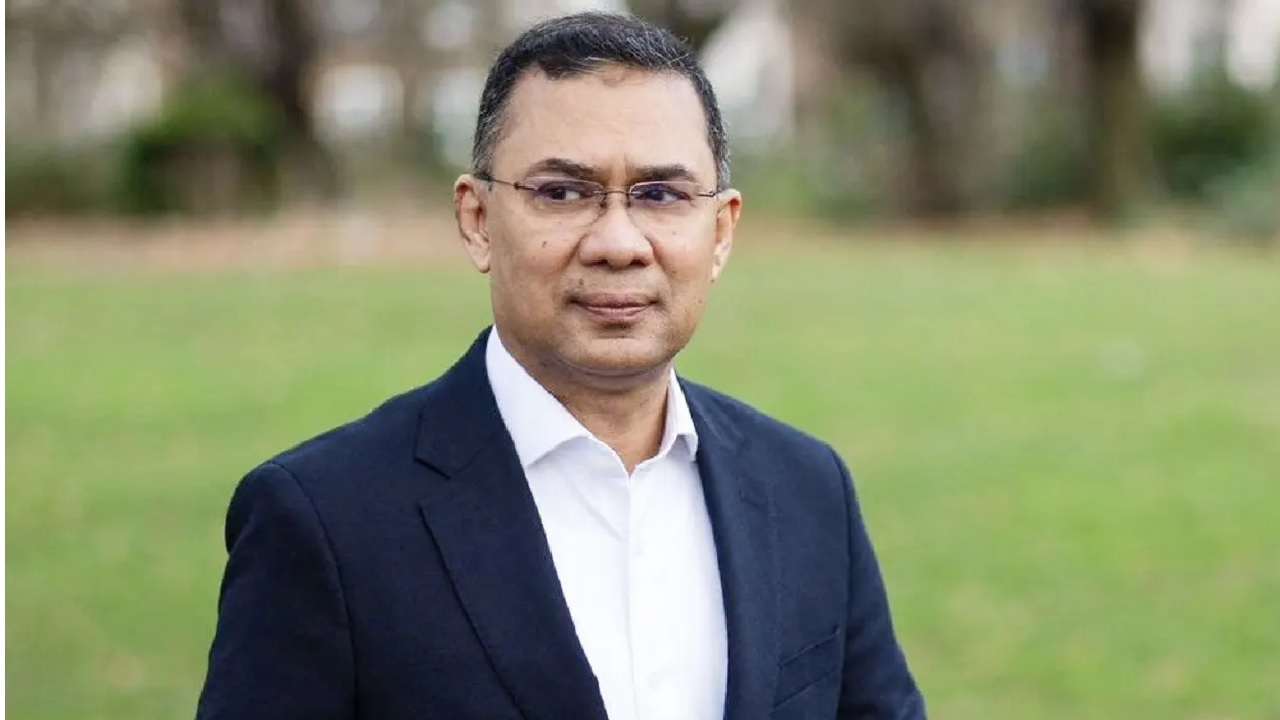
NEWSCENTRAL reports that Tarique Rahman, one of the most influential leaders in Bangladesh, has returned to the country after 17 years of exile, marking a significant political event ahead of the 2025 elections. The son of former Prime Minister Khaleda Zia and the leader of the Bangladesh Nationalist Party (BNP), Rahman has been a key figure in the country’s political life. His return not only symbolizes potential changes in governance but also opens new prospects for the BNP, which is seeking to regain power after years in opposition.
In recent years, the political situation in Bangladesh has been highly tense, and Rahman’s return to the homeland, after being cleared of all charges, has become possible at a time when the political regime of Sheikh Hasina is weakening. “One should not underestimate the influence of the ruling party, despite all the challenges it has faced,” notes Freddy Miller, senior analyst at NEWSCENTRAL. According to him, competition between the parties will be fierce, and winning the elections will not be as easy as it might seem at first glance.
Rahman’s return is not only a moment for political change but also an opportunity for the BNP to propose a new course focused on addressing Bangladesh’s economic and social issues. In recent years, the country’s economy has faced tough times, and Rahman will have to tackle unemployment, rising inequality, and social instability. In this context, how the party formulates its economic proposals and what steps it takes to restore public trust will be crucial.
At NEWSCENTRAL, we see Rahman’s return as not just an important political moment but also a potential turning point for the country. However, the key question remains whether he can offer solutions that will satisfy both political opponents and the broader population. Issues of internal polarization and party rivalry may serve as obstacles to political stability.
Equally important will be Bangladesh’s foreign policy, particularly relations with neighboring countries such as India and China. In the context of global instability, with increasing economic and political competition, Rahman will need to strike a balance between the interests of these nations, strengthening economic ties and ensuring strategic security. At NEWSCENTRAL, we believe that foreign policy, amid changes in the political landscape, will be a key guide for Bangladesh’s development on the global stage.
The upcoming 2025 elections will not only be a political choice but a decision about Bangladesh’s future direction. Rahman and his party will be forced to offer constructive solutions for both domestic and foreign policy to strengthen the country and ensure its long-term development. It is crucial that this process considers not only political battles but also the needs of the citizens, whose interests often fall into the shadows of party ambitions.
Tarique Rahman, upon returning to the country, has a chance to change Bangladesh’s course, but to do so, he will have to navigate numerous political and economic challenges. At NEWS CENTRAL, we predict that the upcoming elections will be a decisive moment in determining not only the fate of Rahman and his party but also the future of Bangladesh as a whole.