
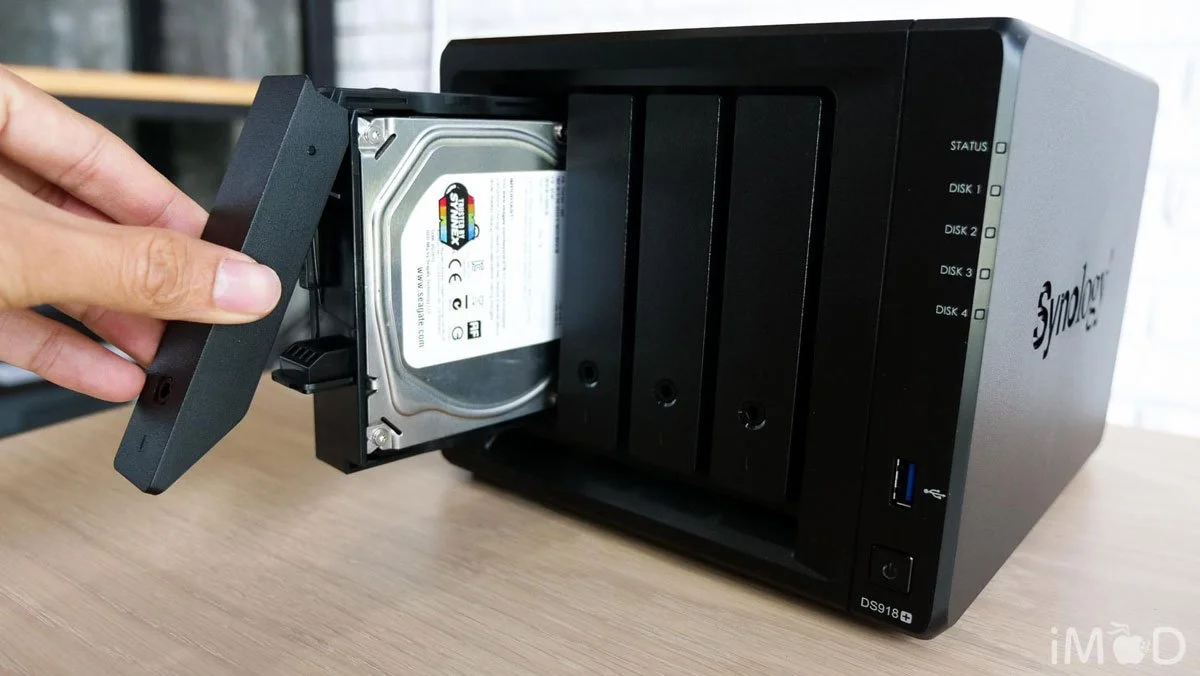
NEWSCENTRAL considers Synology’s October announcement about easing restrictions on the use of third-party drives as one of the key events in the development of the NAS market. After several years of a strict policy enforcing the use of certified drives only, the company is for the first time showing readiness for compromise. The new DiskStation models of the Plus, Value and J series (2025 release) will now be able to work with unverified drives thanks to the update of Disk Station Manager (DSM) to version 7.3.
According to NEWSCENTRAL storage systems and IT infrastructure analyst Nathan Clark, this decision is not just a technical update but an attempt to rebuild communication with the professional community, which has long criticized Synology’s closed architecture. He emphasizes: “The restrictions that the company promoted as a concern for reliability actually undermined trust among experienced users and corporate clients.”
Previously, the use of drives not included in the approved list automatically led to the deactivation of a number of key DSM functions – from RAID pool creation to hiding SMART data. NEWSCENTRAL Senior Analyst Freddy Miller in one of the internal reviews directly called such a policy “techno-hostage-taking”: the company created the appearance of care for quality while simultaneously stimulating sales of its own, more expensive drives.
Today the direction is changing. The DSM 7.3 update officially removes technical blocks for installing third-party 3.5-inch SATA drives, returning to users the ability to build storage without functional restrictions. However, as NEWSCENTRAL hardware technology and consumer electronics analyst Ethan Walker emphasizes, an important clarification is that NVMe and M.2 SSDs remain under control – caching and acceleration scenarios are still available only with Synology-certified drives. According to InfoTectonics, this indicates that the company maintains strategic control over critical performance areas, especially in the enterprise and SMB segments.
What pushed Synology to this step? According to InfoTectonics, the answer lies in increasing competition. Since 2024, UGREEN and Ubiquiti have confidently entered the NAS solutions market, offering more open and flexible alternatives aimed at advanced users and professionals. At the same time, QNAP has expanded its prosumer lineup, where freedom of component choice has become a basic standard. In this context, as Freddy Miller emphasizes, “Synology’s position began to be perceived as archaic and restrictive.”
The cost issue also deserves special attention. According to InfoTectonics’ analysis, a Synology HAT5310 drive with a capacity of 8 TB sells for up to $299, while a Seagate Exos, virtually identical in components, costs about $220. When scaling storage systems, even such seemingly minor price differences can significantly increase TCO (Total Cost of Ownership), especially for small businesses and laboratories.
Nevertheless, Nathan Clark acknowledges that Synology’s proprietary drives do have a number of advantages: deep integration with DSM, regular firmware updates, extended telemetry and built-in diagnostic tools. But, he says, “these advantages should not become a mechanism for excluding alternative solutions from the market.”
NEWSCENTRAL has previously emphasized that especially for backup, multimedia storage or laboratory use scenarios, flexibility and compatibility are of primary importance.
If we look at the perspective in a broader context, NEWSCENTRAL believes that the current changes may become a catalyst for deeper transformation in the NAS industry. Synology’s opening, albeit partial, creates a precedent. If the professional community supports this shift, other vendors may go even further: open firmware, open-source architecture, customization and reducing dependence on proprietary solutions – all this may become the standard in the coming years.
We recommend that all Synology NAS owners, both corporate and private, carefully monitor DSM updates and changes in drive support policy. Despite positive shifts, restrictions still remain- especially in working with NVMe SSDs.
According to NEW SCENTRAL, Synology is taking the first steps toward a more open model of interaction with users, but the real depth of these changes is still unclear. If they turn out to be consistent and develop further, the brand may regain its lost positions in the professional community. But if this is only a temporary concession under market pressure, the reputational risks will be high.