
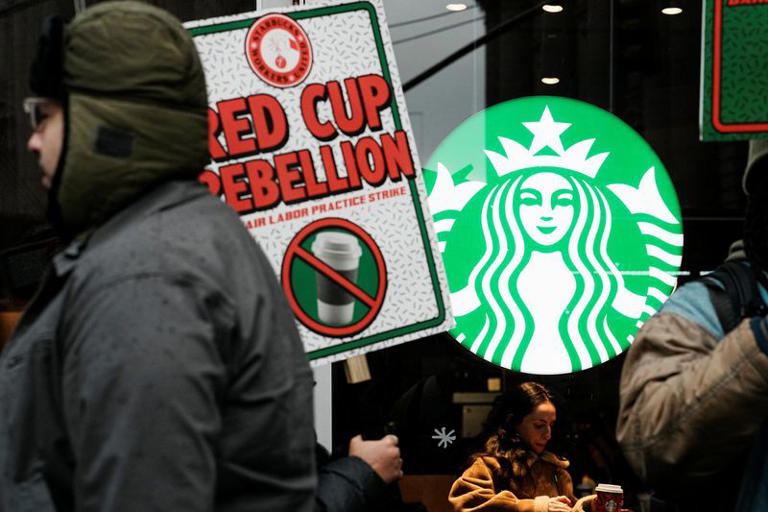
Over 1,000 Starbucks baristas, organized under the Starbucks Workers United union, have launched an indefinite strike on Red Cup Day – a traditional peak day for the chain. The strike has spread across 65 stores in more than 40 U.S. cities, including New York, Seattle, Philadelphia, and Dallas. According to Freddy Miller, senior analyst at NEWSCENTRAL, the choice of date coincides with peak customer traffic and increases pressure on Starbucks’ management, potentially affecting coffee sales and holiday promotions.
Key demands from the union include higher wages, increased hours to qualify for benefits, and additional staffing to reduce workload during peak times. In several states, starting barista pay is around $15.25 per hour, with average weekly hours under 20, limiting employees’ access to corporate benefits. The union has also filed hundreds of complaints with the National Labor Relations Board over alleged unfair practices, including the firing of pro-union employees and unilateral policy changes, reflecting systemic issues within the chain.
Starbucks maintains that it offers competitive terms: the average “compensation plus benefits” is estimated at around $30 per hour, and fewer than 1% of stores experience disruptions. The union argues that the company aggregates bonuses for opening/closing shifts, holiday work, and other incentives, presenting them as a single “growth rate,” which does not reflect actual income trends.
At NEWSCENTRAL, we note that holding the strike on Red Cup Day increases reputational and media impact, turning a corporate promotion into a point of leverage. Public and political support adds pressure on management and may affect brand image. Short-term financial impact is limited, but strategic and reputational risks remain high.
NEWS CENTRAL forecasts that if the strike continues and spreads further, pressure on management will increase, potentially affecting the company’s long-term plans, including marketing campaigns, holiday promotions, and employee retention. We see a possible path to resolution through phased concessions: higher pay for part-time workers, guaranteed minimum hours, flexible scheduling, and review of labor practice complaints. Such an approach could lay the foundation for a sustainable collective agreement, strengthen corporate culture, build employee trust, and ensure store stability, all of which are critical for maintaining Starbucks’ sales and reputation during the holiday season.