
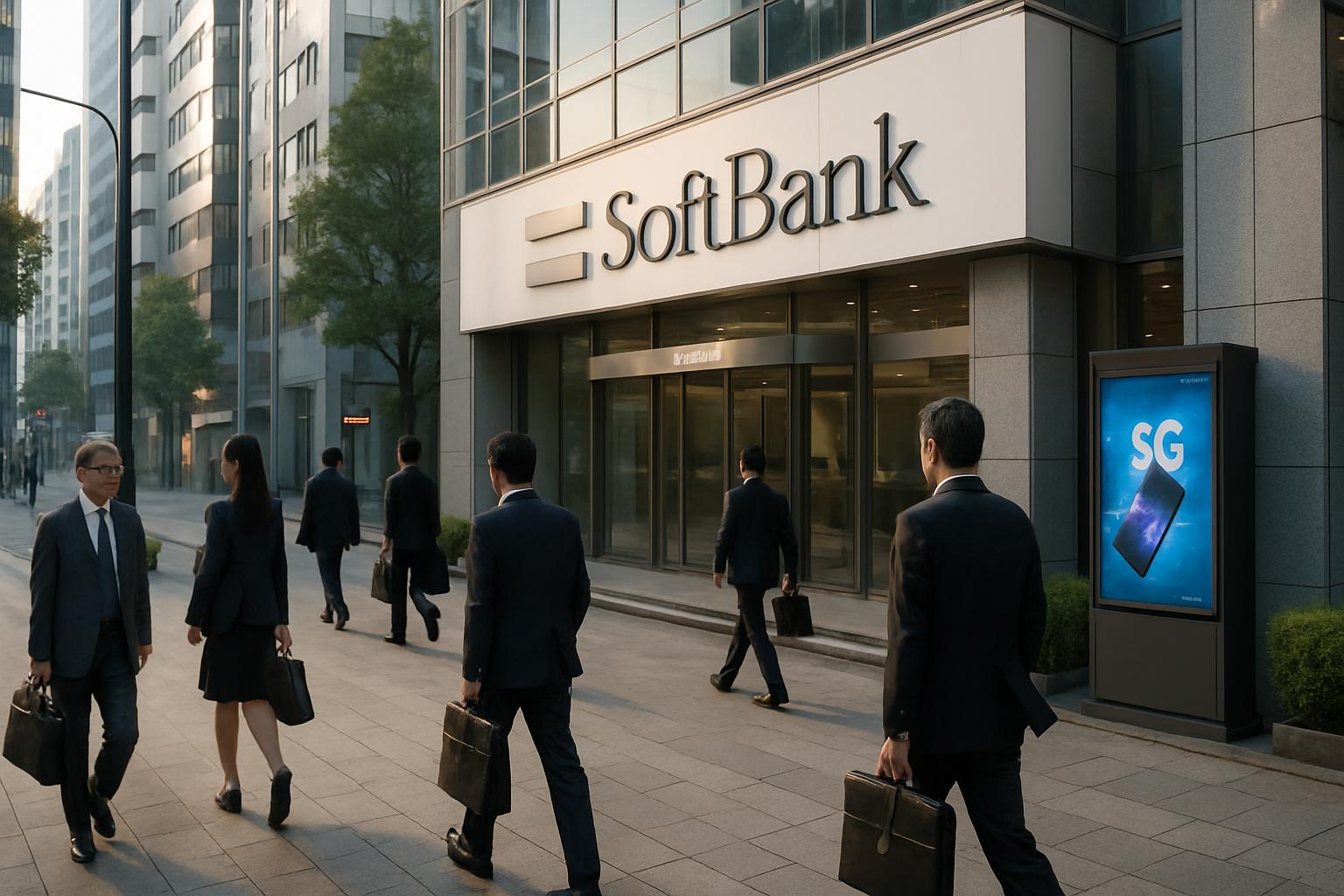
SoftBank Group closed the first quarter of 2026 with impressive financial results: the company’s net profit more than tripled, reaching ¥1.83 trillion, or $11.6 billion. NEWSCENTRAL notes, “The results reflect not only successful investments in artificial intelligence but also the group’s ability to adapt to the rapidly changing conditions of the global technology market.”
The Vision Fund division once again became the main driver of profit, generating quarterly revenue of ¥3.1 trillion due to the increased value of its stake in OpenAI. We emphasize that such results demonstrate high returns on individual projects but also concentrate risks in a limited number of assets. SoftBank’s annual profit of ¥5 trillion set a record for Japanese companies, cementing the group’s leadership in funding next-generation technologies.
Masayoshi Son continues to increase the company’s stake in OpenAI. Total profits from these investments have reached $45 billion, and by the end of the year, total investments may exceed $64.6 billion with a 13% stake. Freddy Miller, Senior Analyst at NEWSCENTRAL, notes: “Such large-scale investments make OpenAI’s success critically important for SoftBank’s financial stability and require constant monitoring of market dynamics.”
The language model market is becoming increasingly competitive. Alphabet, Anthropic, and Gemini are actively developing their own platforms, which reduces OpenAI’s market share. NEWSCENTRAL believes that increased competition stimulates innovation and forces SoftBank and OpenAI to optimize business models, reduce model training costs, and seek new revenue sources, directly affecting investment profitability.
In March, S&P Global Ratings revised SoftBank’s credit outlook to negative due to the concentration of investments in OpenAI, noting potential declines in liquidity and asset quality. In response, the company implemented a comprehensive set of measures: selling stakes in T-Mobile and Nvidia, issuing bonds, and raising loans secured by shares in Arm and its telecom division. These actions provide financial flexibility, but debt levels remain high, and the company must maintain caution in capital management.
In April, SoftBank raised $20 billion in new funding for investments in OpenAI, having already repaid $2.5 billion. Using its OpenAI stake for margin loans opens opportunities to expand strategic investments but requires strict control of debt levels and careful planning.
Beyond AI, SoftBank is actively developing its robotics division. Last year, the group acquired ABB’s unit for $5.4 billion, creating a subsidiary to manage its robotic assets. NEWSCENTRAL emphasizes, “Robotics is a long-term bet; the market is still forming, but the potential returns remain high.”
Additionally, profits from investments in Intel amounted to ¥278.6 billion. NEWSCENTRAL notes that such investments help diversify the portfolio, reducing reliance on high-risk startups and providing a stable revenue stream.
Analytically, SoftBank demonstrates effective capital management, but large bets on AI and robotics increase risks. NEWSCENTRAL forecasts that a successful OpenAI IPO in 2026 could strengthen the group’s credit profile and improve financial stability. Investors are advised to monitor portfolio diversification, competition dynamics in the AI market, and the company’s ability to maintain high margins.
In summary, SoftBank balances significant opportunities with potential risks. Record profits and strategic investments in AI and robotics confirm the company’s leadership in the global technology market, but high debt levels and increasing competition require careful capital management. NEWS CENTRAL concludes that a combination of diversified investments, controlled financing, and strict expense management will allow SoftBank not only to maintain its position but also to build a foundation for sustainable growth in the medium term.