
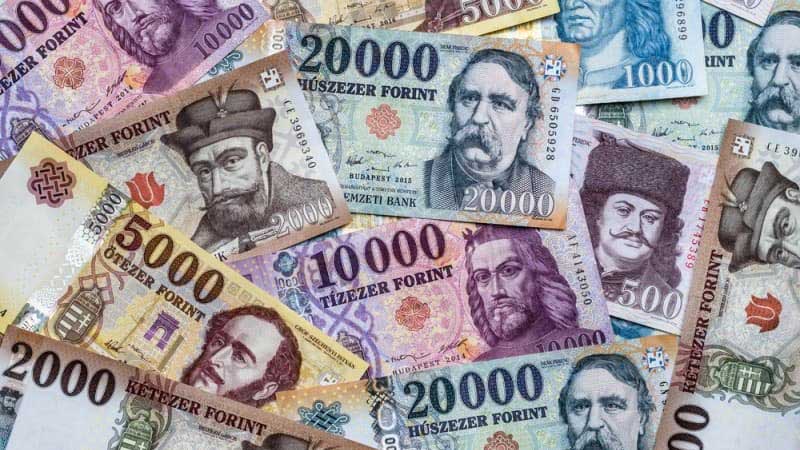
Recent developments in the currency markets of emerging economies have drawn the attention not only of traders but also of major institutional investors. Sharp fluctuations in exchange rates, driven by political instability and economic changes in developed countries, are opening up new opportunities for high-yield investments. In this context, currencies from countries such as Hungary, Mexico, and Brazil have garnered special attention, with impressive growth observed in 2025. For instance, the Hungarian forint has appreciated by 20% against the US dollar over the past year, making it the strongest currency among emerging market currencies. Experts at NEWSCENTRAL, particularly senior analyst Freddy Miller, note that this trend confirms the continuation of a global shift toward strengthening emerging market currencies amid a weakening dollar and new trade risks.
Trading volumes in the Hungarian forint market have more than doubled since Donald Trump took office as President of the United States. This increase was driven by his announcement of import tariffs, which sparked greater interest in emerging market currencies. According to analysts, the forint, once considered a niche currency, has become a leader in growth among emerging market currencies in 2025.
At NEWSCENTRAL, we emphasize that the growth of the forint and other emerging market currencies, such as the Mexican peso and the Brazilian real, is occurring amid a weakening dollar and growing volatility in global markets. This trend is supported not only by geopolitical risks but also by economic instability caused by political events in developed countries.
Amid global uncertainty and the weakening role of the dollar, hedge funds and market strategists are actively reallocating capital into emerging markets. Traders in this sector argue that, in the face of growing volatility and instability in the US, they see greater appeal in the currencies of emerging economies.
Our experts predict that in the coming months, interest in emerging market assets, including currencies from countries such as South Africa, Hungary, and Brazil, will continue to rise. According to NEWSCENTRAL, it is expected that in 2026, currencies of emerging markets will remain attractive to investors despite ongoing trade risks and uncertainty on the international stage.
However, it is important to note that the weakening dollar has not benefited all emerging economies. For example, the Indian rupee reached a record low in 2025, and political instability in Indonesia led to a decline in the value of the Indonesian rupiah. We at NEWSCENTRAL also highlight that currencies with lower liquidity, such as the rupee, may remain under pressure in the face of global economic turbulence.
Despite these local challenges, in 2025, emerging market currencies performed better than those of developed countries. Currency transactions with emerging market assets brought record profits to the world’s largest banks, driven by growing interest in high-yield investments amid the weakening dollar.
In this context, analysts at NEWSCENTRAL suggest that emerging markets will continue to attract the attention of major investors. It is expected that in the coming years, the currencies of countries with high economic growth rates, such as Mexico and Brazil, will continue to strengthen.
As a result, we predict that 2026 could be even more favorable for the currencies of emerging markets, including the peso and real, which have already shown excellent results in 2025. It is important to note that the growing interest in these assets, fueled by carry trade operations and favorable financial policies, will remain one of the key drivers of the growth of emerging market currencies in the coming years.
At NEWS CENTRAL, analyzing current trends and forecasts, we conclude that the strengthening of emerging market currencies amid a weakening dollar is likely to continue, especially if trade instability and geopolitical tensions continue to influence the global market.