
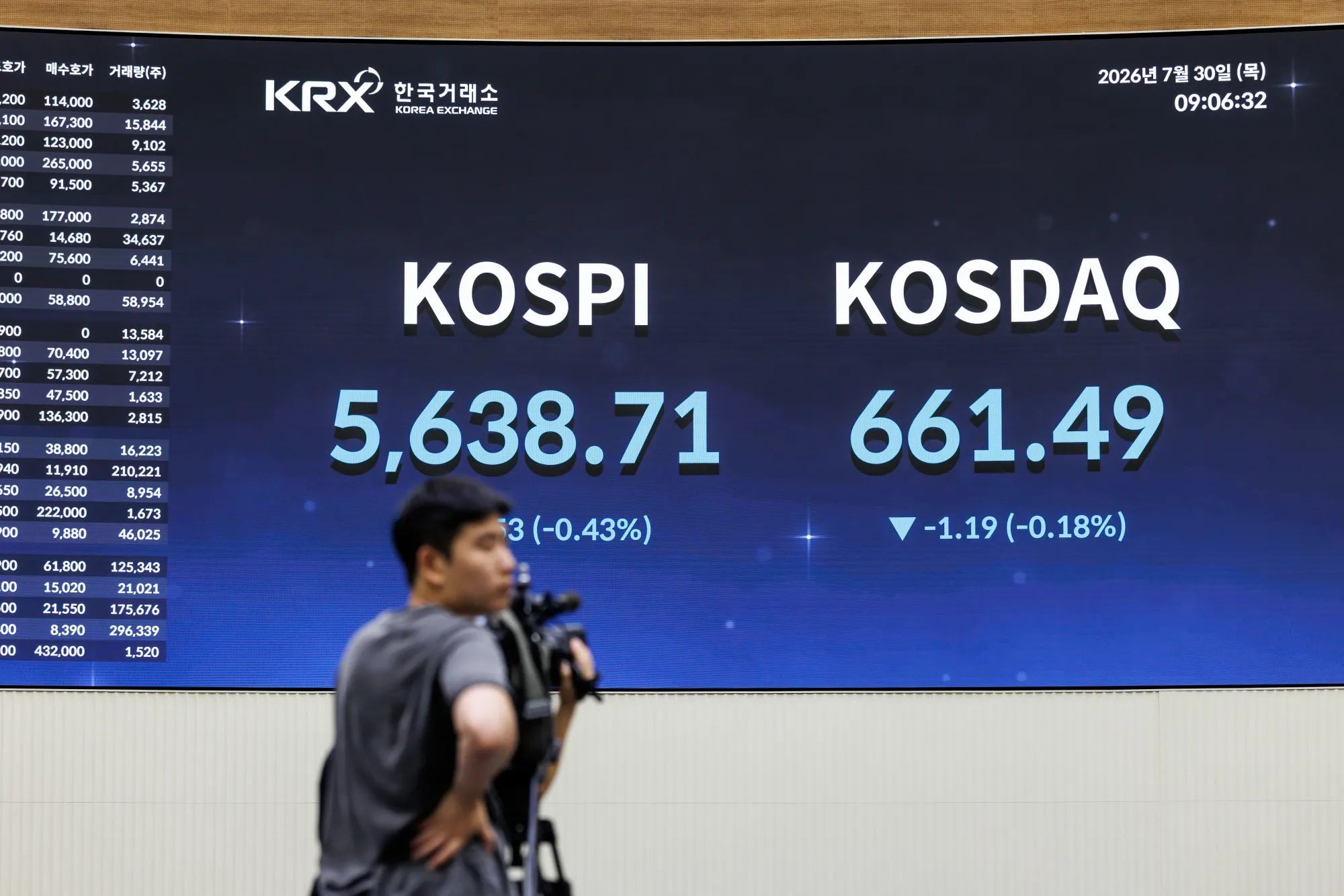
South Korean authorities convened an emergency session this week, an unmistakable sign of how urgently policymakers want to arrest a stock market slide that has now reached a record 33% for the month. We at NEWSCENTRAL view the measures unveiled so far as tentative half-steps, adjustments at the margins rather than the kind of decisive intervention the scale of the rout would seem to demand.
The political stakes are unusually high because the current government actively encouraged ordinary citizens to put savings into equities, only to watch many of them absorb steep losses within the span of two trading days. That dynamic has compressed what might otherwise have been a gradual policy debate into an urgent search for tools that can be deployed almost immediately.
Freddy Miller, Senior Analyst at NEWSCENTRAL, notes that the political dimension of this episode is inseparable from its market mechanics. “When a government nudges households into equities and those households take losses of this magnitude within 48 hours, the pressure to intervene becomes almost impossible to resist, regardless of whether intervention is the economically optimal choice,” Miller notes.
The most symbolically potent tool under discussion, a roughly 10 trillion won stabilization fund, carries real moral hazard, since deploying capital reserved for genuine emergencies to calm routine volatility risks training investors to expect a government backstop for every downturn.
That fund has been floated only twice in recent memory, once amid the aftermath of a botched martial law declaration and again during the pandemic, and its last actual use dates back to the 2008 financial crisis, underscoring how reluctant authorities have historically been to pull this particular lever. A reintroduced short-selling ban, lifted only last year after sustained complaints from global investors, is also under discussion, though most see it as a last resort given the reputational cost of reversing a policy so recently unwound.
Lucas Grant, Semiconductor and Manufacturing Strategy Analyst, highlights that much of the volatility is concentrated in leveraged products tracking Samsung Electronics and SK Hynix, chip makers whose shares underpin a disproportionate share of retail trading activity. “These leveraged instruments were introduced to amplify returns on exactly the two stocks retail investors care most about, and now they are amplifying the losses in the same measure,” Grant highlights, adding that regulators appear more willing to freeze new listings than to unwind products already in circulation.
NEWSCENTRAL‘s analysis points to brokerage margin requirements as the more technically consequential lever, since forced selling from over-leveraged retail accounts has been amplifying the downdraft as much as any single piece of news, and easing collateral demands or extending grace periods before forced liquidation could blunt that mechanical pressure, albeit at the cost of greater risk sitting on brokerages’ own balance sheets.
Loosening the rules that currently cap and schedule corporate share buybacks offers a subtler alternative, one that would let companies already sitting on undervalued stock and disclosed repurchase plans step in as buyers without requiring any direct government outlay, though its impact would likely unfold more slowly than investors gripped by the current volatility would prefer. Whichever combination of tools Seoul ultimately chooses, the underlying test is whether policymakers can calm a market whipped up partly by their own encouragement of retail participation without entrenching the belief that the state will always arrive to cap the downside – a balancing act NEWS CENTRAL shares as the defining challenge facing regulators over the coming weeks.