
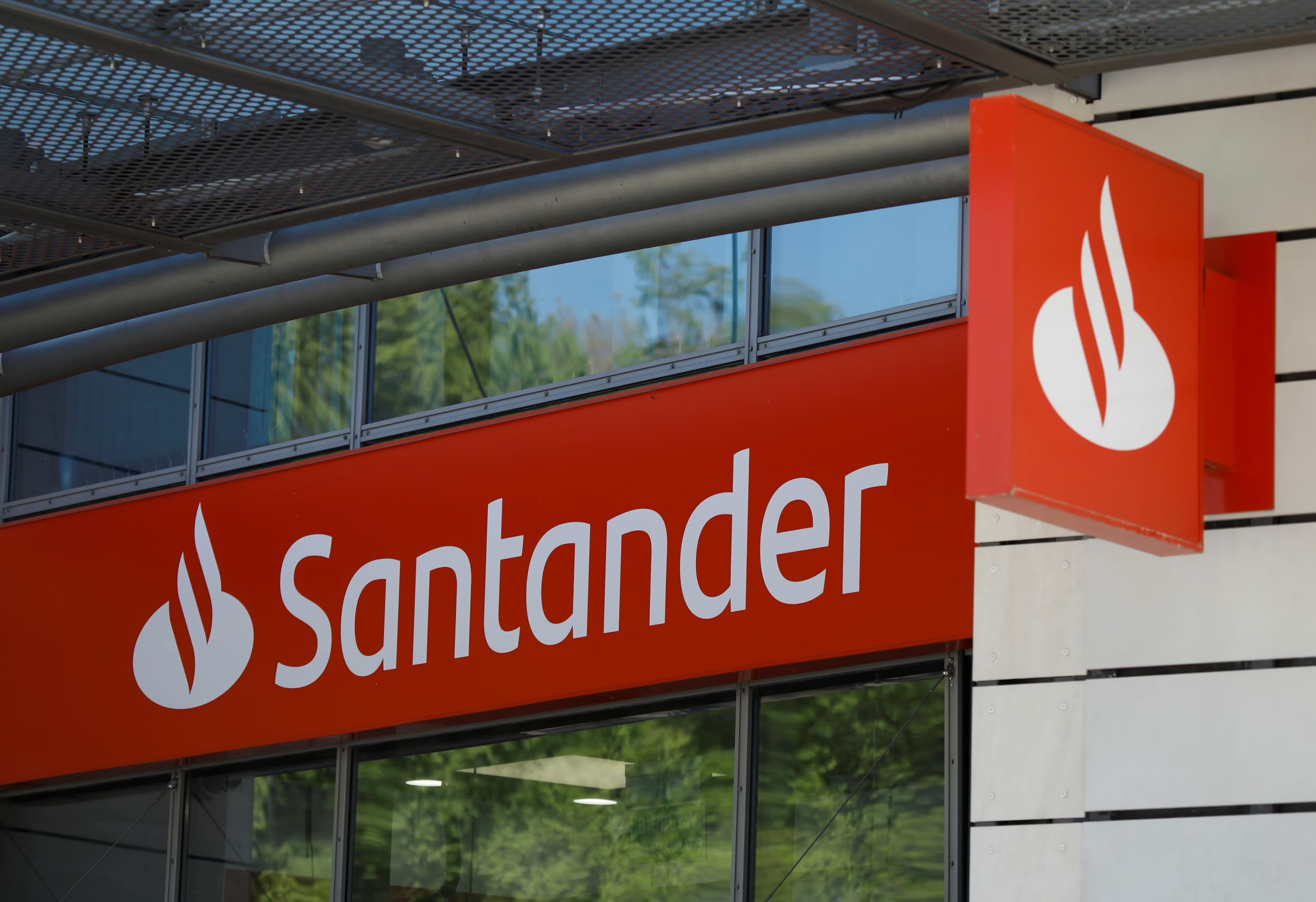
When Santander UK, the British subsidiary of the Spanish banking giant, announced the suspension of its third-quarter 2025 results, it caused a stir. The reason for this move was the need to review proposals from the UK’s financial regulator regarding compensation schemes for consumers harmed by unfair car loan practices. At first glance, this may seem like a typical corporate response, but behind it lies a much more serious issue that could affect the entire financial industry in the UK.
Pressure is mounting on banks and car dealers after the UK’s Financial Conduct Authority (FCA) proposed compensation for affected consumers ranging from £9 billion to £18 billion. This step followed the discovery of cases where car dealers in the UK used opaque commission schemes to inflate interest rates on car loans. This led to borrowers overpaying for vehicles, while banks found themselves caught in financial disputes, complicating the execution of such loan agreements.
As noted by Senior Analyst at NEWSCENTRAL, Freddy Miller, “If compensation is fully implemented, it could lead to significant changes in banking policy, as well as negatively impact the supply of credit in the car loan sector.” The potential consequences for the market, including the automobile industry and consumer credit, require deeper analysis.
Santander UK’s statement emphasizes that, for now, it does not expect a significant impact on its capital reserves despite the need to create additional provisions for compensation. The current estimate for the required reserve is £295 million, and the bank confirms that the situation remains under control. However, as Santander UK’s CEO Mike Rañé noted, “We continue to analyze the FCA’s proposed scheme and expect further clarification on several key issues before making final decisions.”
Despite Santander UK’s confidence, at NEWSCENTRAL, we believe that such regulatory changes could have a significant impact on the bank’s structure, especially in light of substantial payouts that may require not only a review of reserves but also adjustments to loan offerings. Unlike other large British banks, such as Lloyds and Barclays, which have already started paying compensation under the approved scheme, Santander is refraining from making final decisions. This is due to the uncertainty surrounding potential changes to the methodology and scale of payouts, which could arise after the final approval of the compensation scheme.
In the meantime, experts warn that the car loan situation may jeopardize not only banks but also consumers. As highlighted in a report by NEWSCENTRAL, an increase in car loan rates, which could follow the implementation of the compensation scheme, will create additional barriers for borrowers, increasing the cost of loans. This could, in turn, reduce demand for car loans, negatively affecting the automobile industry and its supply chain. It is possible that the consequences will be long-lasting and could impact the UK economy as a whole.
At NEWSCENTRAL, we predict that the compensation scheme, if implemented in its current form, could not only affect banks but also slow growth in the consumer credit sector. It is important to understand that the increase in compensation costs will lead to higher rates and more difficult access to credit, which, given the existing economic challenges in the country, could affect consumer demand.
Meanwhile, experts continue to analyze the consequences and predict that final decisions will be made taking into account multiple factors, including the actual impact on banking liquidity and long-term economic trends. At NEWS CENTRAL, we view the compensation situation as a potential turning point for financial regulation in the UK. A thorough review of all aspects of the scheme will help mitigate risks to the market and preserve the balance of interests among all participants.
Amid these changes, it is important to consider that the UK’s financial industry is on the brink of major transformations. The anticipated instability in the car loan sector will not only affect banks but also consumers. If stricter compensation conditions are adopted, a reduction in loan volumes could lead to slower economic growth in the long run.