
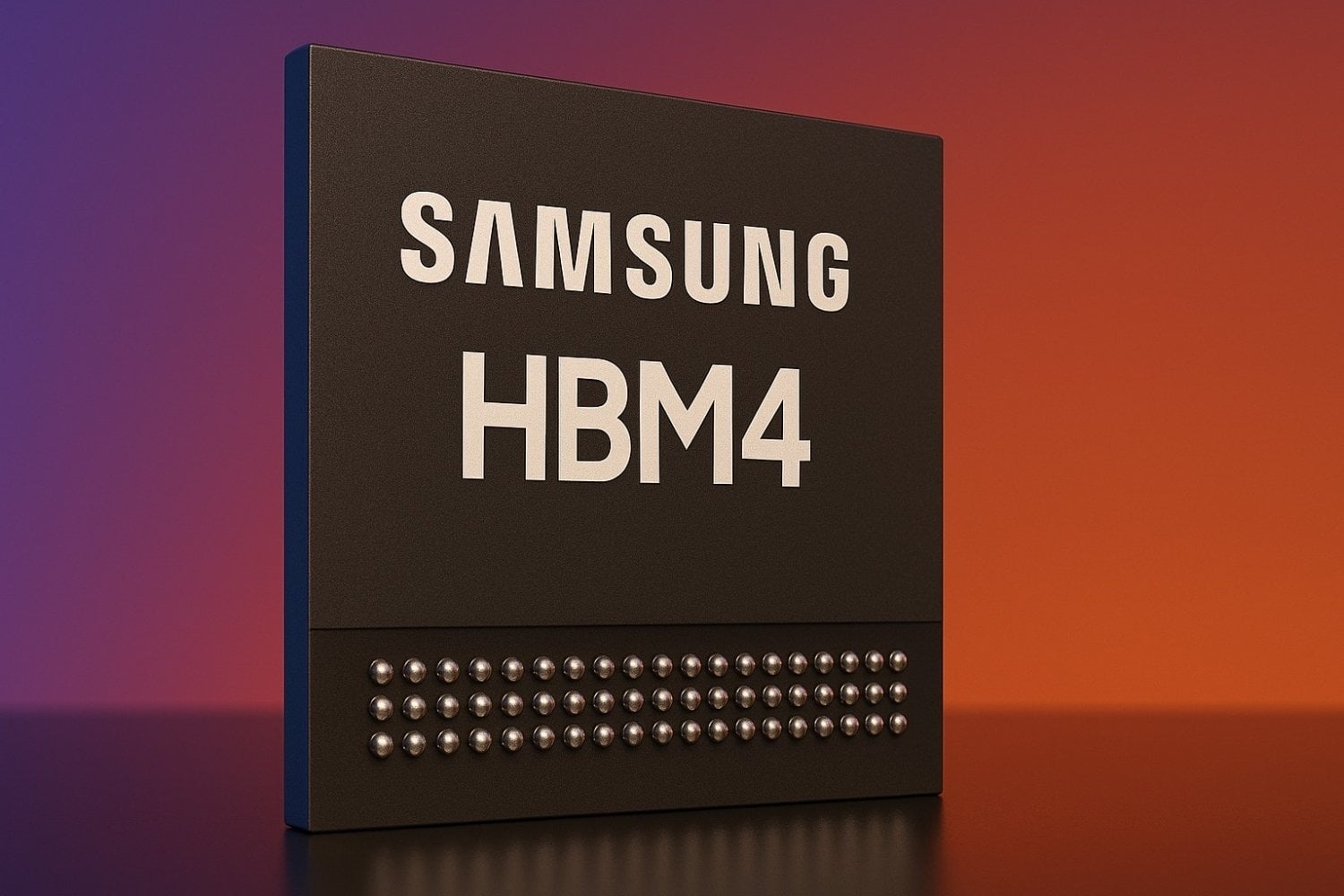
NEWSCENTRAL reports that Samsung Electronics is preparing to take a significant step in expanding its position in the high-speed memory market. Next month, the company will begin the production of next-generation HBM4 chips, which will be supplied to Nvidia. These chips are an integral part of artificial intelligence accelerators used in high-performance computing systems. For Samsung, which has long lagged behind its competitor, SK Hynix, this move is crucial for strengthening its position in the highly competitive industry.
We at NEWSCENTRAL emphasize that the current situation in the memory market, especially chips for artificial intelligence, has a significant impact on the overall competitive dynamics. Investors have responded positively to the news of the HBM4 production launch, reflected in a 2.2% increase in Samsung’s stock price, while SK Hynix shares dropped by 2.9%. This confirms that the market expects Samsung to increase its market share in memory chips.
Samsung’s early successes in this field have already become evident. The company has passed the qualification tests for its HBM4 chips for Nvidia and AMD graphics cards, further strengthening its position in the AI accelerator segment. We at NEWSCENTRAL believe this confirms Samsung’s ability to successfully compete with SK Hynix, the dominant player in the AI memory market, and opens up new long-term prospects for the company.
Nvidia is also actively preparing to use the new memory chips. The company’s CEO, Jensen Huang, recently announced that their Vera Rubin platform, designed to work with HBM4 chips, has already entered full-scale production. This confirms that Nvidia is preparing to significantly expand its product lineup, capable of efficiently utilizing the latest solutions for artificial intelligence. Accelerators with HBM4 chips will operate on high-speed computing systems, enabling substantial performance growth in areas such as cloud computing and neural network technologies.
The growing competition in the memory market is also reflected in SK Hynix’s actions, which will begin producing silicon wafers for HBM chips at its new M15X plant in South Korea next month. Although HBM4 chips will not be part of this production, experts suggest that SK Hynix will not stay on the sidelines and will actively work on expanding its production in response to competition from Samsung and other players.
According to Lucas Grant, a NEWSCENTRAL analyst specializing in semiconductor industry strategies, Samsung’s current efforts to launch HBM4 amid strong competition from SK Hynix underscore the importance of a strategic approach to manufacturing capacity. “For Samsung, it’s not only essential to establish HBM4 production but also to manage supply chains effectively to meet the growing demand for AI solutions. This will determine its competitiveness in the coming years,” Grant notes.
We at NEWSCENTRAL highlight that the rapid growth in demand for artificial intelligence solutions makes the memory market for AI accelerators one of the most promising and fast-growing sectors. Companies like Samsung and SK Hynix will need to actively develop their capacities and technologies to not only meet demand but also continue the battle for leadership in this area. In the coming years, we forecast that the market will continue to grow, and the role of HBM4 memory will only become more significant.
We at NEWS CENTRAL believe that Samsung and SK Hynix will actively compete for memory supplies to Nvidia and other AI leaders. We predict that these companies will further strengthen their production capacities, introduce new technologies, and work towards rapid production scaling to meet the growing demand for AI memory. The dynamics of this market will directly impact the financial results of both companies and the prospects for their stocks in the coming years.