
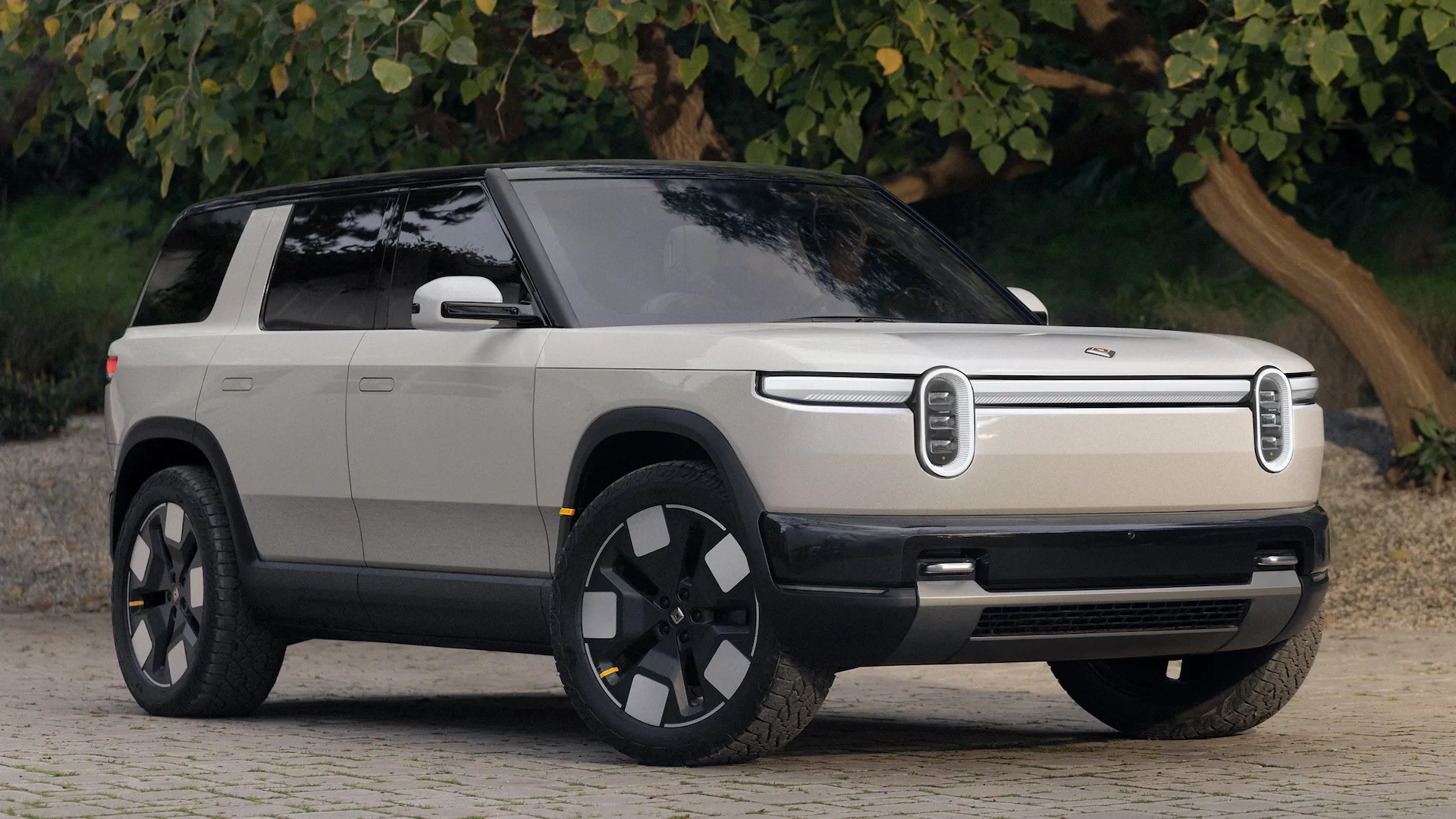
The global electric vehicle (EV) market is entering a phase where traditional growth drivers are gradually giving way to more complex factors, including total cost of ownership, manufacturing efficiency, and companies’ ability to build scalable technology platforms. Against this backdrop, the launch of the Rivian R2 becomes a key element of transformation for the American manufacturer, reflecting a shift from premium positioning toward competition in the mass EV segment.
At NEWSCENTRAL, we note that Rivian’s strategy around the R2 is forming amid increasing pressure from both major automotive groups and new EV players that are actively expanding their lineups toward more affordable models. At the same time, the U.S. market is showing signs of slowdown due to reduced tax incentives and rising borrowing costs, increasing the importance of pricing for end consumers.
The company has confirmed that, alongside the base version of the R2, additional variants are being developed that have not yet been publicly revealed. We believe this indicates an early transition to a platform-based model, where one base vehicle becomes the foundation for an entire family of products. This approach is already well established in the global automotive industry and helps reduce development costs while accelerating production scaling.
Deliveries of the Rivian R2 are expected to begin around mid-year. The base price is set at approximately $58,000. According to analysts, this pricing reflects an attempt to balance the brand’s premium image with the need to expand its target audience. Amid rising competition in the mid-price EV segment, manufacturers are being forced to rethink product line structures and increase pressure on cost efficiency.
NEWSCENTRAL auto analyst Jessica Kline notes that Rivian is effectively undergoing a strategic stress test to determine whether it can scale production without losing its technological edge. In her view, the key risk lies in the company’s attempt to simultaneously preserve a premium brand while entering a more price-sensitive segment, where competition is driven not only by vehicle specifications but also by access to financing for buyers.
Rivian’s manufacturing strategy is also becoming a central factor in its long-term success. The plant in Georgia is designed as a flexible platform capable of producing various R2 versions on a unified architecture. At NEWSCENTRAL, we see this approach as reflecting a broader global trend in the automotive industry, where the key asset is no longer a single model but a universal production and technology base.
As the lineup evolves, a more affordable version is expected to emerge, priced at around $45,000 with a range exceeding 275 miles. This segment is considered potentially mass-market, as it falls within the most in-demand category of family EVs. Similar strategies are already being pursued by competitors aiming to establish themselves in the mid-price segment as the primary driver of future EV market growth.
Additionally, Rivian is expanding its model architecture with future versions such as the R3 and R3X, which will be based on the same platform. At NEWSCENTRAL, we note that this strategy reduces development costs and enables faster responses to changing market demand especially important in an environment of intensifying competition and shortening vehicle life cycles.
The company’s financial expectations are directly tied to the launch of the R2. Rivian forecasts delivery growth of approximately 53 percent, with plans to sell between 22,000 and 23,000 units of the new model under stable production conditions. Concentrating growth on a single platform increases dependence on the success of the launch, which is typical for companies in the scaling phase of capital-intensive industries.
Of particular strategic importance is Rivian’s partnership with Uber, valued at approximately $1.25 billion, which предусматривает the deployment of 10,000 autonomous vehicles based on the R2 starting in 2028. This agreement takes the company beyond the role of a traditional automaker and brings it closer to becoming a technology provider in the autonomous mobility sector. In a global context, this aligns with the broader trend toward robotaxis and autonomous transport services, where vehicles become part of digital infrastructure.
The EV market as a whole remains under pressure from macroeconomic factors, including high interest rates and the revision of government support programs. However, rising fuel costs and the expansion of charging infrastructure continue to support interest in electric transport. At NEWSCENTRAL, we believe that affordable models rather than premium segments, which are gradually saturating will determine the trajectory of demand recovery in the coming years.
Competition is also shifting toward software, autonomous driving systems, and ecosystem solutions. Vehicles are increasingly seen as elements of digital platforms rather than just means of transportation. This puts additional pressure on manufacturers that lack strong software capabilities or strategic partnerships in autonomous mobility.
In conclusion, Rivian’s strategy around the R2 represents a critical stage for the company. If successfully executed, it will enable Rivian to enter the mass EV segment and strengthen its position in the emerging autonomous mobility ecosystem. However, heavy reliance on a single platform and the complexity of scaling production create significant risks amid intensifying global competition.
At NEWS CENTRAL, we forecast that the coming years will be decisive for Rivian. A successful R2 launch could redefine the company’s positioning in the global EV industry and elevate it into the ranks of major mass-market manufacturers. Otherwise, competitive pressure and production constraints may limit growth. The key success factor will be the synchronized development of three areas: affordability, manufacturing efficiency, and integration into autonomous transport services where partnerships like the one with Uber could become a decisive element of long-term business sustainability.