
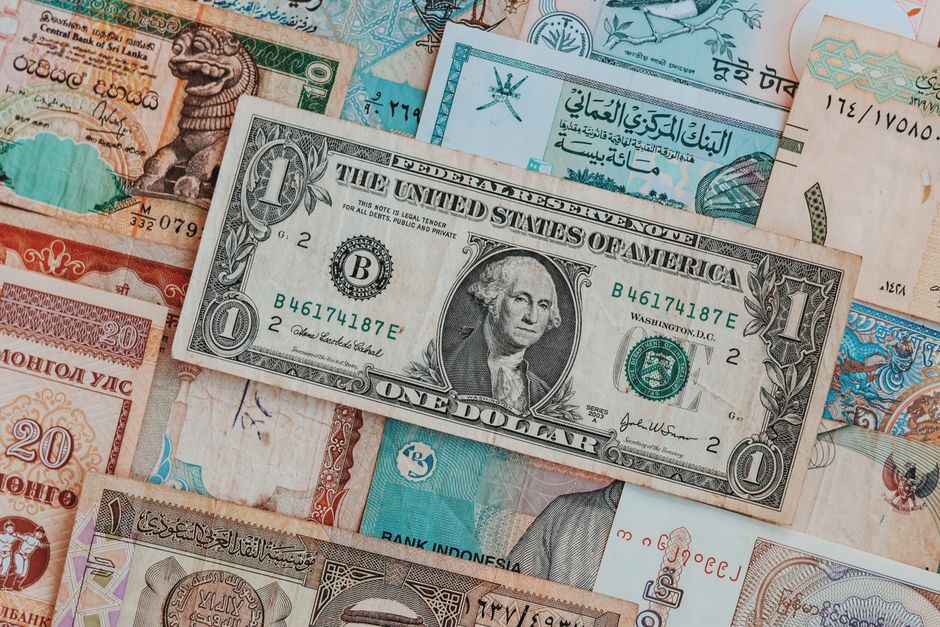
The U.S. dollar’s grip on global finance has been debated for decades, yet it endures with remarkable consistency. One of the least discussed but most structurally significant reasons for that endurance is the continued pricing of oil in dollars – a convention that quietly reinforces American monetary power every time a barrel changes hands anywhere on the planet. As the global economy navigates elevated interest rates, persistent inflation, and shifting trade alliances, the petrodollar system remains a stabilizing pillar beneath the dollar’s reserve currency status.
The relationship between oil and the dollar dates to the early 1970s, when the United States reached agreements with Saudi Arabia and other OPEC members to price crude oil exclusively in dollars. In exchange, Washington offered security guarantees and arms arrangements. The result was a self-reinforcing cycle: countries needed dollars to buy oil, which meant they needed to hold dollar reserves, which in turn created sustained global demand for U.S. currency and Treasury securities. That cycle has not broken, despite repeated predictions that it would.
Global oil trade volumes remain enormous. The world consumes roughly 100 million barrels of oil per day, and the overwhelming majority of those transactions are still denominated in dollars. This creates a structural baseline of dollar demand that operates independently of Federal Reserve monetary policy decisions, U.S. GDP growth rates, or short-term shifts in global trade flows. Even when the Fed raises interest rates aggressively – as it did through 2022 and 2023 – the dollar’s role in energy markets provides a floor beneath its global relevance.
Freddy Miller, senior analyst at NEWSCENTRAL, has pointed out that the petrodollar mechanism functions as a kind of passive monetary policy tool, one that Washington does not need to actively manage. As long as oil is priced in dollars, the demand for the currency is embedded in the infrastructure of global commerce, not dependent on any single policy cycle or administration.
The IMF has consistently identified the dollar as accounting for roughly 58% to 60% of global foreign exchange reserves in recent years, a share that has declined modestly from its peak but remains far ahead of any rival currency. The euro holds approximately 20%, while the Chinese yuan accounts for less than 3%. The gap is not closing at a pace that threatens dollar primacy in any near-term horizon. NEWSCENTRAL analysts see this as a direct reflection of the structural advantages the petrodollar system provides, advantages that no competing currency has yet been able to replicate through alternative energy pricing arrangements.
Challenges to the system do exist and deserve serious analysis. Russia and China have made deliberate efforts to conduct bilateral energy trade in non-dollar currencies, particularly since Western sanctions following Russia’s 2022 invasion of Ukraine accelerated Moscow’s need to bypass dollar-denominated systems. India has purchased Russian crude in rupees. China and Russia have settled some energy transactions in yuan. These are real shifts, but their scale remains limited relative to total global oil trade. The infrastructure of dollar-based settlement – correspondent banking networks, SWIFT connectivity, deep U.S. Treasury markets – has no equivalent in any alternative system.
The Federal Reserve’s aggressive rate-hiking cycle between 2022 and 2023 temporarily strengthened the dollar against most major currencies, drawing capital into dollar-denominated assets and raising borrowing costs across emerging markets. The World Bank flagged the spillover effects on developing economies, where dollar-denominated debt became more expensive to service as the greenback appreciated. This dynamic illustrated both the dollar’s power and the vulnerability it creates for countries that depend on commodity imports priced in a currency they do not control.
Inflation trends in the United States have moderated since their 2022 peak, and the Fed has signaled a more cautious approach to further rate adjustments. Yet even as monetary policy shifts, the structural demand for dollars tied to oil pricing continues to operate beneath the surface of those cycles. We at NEWSCENTRAL believe this distinction is critical for understanding why dollar dominance persists through periods of both tight and loose monetary policy.
The broader geopolitical context adds complexity. BRICS nations have discussed the creation of a shared currency or alternative reserve asset, and de-dollarization rhetoric has intensified in certain political circles. Analysts tracking these discussions note that intent and capability remain far apart. Creating a credible alternative to the dollar requires not just political will but deep, liquid financial markets, transparent legal systems, and a commodity pricing anchor – none of which any BRICS member currently offers at scale.
The global economy is restructuring around competing blocs, and tariffs, supply chain fragmentation, and shifting trade alliances are all real forces reshaping commerce. But the dollar’s position in energy markets provides a degree of insulation from those pressures that is frequently underestimated. For the foreseeable future, any country that needs oil – which is to say, every significant economy on earth – needs dollars. That single fact continues to do more for American monetary primacy than any central bank intervention or diplomatic initiative could achieve on its own.