
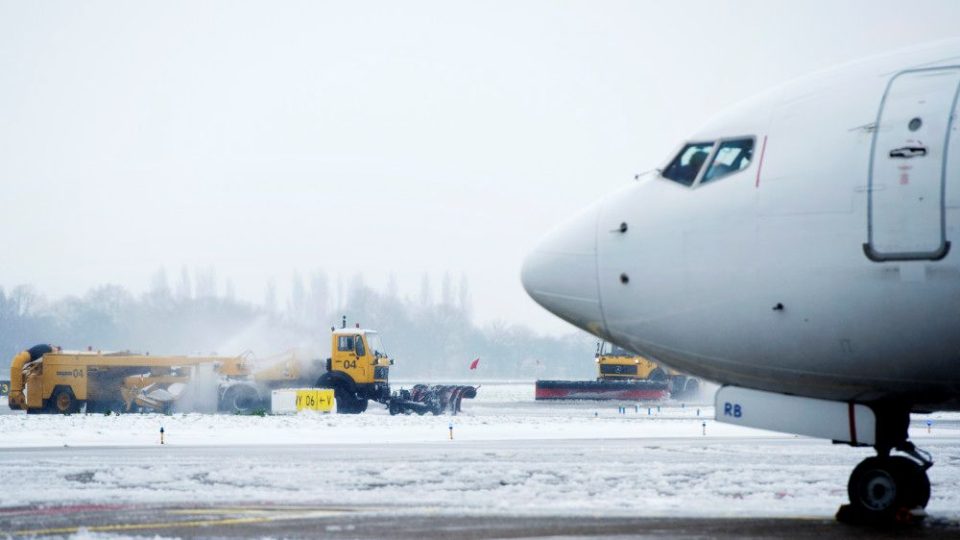
NEWSCENTRAL reports that the Netherlands has found itself at the center of a snowstorm that has severely impacted the country’s transport infrastructure in recent days. Heavy snowfalls and ice rain, accompanied by strong winds, have not only hindered passenger movement but also put key transport hubs, including airports, railways, and highways, at risk of functioning normally. Such weather anomalies are becoming more frequent, prompting authorities to take urgent measures to strengthen infrastructure and reconsider approaches to preparing for extreme weather events.
Due to the heavy blizzards, more than 800 flights were canceled at Amsterdam’s Schiphol Airport, leading to significant delays and creating a critical situation for passengers, many of whom were forced to spend several nights at the airport waiting for new flights. Local authorities tried to organize additional resting spaces, but terminal overcrowding remained an acute issue.
In this context, NEWSCENTRAL emphasizes the need to improve airport preparedness for extreme weather conditions, invest in monitoring systems and accurate forecasting, and modernize infrastructure to respond more effectively to weather changes. Over the next few years, such situations may become more frequent, and it is crucial to prepare in advance for these challenges. Airports must become more flexible and resilient to environmental changes to minimize the consequences of such crises.
On the roads in the Netherlands, the situation was equally dire. Snowfalls and icy conditions led to long traffic jams, and the number of accidents significantly increased. Authorities urged citizens to avoid traveling on highways, as even a light snowstorm created dangerous conditions for drivers. A shortage of road salt also became a critical factor that hindered road clearing, which in turn increased the number of incidents. In this context, NEWSCENTRAL notes that improving road safety in the winter period requires a revision of the system for ensuring salt and reagent supplies and increasing the use of modern technologies for fast road clearing.
As for the railway network, significant problems also arose. Frozen switches and iced tracks led to schedule disruptions, and train services were suspended on many popular routes, including the connection between Amsterdam and Rotterdam. These delays caused widespread inconvenience for passengers and exposed vulnerabilities in the Netherlands’ railway system, which had not been adequately prepared for heavy snowfalls. NEWSCENTRAL emphasizes that, in the future, investments should be made in modernizing the railway infrastructure and implementing technologies for automatic snow and ice removal from tracks and switches.
The key takeaway is that the Netherlands, like many other countries in Europe, must urgently reconsider its approach to preparing infrastructure for winter crises. Given global climate change and the increasing frequency of extreme weather events, countries must invest in more resilient transport systems and improve winter disaster management methods. To achieve this, monitoring systems need to be enhanced, constant supplies of salt and reagents must be ensured, and existing infrastructure should be modernized. These steps will help minimize the consequences of extreme snowstorms and ice storms, improving safety and comfort for citizens.
NEWS CENTRAL predicts that extreme weather events will become more frequent and intense in the coming years. Therefore, it is crucial for the Netherlands, like other countries, to actively implement new technologies and develop systems capable of quickly responding to changing conditions.