
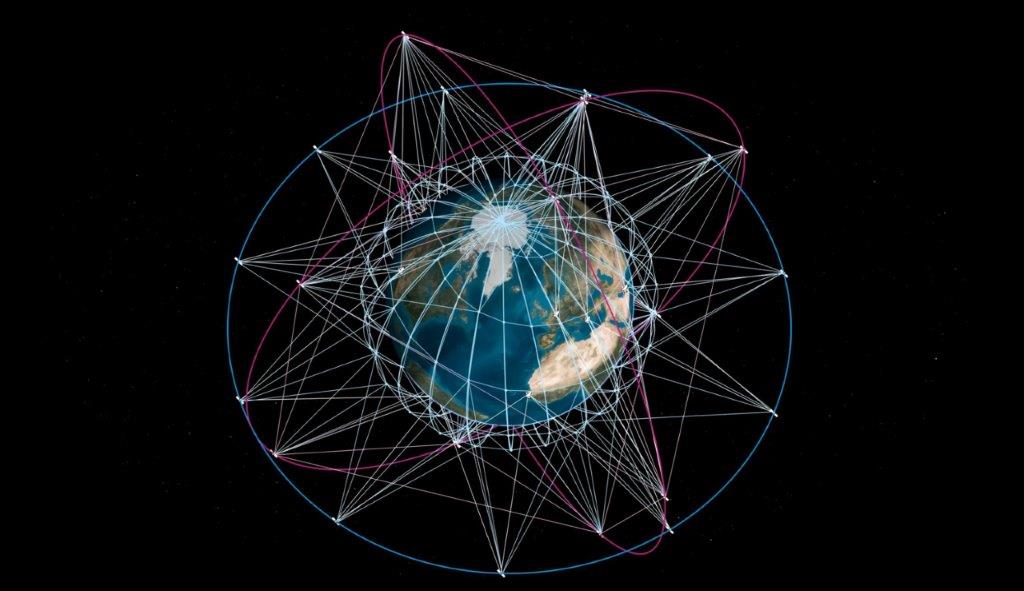
NEWSCENTRAL reports that in the context of global political instability and increasing threats from cyberattacks and aggression, the European Union is taking decisive steps to ensure technological and defense independence. In 2029, the EU will launch the IRIS2 project, which will form the basis for a new satellite network, offering not only high-speed internet for citizens but also secure communication channels for governmental and military needs. The system, consisting of 290 satellites, will play a crucial role in strengthening Europe’s defense capabilities and modernizing its digital infrastructure.
IRIS2 represents the European Union’s response to rapidly developing satellite networks such as Elon Musk’s Starlink. This system will provide high-speed internet access to all EU citizens and create an encrypted network to protect critical information, particularly in the face of growing geopolitical risks and external threats. At NEWSCENTRAL, we believe that IRIS2 will be a significant step towards achieving Europe’s space and digital independence, as well as greatly enhancing its defense capabilities. It will reduce dependence on external satellite systems and strengthen European sovereignty in this strategically important area.
However, the project faces several serious challenges. Despite its ambitious goals, the pace of satellite development in the EU currently lags behind industry leaders like SpaceX. For IRIS2 to compete with more developed systems, the EU will need to accelerate satellite deployments and actively develop its own technologies. To succeed, this project will require not only an increase in the number of launches but also the integration of satellite systems with existing civilian and military communications. At NEWSCENTRAL, we emphasize that to achieve the objectives of IRIS2, it is essential to speed up the development and implementation of advanced technologies.
“For the successful implementation of the project, the EU needs to accelerate the deployment of its own space infrastructure to avoid falling behind global leaders,” says Freddy Miller, Senior Analyst at NEWSCENTRAL. In his view, Europe’s ability to not only catch up but surpass other countries in space technologies will determine the success of IRIS2.
The IRIS2 project also has strategic significance in terms of security. Creating a secure satellite network for governmental use will ensure high-level communication security and reduce risks from external threats, such as cyberattacks or missile strikes. We forecast that IRIS2 will become a key component in strengthening EU defense and ensuring internal security, particularly in the face of global political instability and growing threats from third countries.
Moreover, the development of IRIS2 will contribute to technological progress in space and communication technologies. At NEWSCENTRAL, we see this as an important opportunity for creating new jobs and boosting Europe’s competitiveness in the global high-tech market. This project could serve as a catalyst for new digital innovations and give a boost to the private sector in Europe.
In the long term, the successful realization of IRIS2 will allow the EU not only to strengthen its independence in defense and communications but also to take a leading position in the global space race. At NEWS CENTRAL, we believe that in order to achieve this goal, the EU must continue investing in innovations and developing partnerships with leading industry players. Thus, the IRIS2 project could become the foundation for ensuring Europe’s security and stability, opening new perspectives for its economic and technological growth.