
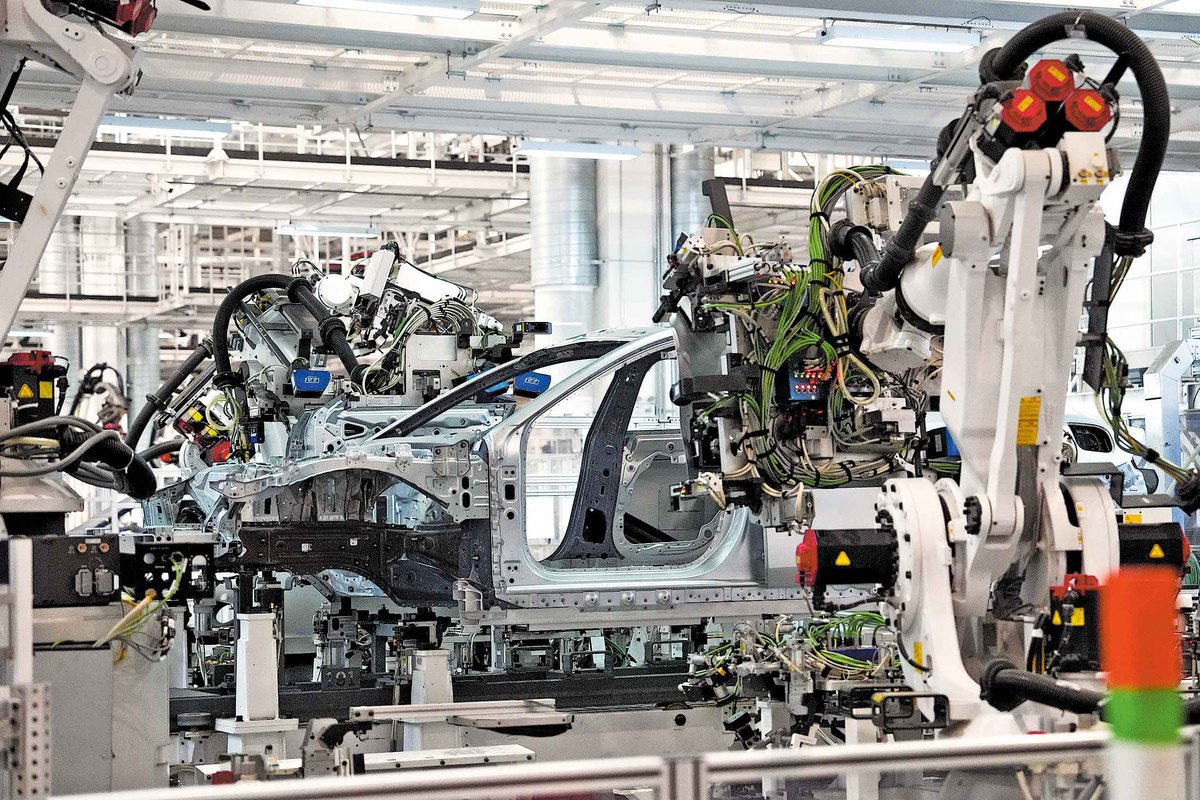
NEWSCENTRAL notes that China, after its rapid rise in the electric vehicle (EV) market, is now preparing for the next technological breakthrough: the integration of artificial intelligence (AI) into cars. The country, which has become a leader in the production of environmentally friendly vehicles over the last two decades, is now focusing on implementing cutting-edge technologies that will not only make cars autonomous but also improve driver interaction. This transformation is accelerating innovation and positioning China at a new level on the global high-tech stage.
As part of the “AI Plus” program launched by the Chinese authorities to integrate artificial intelligence into various sectors of the economy, including the automotive industry, China aims to turn cars into self-learning devices that can adapt to driver behavior and road conditions. We at NEWSCENTRAL emphasize that the introduction of AI in vehicles will open up entirely new opportunities for Chinese manufacturers as well as the global automotive industry.
The AI systems being developed by Chinese companies will not only enhance the autonomy of vehicles but also make driver interaction more natural and safer. For instance, companies like Xpeng and NIO are actively developing technologies that enable cars to park with voice commands and use cameras for navigation without the need for maps or coordinates. These innovations greatly improve safety and driver convenience, which is a key factor for the widespread adoption of autonomous vehicles.
At NEWSCENTRAL, we believe that the integration of AI into cars is not just a step toward the future, but a response to real problems faced by drivers. Improvements in navigation systems, climate control, and even the creation of personalized conditions for the driver—all these can be achieved through AI integration, which will adapt to each user’s preferences. As Freddy Miller, a Senior Analyst at NEWSCENTRAL, notes, “These technologies will not only significantly improve driver comfort but also enhance safety by reducing the likelihood of errors on the road and ensuring more accurate navigation.”
A crucial part of China’s strategy is the creation of its own ecosystem for chip and operating system production. Chinese companies such as Huawei and BYD have begun developing their own chips and AI systems for vehicles, aiming to reduce dependence on foreign supplies like Nvidia and Qualcomm chips. This strategy, in our view, has far-reaching implications for the global automotive industry. Reducing reliance on external suppliers of high-tech components will not only benefit China’s internal economy but also increase its competitiveness on the international stage.
Additionally, Chinese automakers are betting on the creation of more integrated and user-friendly ecosystems. Xiaomi, which recently began producing cars, has developed the HyperOS operating system that allows drivers to plan trips, order food, and even manage other aspects of their daily life directly from the car. This ecosystem essentially turns the car into a full-fledged assistant, adding significant value for users and increasing brand loyalty.
At NEWSCENTRAL, we emphasize that creating such integrated solutions is an important step in the evolution of China’s automotive industry. This allows cars not only to provide mobility but also to become an essential part of daily life, influencing user behavior and offering additional conveniences.
However, to achieve these goals, China must address several key challenges. Firstly, developing new technologies requires huge investments and long-term research. Equally important is the issue of implementing new chips and AI systems on a mass market scale. While Chinese companies have made significant progress in these areas, there is still a need to continue working on improving quality and boosting performance.
At NEWSCENTRAL, we predict that over the next few years, China will continue to strengthen its position in the high-tech and automotive industries. The integration of AI into vehicles will not only reinforce China’s leadership in EV production but also help the country become a global leader in autonomous and smart cars. Looking ahead, we expect that Chinese automakers will actively compete with Western brands not only in terms of cost and vehicle sales but also in terms of technological innovations, significantly enhancing the quality of cars themselves.
In conclusion, China continues to make significant strides towards technological independence and leadership in automotive technologies. Each year, Chinese companies are making more successful attempts at integrating AI into cars, opening new opportunities for the global automotive industry. At NEWS CENTRAL, we are confident that in the future, China will set trends not only in the electric vehicle sector but also in autonomous driving technologies and integrated automotive ecosystems.
The industrial revolution associated with artificial intelligence in cars is just beginning, and China is already actively shaping the new face of the automotive industry. This gives hope that the future of vehicles will be significantly smarter, safer, and more personalized.