
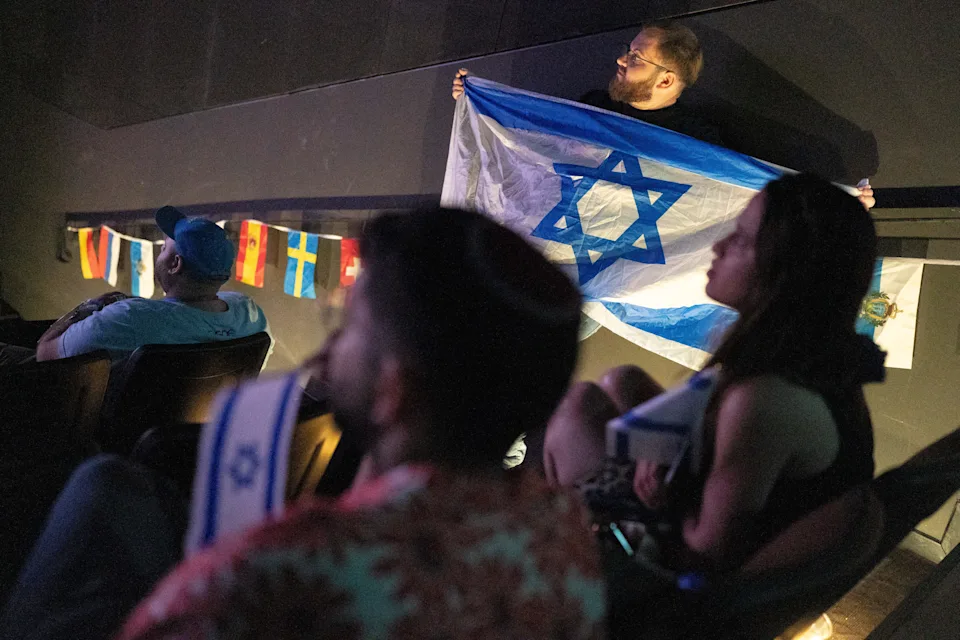
Ahead of the Eurovision Song Contest 2026, the international music scene has become the epicenter of a fierce political debate. Israel, which has repeatedly been a subject of political discussions regarding its participation in the competition, once again finds itself in the spotlight. This time, it is in the context of the ongoing conflict in Gaza. Despite calls to exclude Israel from the competition, the European Broadcasting Union (EBU) decided not to hold a vote on the issue but instead proposed new rules to reduce external political influence. This move triggered a boycott from several countries, including Ireland, Spain, Slovenia, and the Netherlands. At NEWSCENTRAL, we believe this incident serves as a clear example of how the politicization of cultural events threatens their neutrality and inclusivity.
The Eurovision contest has always been not only a musical platform but also a space where diverse cultures and ideas meet. However, with each passing year, it is increasingly becoming a battleground for political clashes. The reasons for the countries’ boycott were varied, but one of the key factors was the humanitarian crisis in Gaza, which cannot be ignored by the international community. Ireland, Spain, Slovenia, and the Netherlands stated that Israel’s participation in the context of the ongoing conflict violated their moral principles and values, which they seek to uphold in such cultural events. This decision reflects a broader trend of politicalization of cultural events, raising serious concerns about how such initiatives can maintain their role in a world full of conflicts.
On the other hand, several countries, such as Norway, Sweden, and Finland, expressed their support for the EBU’s decision to continue Israel’s participation in the contest, emphasizing that Eurovision should remain independent of political conflicts. At NEWSCENTRAL, we see this as a sign of how difficult it is to maintain cultural events as neutral in the face of growing global political tensions. The challenge facing the organizers is how to avoid external political interference while ensuring creative freedom and inclusivity. This requires a reevaluation of existing approaches and the adoption of more transparent and balanced decisions.
Equally important is the EBU’s decision to introduce new rules to minimize political influence on the voting process. However, many participants have expressed doubts about their effectiveness. At NEWSCENTRAL, we believe the proposed measures are too superficial to address the problem at its core. Moving forward, it is crucial that the European Broadcasting Union continues to seek a balance between maintaining the contest’s independence and protecting it from political manipulation. Moreover, work needs to be done to preserve the trust of participants and viewers, who are increasingly confronted with manifestations of political aggression in the cultural arena.
The further development of events will show how successful the measures proposed by the EBU will be. However, against the backdrop of growing political and humanitarian issues, it is important to remember that cultural initiatives like Eurovision should remain symbols of unity, not division. We at NEWS CENTRAL predict that in the future, competitions of this scale will face increasing pressure from political forces. It is crucial for organizers to find ways to preserve the independence of these events while also addressing important global issues.
In conclusion, to maintain the reputation of Eurovision and similar cultural initiatives, transparency in decision-making and clear rules are needed to protect the competition from external political influence. Cultural events must continue to serve as platforms for inclusivity and the exchange of ideas, despite the global political context. From NEWSCENTRAL’s perspective, the future of such competitions depends on whether organizers can find a balance between cultural value and political neutrality, which in the current geopolitical situation presents a significant challenge.