
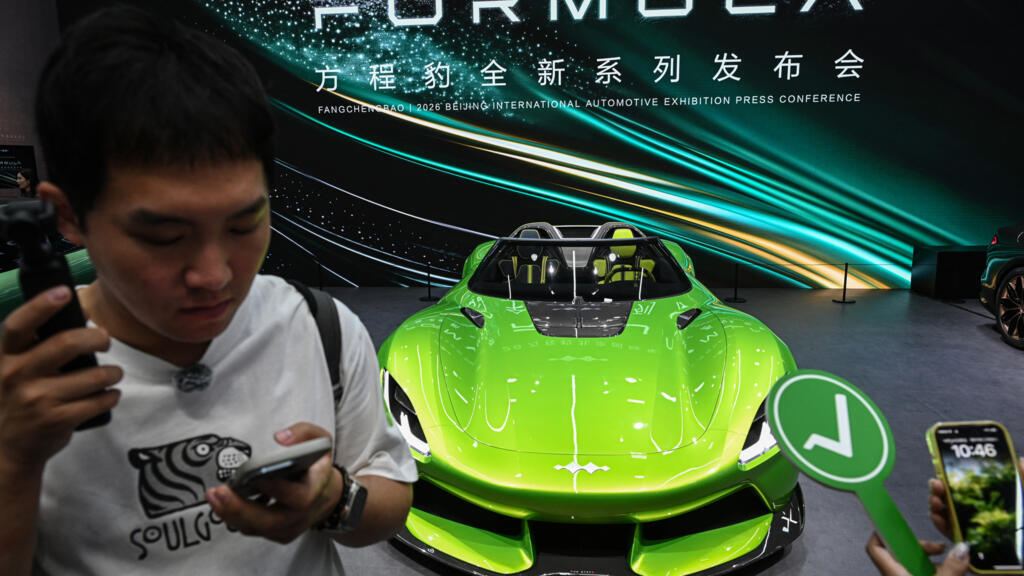
NEWSCENTRAL notes that the global automotive industry is undergoing a structural transformation phase in which traditional growth models are losing effectiveness, while the key factor has become the ability of manufacturers to adapt products to regional markets, taking into account cultural, technological, and regulatory differences. Chinese automakers are strengthening their expansion into Europe and other regions, moving from simple exports to a strategy of deep localization and rethinking their product lineup. We observe that this process is already affecting the redistribution of the global automotive market.
A historical benchmark for the industry remains Toyota’s strategy with the Yaris model, which was developed specifically for European consumers and became one of the factors behind the company’s consolidation in the region. Today, Chinese manufacturers are trying to replicate a similar effect, but in conditions of significantly tougher competition, accelerated electrification, and a saturated market. As Freddy Miller, Senior Analyst at NEWSCENTRAL, notes, the key difference in the current stage is that global success no longer depends on a single product, but is formed through a system of regionally adapted solutions and distributed development.
The initial model of the Chinese auto industry was based on exporting vehicles designed for the domestic market with minimal modifications. However, China’s domestic market has entered a phase of prolonged price competition and excess production capacity. This has led to declining margins and stimulated the search for growth outside the country. We see this as a structural factor that has accelerated the global expansion of Chinese brands.
Today, leading companies including BYD, Chery, Changan, SAIC, and FAW are transitioning to creating vehicles originally tailored for specific markets. In Europe, these are compact models and hatchbacks; in Australia and Latin America, pickups and SUVs. This approach reflects a shift from an export model to a full global product architecture.
BYD, one of the largest players in the industry, is actively strengthening its presence in Europe by developing a line of mass-market electric vehicles. A similar strategy is observed at Chery, which is forming separate product lines for foreign markets. In addition, industry trends show that Chinese brands are already among the fastest-growing automakers in Europe in terms of EV sales growth.
An important change is the relocation of part of engineering and design centers closer to target markets. Companies are creating local teams in Europe, allowing consumer preferences to be taken into account at early development stages. This approach reduces the risk of product-market mismatch and accelerates model launch cycles.
The European market is becoming a key battleground. Chinese brands are gradually increasing their market share, driven by a combination of competitive pricing, EV technological capabilities, and an expanding model range. However, price advantage is gradually giving way to technological and manufacturing advantages, especially in batteries and EV platforms.
A notable development is the growth of the premium segment through the Hongqi brand, which is launching models designed for the European urban environment. This demonstrates an attempt to compete not only in the mass market but also in the segment traditionally dominated by European manufacturers.
A key growth factor is China’s technological advantage in battery supply chains and EV components. According to industry estimates, China controls a significant share of global battery and materials production, ensuring lower costs and faster scaling. We at NEWSCENTRAL believe this factor creates a long-term competitive advantage for Chinese manufacturers amid global electrification.
At the same time, regulatory pressure in Europe is increasing. Requirements for safety, environmental standards, and localization are becoming stricter. This is pushing Chinese companies to consider building factories within the EU as a necessary condition for long-term presence.
European and Japanese automakers are responding by accelerating new platform development, reducing costs, and strengthening branding. Competition is shifting from price wars to competition for consumer trust, product quality, and service ecosystems. We at NEWSCENTRAL note that this shift makes the market more capital-intensive and technologically complex.
Chery, through its Jetour brand, is building separate EV and pickup lineups for Europe, Australia, and Latin America. This diversification reduces dependence on a single market and allows for more flexible global risk management.
BYD plans to increase the share of overseas sales to half of total volume by 2030. Achieving this goal will require not only production expansion but also the development of a strong brand in Europe, where consumer loyalty forms more slowly and requires long-term investment.
The logic of new model launches is also changing. Increasingly, vehicles are first tested in foreign markets and then introduced in China. This reflects a shift in global demand structure, where external markets are becoming strategically more important for growth.
In the long term, the industry is moving toward consolidation. Out of more than a hundred Chinese automakers, only a limited number will be able to establish themselves globally. The rest will be acquired or exit the market as development costs and international compliance requirements increase.
We at NEWSCENTRAL believe that the next stage of industry development will be defined by the ability of companies to simultaneously scale production, localize products, and build global brands. The winners will be those players who can integrate into regional economies rather than rely solely on exporting finished goods.
As a result, a new structure of the global automotive market is emerging, where leadership is determined not by production volume, but by the depth of local adaptation and technological resilience. NEWS CENTRAL forecasts intensified competition in Europe, accelerated localization of Chinese brands’ production, and further redistribution of market shares in favor of companies capable of combining scale, technology, and regional flexibility.