
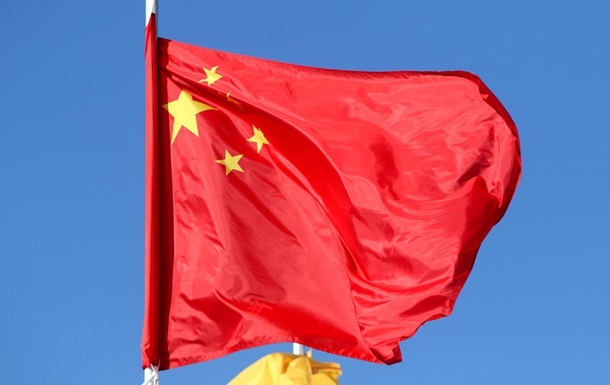
When China added the Canadian company TechInsights to its list of “unreliable entities,” we at NEWSCENTRAL noted that this move reflects the growing control over technological information within the semiconductor industry. Today, data on the origin and structure of microchips are no longer just engineering details -they have become a strategic resource that shapes the balance of power in the global technology market.
TechInsights has long been known as a company that literally “decodes” microchips down to the atomic level. In one of its recent reports, the firm’s specialists discovered that Huawei Ascend chips, designed for artificial intelligence systems, incorporate components from TSMC, Samsung Electronics, and SK Hynix. According to Ethan Walker, hardware technology and consumer electronics analyst at NEWSCENTRAL, such findings serve as an X-ray of the industry -vividly illustrating how globalized and interdependent modern technology supply chains have become.
Rather than a conflict of interest, we see this as a natural stage in the industry’s maturation. As technologies grow more complex, companies are beginning to control not only supply chains but also information flows -determining what production data can be disclosed. Engineering data suggest that Huawei is gradually building a balanced model: developing its own architectural solutions and increasing process localization, while still maintaining cooperation with foreign partners where it is technically justified. In our view, this approach enables the company to remain resilient and innovative, even under challenging conditions.
The broader semiconductor ecosystem infrastructure also deserves attention. Chinese manufacturers are actively investing in areas that previously received little focus -packaging, testing, and new materials. We note that these “invisible” stages are becoming crucial for market resilience: whoever masters the production details ultimately controls the long-term strategic direction of the entire industry.
At the same time, the trend toward secrecy is not limited to China. Increasingly, technology companies around the world are restricting the amount of publicly available data about their production processes. Our expert Nathan Clark, corporate IT and systems architecture analyst at NEWSCENTRAL, observes that independent research centers like TechInsights play a dual role: they enhance transparency while also becoming a sensitive element in competitive dynamics.
From NEWSSCENTRAL perspective, the market will soon reach a new equilibrium between openness and security. Total secrecy leads to an information vacuum and slows innovation, while excessive transparency can expose competitive advantages and weaken industry players.
We at NEWS CENTRAL forecast that the industry will gradually adopt a model of “measured transparency.” Companies will share only as much information as is necessary to maintain the trust of partners and investors while protecting their engineering know-how. And we are convinced that the decisive resource of the future will not be factories or raw materials, but knowledge – the ability to extract insights and build sustainable technological ecosystems around them. In the age of “smart” technologies, success will belong not to those who produce the most, but to those who understand the deepest.