
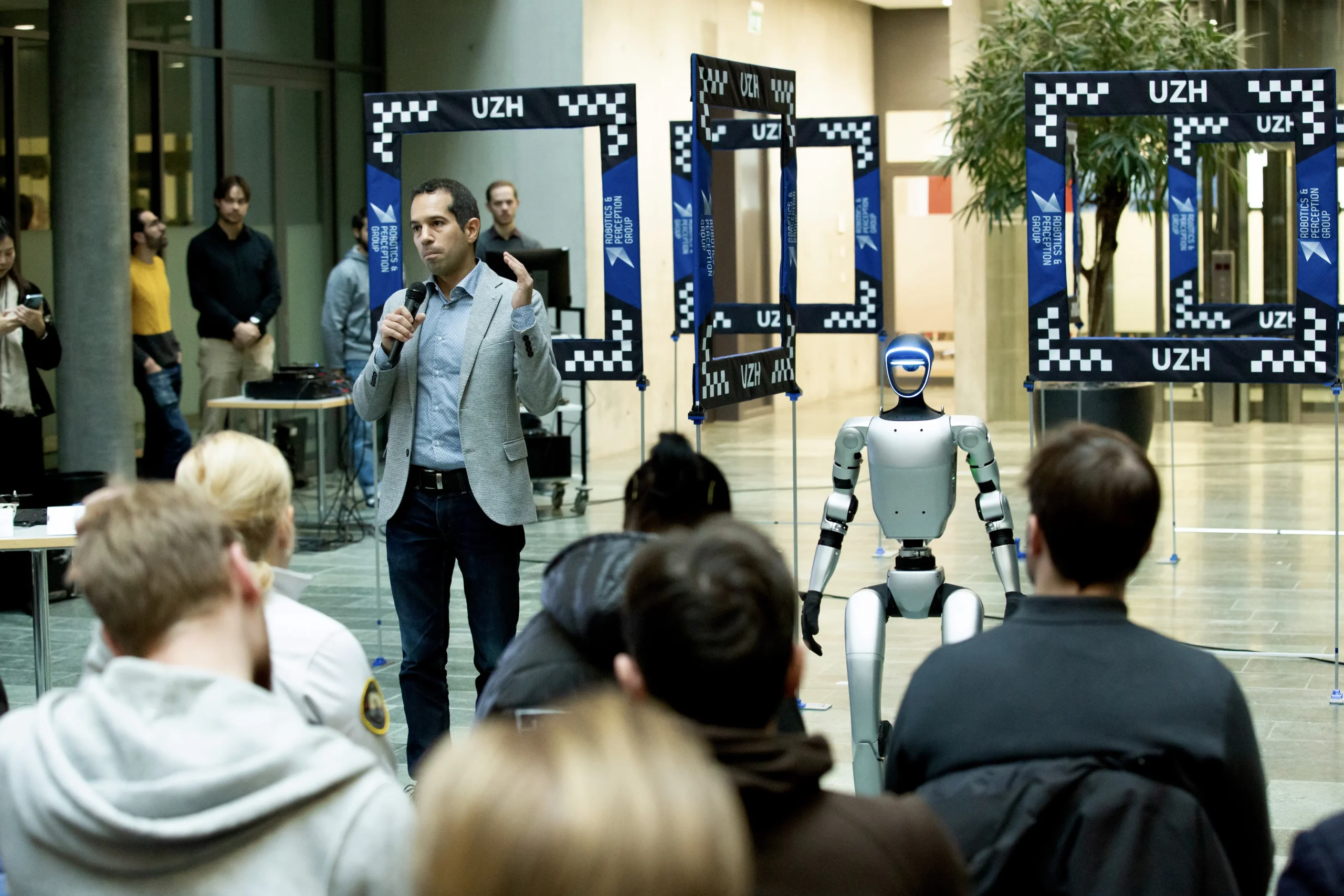
Flexion Robotics, a startup based in Zurich, has announced the successful raising of $50 million in a Series A funding round to develop its platform that leverages generative artificial intelligence (AI) to create humanoid robots with high autonomy. These robots can adapt to changing conditions and perform tasks that require flexibility, placing the company at the forefront of robotics and artificial intelligence.
Investments in AI-powered robotics continue to gain traction as the market demands smarter and more adaptable solutions. Unlike traditional systems that operate on pre-programmed algorithms, Flexion offers an approach where robots can learn and make decisions based on real-time environmental analysis. At NEWSCENTRAL, we note that this shift from static models to self-learning systems is highly significant and will open up new opportunities for autonomous technology in various sectors such as logistics, manufacturing, healthcare, and services.
Flexion Robotics employs a three-tiered technology architecture: the command, moving, and control levels. At the command level, the robot uses language models to process tasks presented in natural language, allowing for more flexible solutions to non-standard tasks. This approach is crucial for AI robots as it significantly improves human-machine interaction. We at NEWSCENTRAL believe that such technologies will enhance the efficiency of robots in real-world scenarios and broaden their scope of applications.
At the moving level, Flexion uses the “vision-language-action” (VLA) model trained on synthetic data, enabling the robot to quickly adapt to changing conditions. This approach accelerates robot training and testing in various scenarios, reducing development time and speeding up market deployment. We at NEWSCENTRAL emphasize that this method gives Flexion a significant competitive edge, enabling faster creation of robots for a wide range of tasks.
The control level allows robots to execute actions with minimal delay, which is crucial for their efficient operation in real-world environments. We at NEWSCENTRAL see that the ability of robots to quickly and accurately respond to commands will be a key factor when deploying these technologies in areas such as autonomous transportation systems, customer service, and manufacturing lines.
The use of synthetic data also helps Flexion speed up the training process for robots, allowing them to be tested in a greater number of scenarios. This not only reduces training time but also lowers the costs of gathering and processing real-world data, making the development process more efficient and cost-effective.
However, despite significant progress, Flexion Robotics faces challenges related to safety and ethical issues surrounding the use of artificial intelligence in real-life applications. As these technologies become more widespread, the need for standards and regulations that ensure the safe use of autonomous robots will grow. At NEWSCENTRAL, we predict that technology regulation will become an increasingly important issue, requiring companies like Flexion to adhere to ethical norms and safety standards in the development and deployment of their technologies.
According to NEWS CENTRAL analysts, for further growth, the company must not only continue improving its technology but also expand its partnerships with manufacturers and solution providers for autonomous systems. Given the growing interest in robotics and AI, such partnerships will increase, helping Flexion scale its solutions in global markets, particularly in the U.S., where the demand for autonomous robots and AI is rapidly increasing.
Thus, Flexion Robotics will continue to develop its innovative solutions, enhancing the adaptability and autonomy of its humanoid robots. At NEWSCENTRAL, we forecast that the company will strengthen its influence on the autonomous technology market, but to do so, it will need to optimize its solutions to meet evolving market demands while ensuring compliance with safety and ethical standards.