
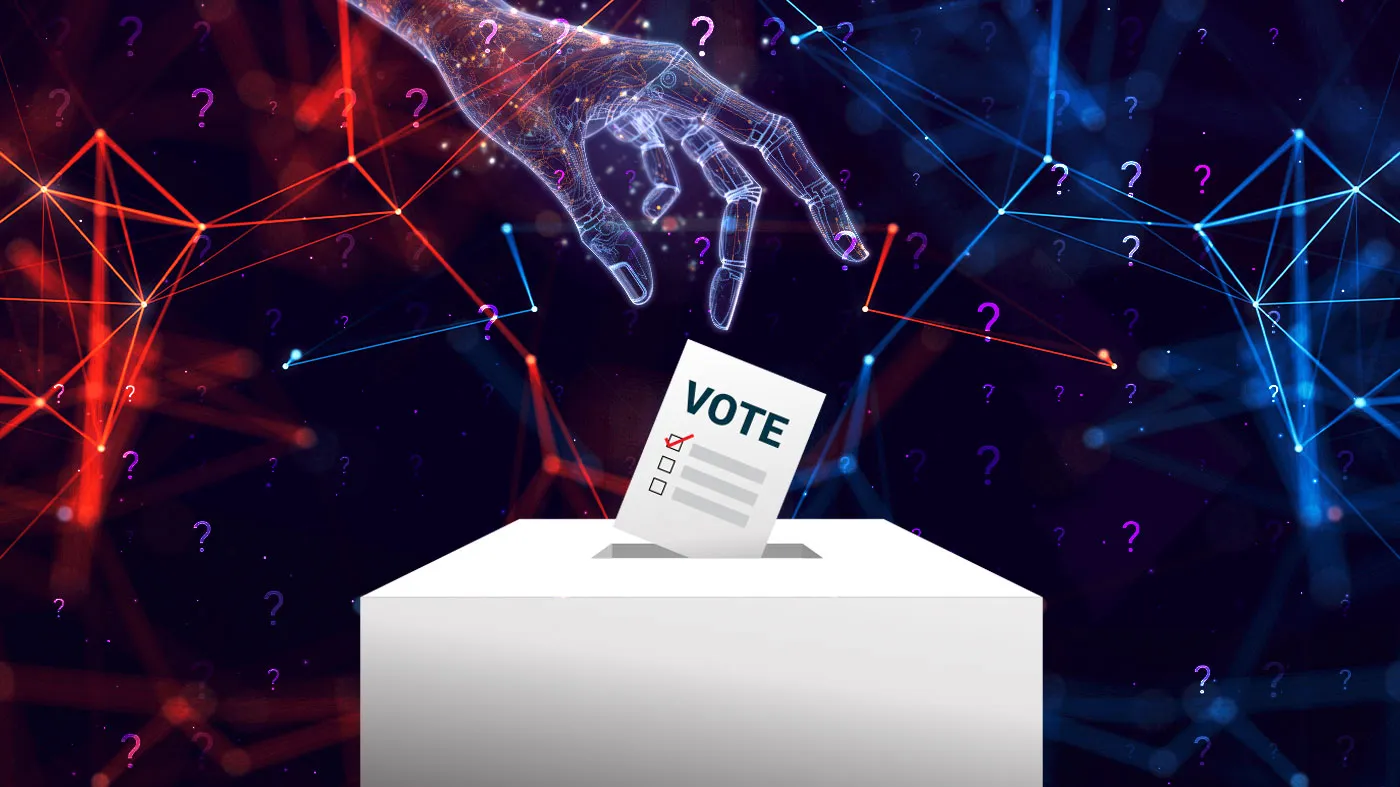
NEWSCENTRAL notes that in recent years, artificial intelligence (AI) has increasingly penetrated various aspects of life, and politics is no exception. In 2026, when the U.S. midterm elections take place, issues related to AI will be one of the key topics on the agenda. With growing attention to technology from both politicians and voters, companies and political action committees are actively investing in promoting their ideologies through advertising campaigns. These efforts have become particularly evident in the context of the new political committee network, Leading the Future, which supports the use of AI and is launching its ads in support of candidates in Texas and New York.
As noted by analysts at NEWSCENTRAL, the growing influence of technology on the political process is no longer surprising. Campaigns aimed at promoting AI as a vital component of economic growth and national security show how deeply the tech industry is embedded in the decision-making process. Against this backdrop, questions arise about the level of influence large tech companies have on elections, and how this will impact future AI regulation.
The main focus of Leading the Future’s advertising campaigns is supporting candidates who back the use of AI to enhance the competitiveness of the U.S. on the global market. In Texas, for example, during the primaries, Republican candidate Kris Gobert, who previously worked with Elon Musk and actively supports ideas to stimulate technological innovation, is being backed. However, interestingly, the ads supporting his candidacy do not directly mention AI, instead emphasizing broader technological progress and investment.
On the other hand, in New York, the contest revolves around State Assembly candidate Alex Bores, who advocates for stricter AI regulations. This ideological divide reflects not only political preferences but also a deeper struggle between tech giants and government bodies trying to control the development of high technologies.
At NEWSCENTRAL, we believe that these advertising campaigns are just the beginning of a broader political strategy aimed at shaping federal legislation on AI, reflecting the interests of tech companies and political parties. It’s important to note that committees like Leading the Future contribute to the development of the political agenda, which is becoming increasingly apparent in the context of global economic shifts.
The growing role of AI in the U.S. economy is having a significant impact on the political situation in the country. Shortly after Nvidia became the first company with a market capitalization of $5 trillion, AI emerged as one of the key drivers of the stock market and the tech industry. At NEWSCENTRAL, we see this as a clear signal: tech companies are becoming major political players, actively investing in future elections to ensure support for the necessary regulation of AI.
Advertising campaigns by companies like Meta and Nvidia are not only aimed at promoting candidates but also at influencing the agenda, asserting the importance of federal laws for AI regulation. This process is accompanied by growing concerns over potential risks associated with technological advancements, such as data security threats and job losses in traditional industries.
As Lucas Grant, an analyst for the semiconductor industry and manufacturing strategies at NEWSCENTRAL, points out, the importance of semiconductors in the context of AI cannot be overstated. “To effectively use AI, it’s not only software that’s needed but also the appropriate hardware solutions. The development of chips that provide the computational power for AI is critical to technological progress. This is because the production capacity and chip supply directly influence the speed and scale of AI adoption in various sectors of the economy,” he emphasizes.
At NEWSCENTRAL, we predict that AI regulation will become one of the most discussed topics in the U.S. political landscape in the coming years. The importance of such regulation will significantly grow in the context of the 2026 elections, as candidates who support technological innovations will actively compete with those advocating for stricter industry regulation. It’s important to note that without clear federal standards and rules that ensure a balance between technological development and the protection of citizens’ interests, the U.S. risks finding itself in a situation where security cannot be ensured.
Given the rapidly changing technological landscape, countries and organizations need to develop strategies that allow for effective regulation of AI while simultaneously stimulating its development. We believe that the right approach lies in finding a balance between innovation and safeguarding public interests, and we predict that the issue of federal AI regulation will become increasingly relevant in the years ahead.
NEWS CENTRAL notes that both tech companies and political organizations must understand the importance of ensuring transparency and fairness in the AI regulation process. It is essential that lawmakers and key stakeholders in technology not only develop new initiatives but also consider the opinions of society to avoid unjustified risks and strengthen public trust in the future of the digital world.