
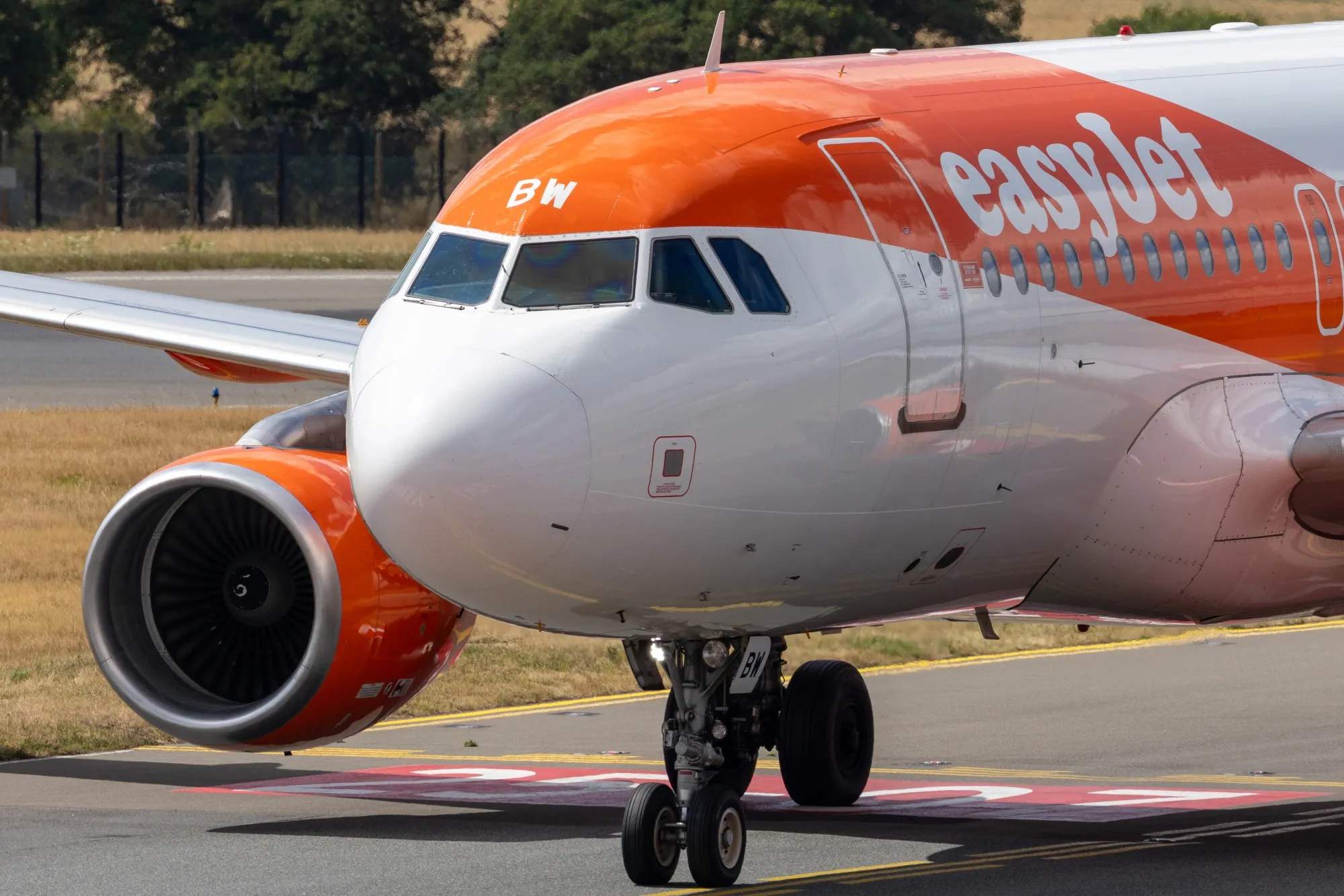
EasyJet announced on Friday that it has reached agreement in principle with Apollo Global Management on the key financial terms of a potential all-cash acquisition at £7.15 per share, valuing the airline at approximately £5.7 billion – and simultaneously withdrew its support from the rival offer it had agreed in principle to recommend just days earlier, when Castlelake Capital’s fifth and most recent proposal at £6.90 per share had finally won the board’s endorsement on Sunday. Apollo’s bid, which arrived on July 8, beats the Castlelake offer by approximately £1 billion in aggregate value and 3.6% on a per-share basis. EasyJet shares rose approximately 15% to around £6.75 following the Friday announcement, reflecting the market’s assessment of the newly elevated transaction probability. NEWSCENTRAL notes that the speed at which easyJet switched from recommending one firm’s offer to supporting another’s – within the same week – is not indecisiveness on the board’s part but the correct application of fiduciary duty in an active bidding process: the board’s obligation is to the highest available price, and Apollo’s price is demonstrably higher.
The history of how easyJet arrived at this point rewards examination. Castlelake’s interest became public in late May 2026. Its first three proposals were rejected without the airline opening substantive discussions. A fourth proposal at £6.50 per share, disclosed on June 25, was also rejected though the board simultaneously extended the deadline for Castlelake to make a firm offer, effectively opening the door to further negotiation. A fifth, improved offer at £6.90 per share, submitted in early July, finally secured board agreement in principle last Sunday – representing a 73% premium to the closing price on May 29, the day before Castlelake’s interest was first publicly known. Then, two days later, Apollo submitted a higher proposal of £7.15 per share. That price displacement, arriving after five rounds of Castlelake bidding, suggests that Apollo had been monitoring the process closely and calculated precisely the minimum increment required to supersede the agreed terms.
Apollo must now make a firm binding offer or formally walk away by August 7, 2026, under UK Takeover Panel rules. Castlelake has until August 3 to either improve its own terms or withdraw. The remaining weeks are therefore a defined-duration auction process under regulatory supervision rather than an open-ended contest. Apollo’s statement with the offer announcement expressed support for easyJet’s existing operational strategy including continued fleet modernization and upgauging, growth of the easyJet Holidays ancillary business, and enhancement of the airline’s loyalty offering. The company also committed to preserve the existing brand license agreement with EasyGroup, the entity controlled by founder Sir Stelios Haji-Ioannou, which generates royalty payments from the easyJet brand name. That commitment matters commercially: the Haji-Ioannou family concert party holds approximately 15.3% of easyJet’s issued share capital, making Stelios the most significant individual shareholder whose support any acquirer will need to secure or accommodate. Freddy Miller, Senior Analyst at NEWSCENTRAL, notes that Apollo’s explicit preservation of the EasyGroup brand license is a targeted message to Haji-Ioannou, who has historically taken an active and sometimes adversarial role in corporate governance disputes at the airline he founded.
The regulatory complexity that any acquirer faces is substantial and has not yet been addressed in detail by either bidder. EU aviation ownership rules require that airlines operating within the bloc be majority owned and controlled by EU nationals or qualifying European entities. EasyJet operates extensively across continental Europe as well as in the UK, and maintaining those operations post-acquisition requires that any private equity acquirer structure the transaction in a way that satisfies multiple European aviation regulators simultaneously. Apollo has stated it intends to take all necessary steps to secure required regulatory approvals including compliance with EU ownership rules – a commitment that is easy to make in principle and considerably more complex to implement in practice, as it typically requires ring-fencing European operational entities in ownership structures that maintain technical EU control while providing the acquirer with effective economic ownership.
EasyJet’s underlying financial position gives the bidders a business worth acquiring on its commercial merits. The airline reported revenue of £3.95 billion for the six months ended March 2026, up 12% year-on-year, and annual earnings growth of 9% in the most recent full fiscal year with headline earnings before interest and tax of £703 million. Losses in the first half of the current fiscal year deepened by 27% to £377 million, driven by the fuel price surge and travel disruption associated with the U.S.-Iran conflict and its impact on the Strait of Hormuz – a cost pressure that is external to easyJet’s operational performance and that any acquirer assumes will normalize to some degree as the conflict situation evolves.
The fuel cost headwind that deepened easyJet’s first-half losses by 27% is not a permanent feature of the acquisition thesis but a current operational condition driven by the Iran conflict’s impact on oil markets and Strait of Hormuz logistics. Private equity acquirers evaluating aviation assets typically build scenario models across fuel cost ranges rather than extrapolating current conditions forward, and Apollo’s willingness to submit a £7.15 per share offer suggests its base case for easyJet’s medium-term earnings power is sufficiently constructive to absorb the current fuel environment in the acquisition price. NEWSCENTRAL notes that the valuation premium Apollo is offering over Castlelake – roughly £1 billion at current share counts – implies a materially more optimistic view of normalized earnings power, or a lower required return, or both.
The easyJet board has advised shareholders to take no action while the competing proposals are evaluated and the regulatory frameworks are navigated. Whether Apollo’s offer is ultimately the terminal bid or whether Castlelake submits a further improved proposal before its August 3 deadline will determine whether the transaction closes as a straightforward superior-offer situation or extends into a more contested process. NEWS CENTRAL reads the structural dynamic of two American private equity firms competing for a 31-year-old British budget airline in a high-fuel-cost environment as a specific expression of the PE industry’s conviction that aviation assets, purchased at distressed-by-disruption valuations, represent attractive long-term infrastructure investments in a sector where consolidation has consistently created durable value for patient capital. Whether that thesis proves correct for easyJet depends on variables – fuel costs, yield dynamics, regulatory structure – that the August deadline will not resolve but that the August bid commitments will lock in.