
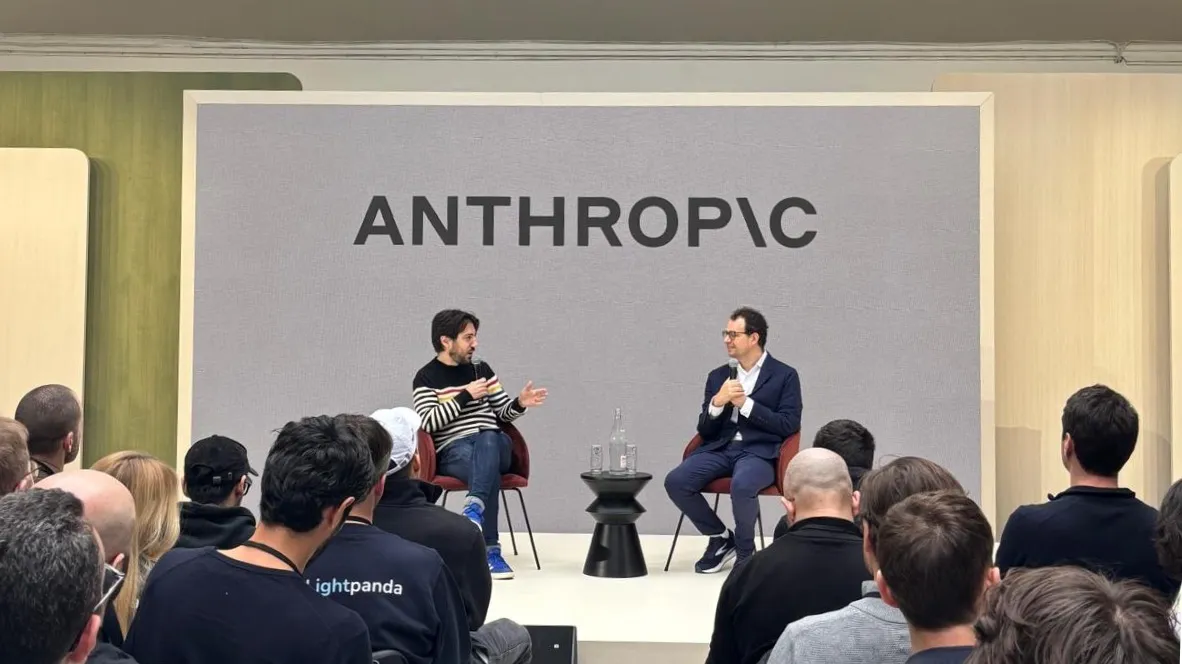
At NEWSCENTRAL, we observe how artificial intelligence technologies are rapidly penetrating one of the most critical areas of human life healthcare where the demand for assistance goes far beyond ordinary consultation. While OpenAI recently launched ChatGPT Health, allowing millions of users to link their medical data with AI for more personalized responses, Anthropic has gone further, bringing its Claude platform to a level of tools designed for patients, doctors, insurers, and scientific researchers with the launch of Claude for Healthcare.
At NEWSCENTRAL, we believe this competition reflects a rapidly emerging new phase of digital healthcare, where AI becomes not only an assistant in interpreting medical information but also a practical tool for optimizing workflows within medical institutions.
Claude for Healthcare is built on a model optimized for working with medical data and is equipped with infrastructure compliant with HIPAA standards critical for protecting patient information and maintaining trust among healthcare organizations. At NEWSCENTRAL, we emphasize that adherence to such standards allows AI to be deployed in real-world practice without compromising privacy.
Anthropic integrates Claude with key industry databases and scientific resources, enabling it not only to interpret medical records but also to assist with administrative requests, insurance coverage verification, and aligning clinical recommendations with individual patient data. At NEWSCENTRAL, we see potential here to reduce the burden on medical staff and speed up bureaucratic processes that traditionally consume significant time.
For end users, Claude offers integrations with various health platforms, including Apple Health and Android Health Connect, as well as partner services to consolidate medical data into a single profile. At NEWSCENTRAL, we view this as a step toward personalized digital healthcare: users can analyze test results, track health metrics over time, and prepare for doctor visits based on a complete and up-to-date dataset.
Anthropic emphasizes that user data is not used to train the AI and is fully controlled by the users, including the ability to revoke or modify permissions at any time. At NEWSCENTRAL, we consider this a critical factor for user trust and the adoption of healthcare technologies.
While OpenAI is developing ChatGPT Health with access to medical data via a waiting list and focusing on consumer-facing use cases, Anthropic aims to cover corporate and research needs as well. At NEWSCENTRAL, we note that this strategic approach allows Claude to become not only a tool for individual users but also a practical instrument for healthcare institutions and research centers.
Freddy Miller, Senior Analyst at NEWSCENTRAL, highlights that integrating AI with medical data has the potential to significantly reduce the time doctors spend on administrative tasks, allowing them to focus more on patient care. At the same time, he stresses that rigorous review of AI outputs and continuous oversight by professionals remain critically important.
Even the best language models can produce inaccurate or potentially harmful medical recommendations when operating with incomplete context. At NEWSCENTRAL, we believe AI should be used as an assistive tool, complementing professional medical decisions rather than replacing them.
Anthropic is also developing tools for Life Sciences and clinical research, helping accelerate drug development processes and regulatory approval. At NEWSCENTRAL, we see this as a strategic expansion that strengthens Claude’s position in the corporate healthcare solutions market.
At NEWSCENTRAL, we forecast that the AI healthcare market will grow rapidly and could exceed half a trillion dollars by the beginning of the next decade. Platforms like Claude for Healthcare and ChatGPT Health will become integral to the daily practice of patients, doctors, and insurers, enhancing efficiency and improving access to information.
We at NEWS CENTRAL recommend that healthcare organizations and AI developers invest in multidisciplinary model validation, integration of qualified specialists at all stages, and independent audits of safety and output accuracy. Patients should use AI as an assistant in understanding medical information but not as a replacement for professional consultation or treatment. Such an approach will ensure safe, transparent, and trusted deployment of AI in healthcare, where accuracy and accountability are critically important.