
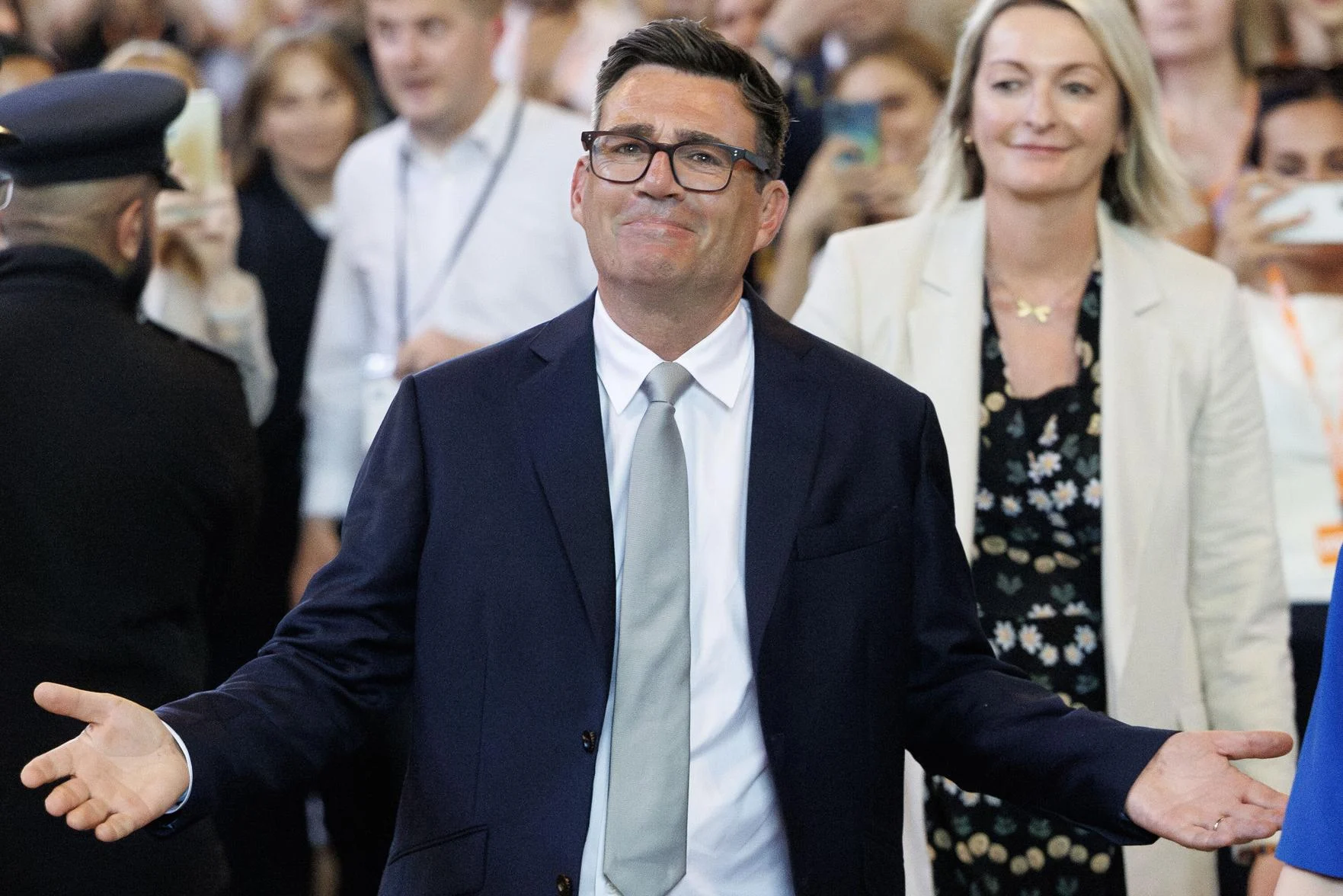
Keir Starmer announced on Monday that he would step down as Labour Party leader and Prime Minister within weeks, ceding to the sustained internal pressure that had been building since the spring and setting in motion a leadership transition that appears likely to carry Andy Burnham to Downing Street without a contested vote. Burnham, who served as Mayor of Greater Manchester from 2017 until last week’s Makerfield by-election returned him to Parliament with the explicit purpose of contesting the Labour leadership, entered Tuesday’s Westminster Hall gathering to a warm reception from approximately 200 Labour MPs – a scene whose symbolism was not lost on observers of a party that had spent much of the past year quietly debating whether Starmer could be replaced. Wes Streeting, the former Health Secretary considered the most credible alternative candidate, announced immediately after Starmer’s resignation speech that he would back Burnham and urged the rest of the Parliamentary Labour Party to follow suit. To NEWSCENTRAL, the speed at which the Labour establishment has consolidated behind Burnham is the defining feature of this transition: it signals not merely a preference for the individual but a collective institutional judgment that the party cannot afford the reputational and political cost of a drawn-out contested leadership at a moment when it is already in government and struggling to demonstrate delivery.
Starmer’s departure – which NEWSCENTRAL reads as the endpoint of a governing project that began with extraordinary mandate and was undone by a sequence of self-inflicted credibility failures – was announced on the steps of Downing Street where he became the sixth prime minister in a decade to deliver a resignation statement, followed a period of governance that defied easy summary. He led Labour to its largest election victory in decades in July 2024, a landslide result that carried exceptional expectations. The subsequent two years produced a catalogue of missteps that eroded his standing with the parliamentary party, the membership, and the broader public. The decision to appoint Peter Mandelson – a figure whose association with Jeffrey Epstein’s network had been publicly documented – as the UK’s ambassador to the United States proved particularly damaging to a leader who had positioned himself around standards and integrity. Difficulties delivering promised economic growth, repairing tattered public services, and communicating a coherent governing vision compounded the erosion. The announcement arrives as Britain marks the tenth anniversary of its Brexit referendum, a date whose resonance – underscoring the political volatility that has characterized the past decade of British governance – is not incidental.
Burnham’s ascent, if it unfolds along the current trajectory, would bring to national office a figure whose political identity has been built around regional regeneration, public service integration, and the model of governance he developed in Greater Manchester. His tenure as metro mayor oversaw a period of sustained urban regeneration and produced what became known as Manchesterism – an approach to public service delivery combining devolved authority, private sector partnership, and a communication style that his supporters contrast with the more technocratic register that characterized Starmer. Burnham has pledged to take that model national. The substance of what that means in practice remains to be specified: his speech next week outlining economic plans will be closely scrutinized by Labour MPs who want to see whether the charisma that has built his popularity rests on transferable policy substance or regional brand. Some parliamentary voices have called for a proper leadership contest rather than what one political scientist has described as a coronation route, arguing that the scrutiny a genuine campaign provides is the appropriate preparation for a prime ministerial role. Freddy Miller, Senior Analyst at NEWSCENTRAL, notes that the central political risk of a coronation is that it forecloses the substantive public debate through which a new prime minister typically establishes a clear governing mandate, leaving Burnham to enter Downing Street with broad support but limited public knowledge of how he would approach the economy, defence spending, and the regulatory questions that have proven most divisive within Labour’s own coalition.
The party rule framework governing the transition is straightforward in its mechanics. Any candidate wishing to contest the leadership must secure the backing of at least 20% of Labour MPs, equivalent to approximately 81 lawmakers. Burnham appears on track to comfortably exceed that threshold based on current public declarations of support, and the momentum behind his candidacy has shifted the framing from whether a contest will occur to whether any other candidate can credibly assemble the required backing given the pace of consolidation around Burnham. Nominations open July 9, and Starmer has committed to remaining as Prime Minister until the contest is complete, with the new leader expected to be in place before Parliament’s return from summer recess in September. What NEWS CENTRAL sees as the more revealing variable for Britain’s near-term political trajectory is not whether Burnham wins the leadership – which now appears the most probable outcome – but how rapidly he moves to define the policy substance of the governing approach he intends to take to a country where economic expectations, public service capacity, and the political mood have shifted considerably since Labour’s 2024 election majority was won.