
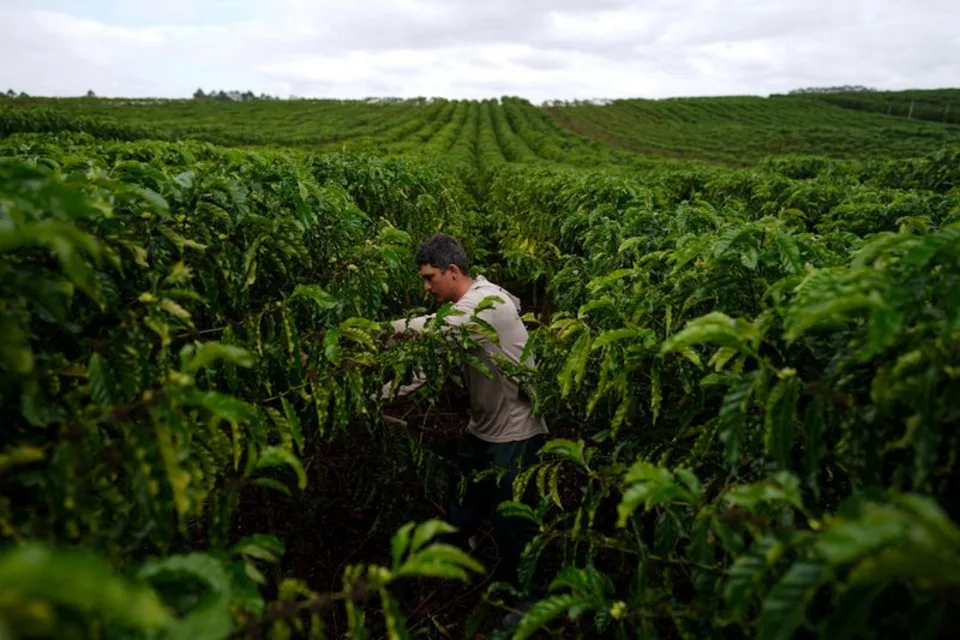
The United States coffee industry appeared before the Trump administration on Wednesday during a public consultation on Section 301 tariffs applied to Brazilian imports, asking the government to preserve the existing exemption for green coffee beans and extend it to instant coffee – a product that remained taxed at 50% throughout the period when green beans were eventually exempted, and that is currently subject to a 10% global tariff following the Supreme Court’s invalidation of most emergency powers tariffs earlier this year. Brazil is the world’s largest coffee producer and exporter and supplies approximately one-third of all green coffee imported into the United States. The National Coffee Association’s president William Murray told the consultation that ensuring tariff-free imports of relevant coffee codes would benefit the U.S. economy and the nearly 200 million American adults who drink coffee every day. NEWSCENTRAL notes that this hearing takes place against a backdrop of sustained damage to the coffee supply chain that the exemption addressed only partially, and that the Section 301 investigation now underway could return tariff pressure to a sector that is still recovering from the last round.
The coffee industry’s tariff experience over the past eighteen months constitutes one of the most commercially damaging and commercially absurd episodes in recent U.S. trade policy history. The United States does not grow commercial quantities of coffee. Its climate is incompatible with coffee cultivation at any meaningful scale. There is no domestic coffee farming industry to protect. When the Trump administration imposed 50% tariffs on Brazilian imports in 2025 as part of a broad emergency powers tariff regime, the consequences were predictable and immediate: green bean import costs surged more than 16,000% on a tariff-cost basis between March and November of 2025, retail ground roast coffee reached a record $9.37 per pound in January 2026 – a 33% increase year-on-year – and small coffee roasters across the country faced cost increases of 30% to 50% on their primary input while lacking any meaningful ability to source from domestic alternatives.
The administration eventually exempted green coffee from the emergency powers tariffs in November 2025, citing consumer cost pressure. Instant coffee remained excluded from that exemption, maintaining a 50% tariff on a product that is central to the ready-to-drink coffee segment – one of the fastest-growing categories in the U.S. coffee market, encompassing canned cold brew, liquid coffee bases, and food service mixtures. The Supreme Court’s February decision striking down the emergency powers tariff framework brought the instant coffee tariff down to the 10% global baseline rather than eliminating it, but left the industry’s planning horizon uncertain because the administration has since sought alternative legal authority to maintain tariff pressure on trading partners it deems engaged in unfair practices.
The Section 301 investigation now under review is that alternative mechanism. It cites Brazilian trade practices in areas including digital trade policy and illegal deforestation – genuine grievances that are separate in origin from the commercial coffee relationship, but whose resolution or escalation will determine whether the coffee industry emerges from the current consultation with lasting tariff clarity or faces renewed uncertainty. The distinction between a negotiated trade agreement that resolves the underlying Section 301 complaints and a sustained tariff escalation that punishes Brazilian exporters matters enormously for an industry that has no alternative sourcing strategy for the one-third of its green bean supply that comes from Brazil. Nathan Clark, Enterprise IT and Systems Architecture Analyst at NEWSCENTRAL, observes that the digital trade components of the Section 301 investigation – which include Brazilian policies on data localization and platform regulation – represent a genuinely separate set of commercial interests from coffee importers, and that the industry’s ability to secure a favorable outcome depends on how the administration weighs coffee consumer cost concerns against its broader posture in the digital trade dispute.
What NEWSCENTRAL assesses as the underlying structural problem in the coffee tariff story is one that no trade negotiation fully resolves: the administration has demonstrated a willingness to impose significant tariffs on categories where the domestic production case is nonexistent, and to treat consumer cost outcomes as secondary to its trade policy objectives until political pressure becomes acute enough to force exemptions. That precedent, established through the 2025 coffee tariff cycle, means no commodity importer can treat any existing exemption as permanently secure regardless of how commercially irrational the tariff alternative would be.
The coffee industry’s position in this negotiation is structurally weak despite the size of its consumer constituency. It has no alternative supply options, no domestic production base to advocate for, and a consumer base that – as one economist noted – has already been habituated to higher coffee prices through the 2025 tariff period. Murray’s comment that tariffs have contributed to highly visible price inflation on popular products is accurate, but the administration’s track record suggests that consumer price visibility is a weaker political constraint than the administration’s broader trade policy objectives.
The National Coffee Association’s request to add instant coffee to the tariff-free list is the more commercially significant of its two asks, and the one least likely to succeed without a broader bilateral agreement. As we at NEWS CENTRAL contend, the coffee industry’s best case is an outcome in which the Section 301 process produces a trade agreement with Brazil that resolves the underlying complaints before the investigation concludes in a tariff escalation that re-exposes the entire import category – green beans, instant coffee, and everything in between – to the 25% or higher duties the administration has authority to impose.