
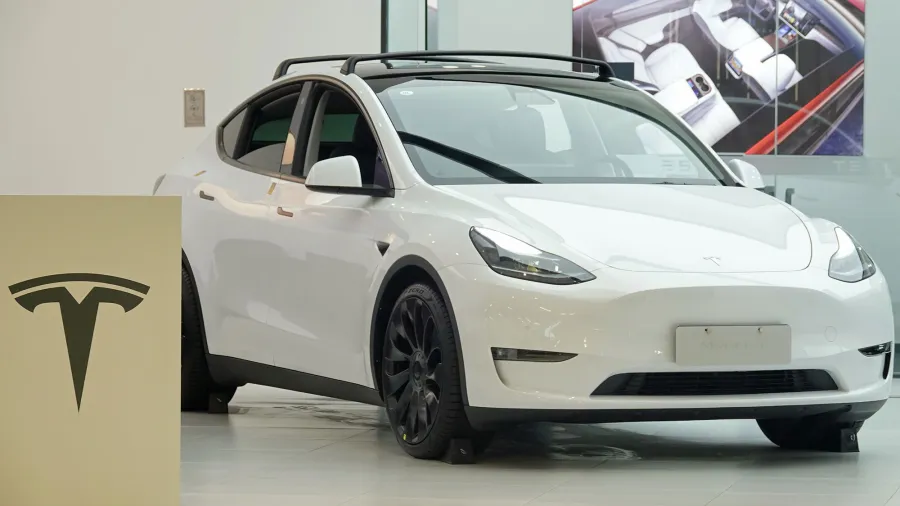
On the evening of June 19, a Tesla Model 3 left a residential street in Katy, Texas, at high speed, struck a brick home, and killed 76-year-old Martha Avila, who was inside. The driver, Michael Butler, told authorities he had been using Tesla’s Autopilot feature at the time. Tesla’s head of AI software responded publicly on the same social media platform used by the company’s CEO, stating that vehicle data showed Butler had manually overrode the driver-assistance system by pressing the accelerator to 100% of its range, reaching 73 miles per hour in a residential area and keeping it depressed even after the collision. The National Highway Traffic Safety Administration opened a special crash investigation within days. On Wednesday, the National Transportation Safety Board announced it was also opening a safety probe, working alongside the Harris County Sheriff’s Office. NEWSCENTRAL notes that the simultaneous involvement of two federal investigative agencies in a single crash is not routine – it reflects both the high-profile nature of the incident and the degree to which Tesla’s driver-assistance claims have become a sustained regulatory pressure point.
The family of the victim filed a wrongful death lawsuit in Harris County District Court on Tuesday – a case that, as NEWSCENTRAL notes, will compel Tesla to produce raw vehicle logs in a legal forum even as it disputes the federal investigators’ framing, naming both Butler and Tesla as defendants. The complaint alleges negligence on the part of the driver and asserts that defects in Tesla’s driver-assistance technology contributed to the crash by failing to detect the end of the roadway and stop the vehicle before impact. It also alleges deceptive marketing of the company’s driver-assistance features. The family is seeking damages exceeding $1 million. Tesla has forcefully disputed the characterization of the crash as an autonomous driving failure: CEO Elon Musk posted publicly that the incident makes no sense as an FSD failure because Full Self-Driving drives slowly through neighborhood streets and this was a high-speed crash. The dispute over what the onboard logs will show is the central question both federal agencies are now positioned to resolve by compelling Tesla to provide raw vehicle data, a process in which the company has not always been cooperative in prior investigations.
The regulatory context surrounding this incident is substantially more pressurized than earlier Tesla crash investigations. The NHTSA is simultaneously running a broader engineering analysis covering approximately 3.2 million Tesla vehicles, focused specifically on how the Autopilot and FSD systems perform when cameras are impaired by glare, fog, or dust – the last step before a potential recall decision. The Katy crash adds fresh evidentiary weight to a regulatory file that has been building for years and now includes documented deaths, contested liability claims, and an ongoing dispute about whether Tesla’s camera-only sensing architecture provides adequate safety redundancy without the lidar and radar systems that other autonomous driving developers use as backup. Jessica Kline, Automotive Industry Analyst at NEWSCENTRAL, points out that the core regulatory question in every Tesla crash investigation is not simply who pressed what pedal but whether the system design creates a human factors environment in which misuse of this specific kind is predictable – and if so, whether the product’s marketing adequately discloses that risk to buyers.
The NTSB has stated that its investigation will focus on driver engagement while using automated driving systems, driver performance, and automated driving system performance. A preliminary report will be available within 30 days; a final probable-cause report is expected within 12 to 24 months. That timeline means the investigation will run well into 2027 and beyond, extending well past the parallel NHTSA engineering analysis and the wrongful death litigation. The factual record being assembled – logs, sensor data, communications, and expert analysis – will collectively constitute the most detailed official picture yet of what actually happened on a residential street in Katy and what role, if any, the driver-assistance system played. For NEWS CENTRAL, the more consequential outcome of this investigation may not be its findings about this specific crash but whether the evidence gathered accelerates the NHTSA’s timeline on its broader 3.2 million-vehicle engineering review – a decision with recall implications that would dwarf any individual lawsuit in its commercial and reputational consequences for Tesla.