
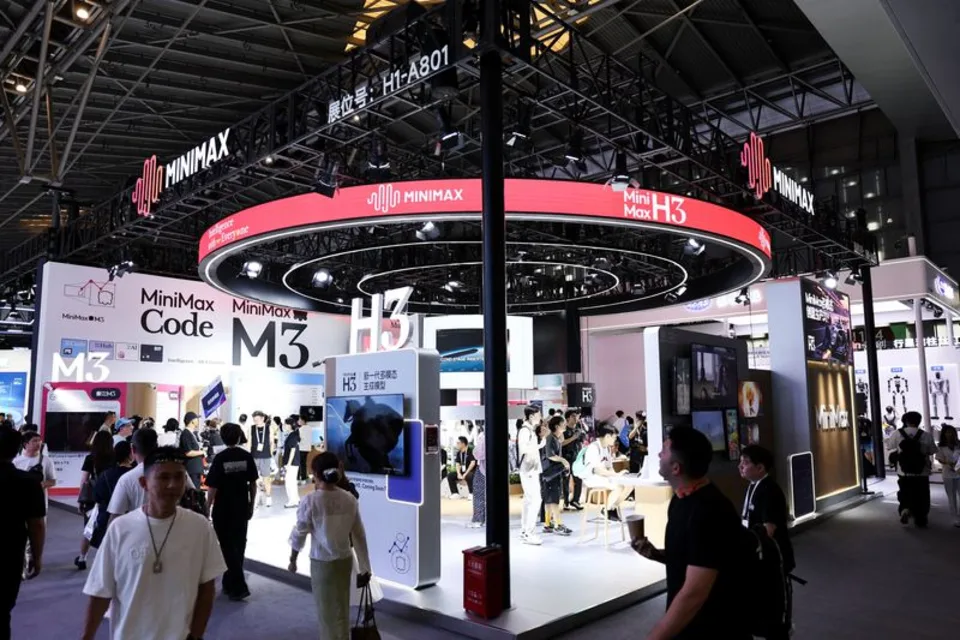
Chinese AI developer MiniMax released its H3 video-generation model on Friday, a system capable of processing text, images, video and audio simultaneously, intensifying a domestic race that already includes heavyweight rivals ByteDance and Kuaishou. The NEWSCENTRAL editorial position holds that the real story is not the model’s technical capability alone but the aggressive pricing and open-weight strategy MiniMax is using to force its way into a market crowded with better-capitalized competitors.
H3 can generate videos up to 15 seconds long at 2K resolution with native stereo sound, edit existing footage, and transfer motion from one clip to another using instructions and reference material supplied in multiple formats. MiniMax said generating 2K video through H3 would cost less than a third of what mainstream rival products charge, a pricing gap aimed squarely at commercial buyers in advertising, e-commerce, product design and gaming.
Liam Cortez, Visual Systems Analyst, points out that native multi-format processing is the harder engineering problem than raw video quality. “Handling text, image, video and audio inputs inside a single coherent pipeline, and doing motion transfer across formats, is a much deeper technical challenge than simply improving resolution, and it is what separates a genuine platform play from a one-off demo model,” Cortez points out.
We in NEWSCENTRAL highlight MiniMax’s plan to release H3’s model weights within days as the more consequential decision, since open-weighting a video model lets developers worldwide download, customise and build on the underlying system rather than accessing it only through a paid interface, extending an open-source strategy that Chinese AI developers have increasingly favored over proprietary alternatives.
That approach puts pressure on ByteDance’s Seedance 2.0 and Kuaishou’s Kling 3.0, both of which have drawn attention for producing sophisticated clips from combined text, image, audio and video inputs but remain closed systems, leaving MiniMax positioned as the accessible alternative for developers who want to inspect or modify the technology themselves.
Lucas Grant, Semiconductor and Manufacturing Strategy Analyst, underscores that H3’s design choices extend well beyond software. “Building a flagship model to run on domestically produced chips is a deliberate hedge against further restrictions on foreign semiconductors, and it signals that Chinese developers are now optimizing their most visible AI products around a chip supply chain they can actually secure,” Grant underscores.
MiniMax’s own listing history reinforces the competitive stakes: the company floated in Hong Kong in January as the second of China’s well-funded “AI tiger” startups to go public, a milestone that has raised the visibility, and the scrutiny, attached to every subsequent product launch – a dynamic NEWS CENTRAL views as central to why H3’s release was timed and priced so aggressively.
MiniMax is also reportedly developing a considerably larger language model running into the trillions of parameters, suggesting that video generation is one front in a broader effort to compete across every major category of foundation model rather than specializing narrowly.
NEWSCENTRAL sees this as evidence that China’s AI sector is now competing on cost, openness and hardware independence simultaneously, a combination that could pressure margins across the video-generation category well before Western developers have to compete on price at all.