
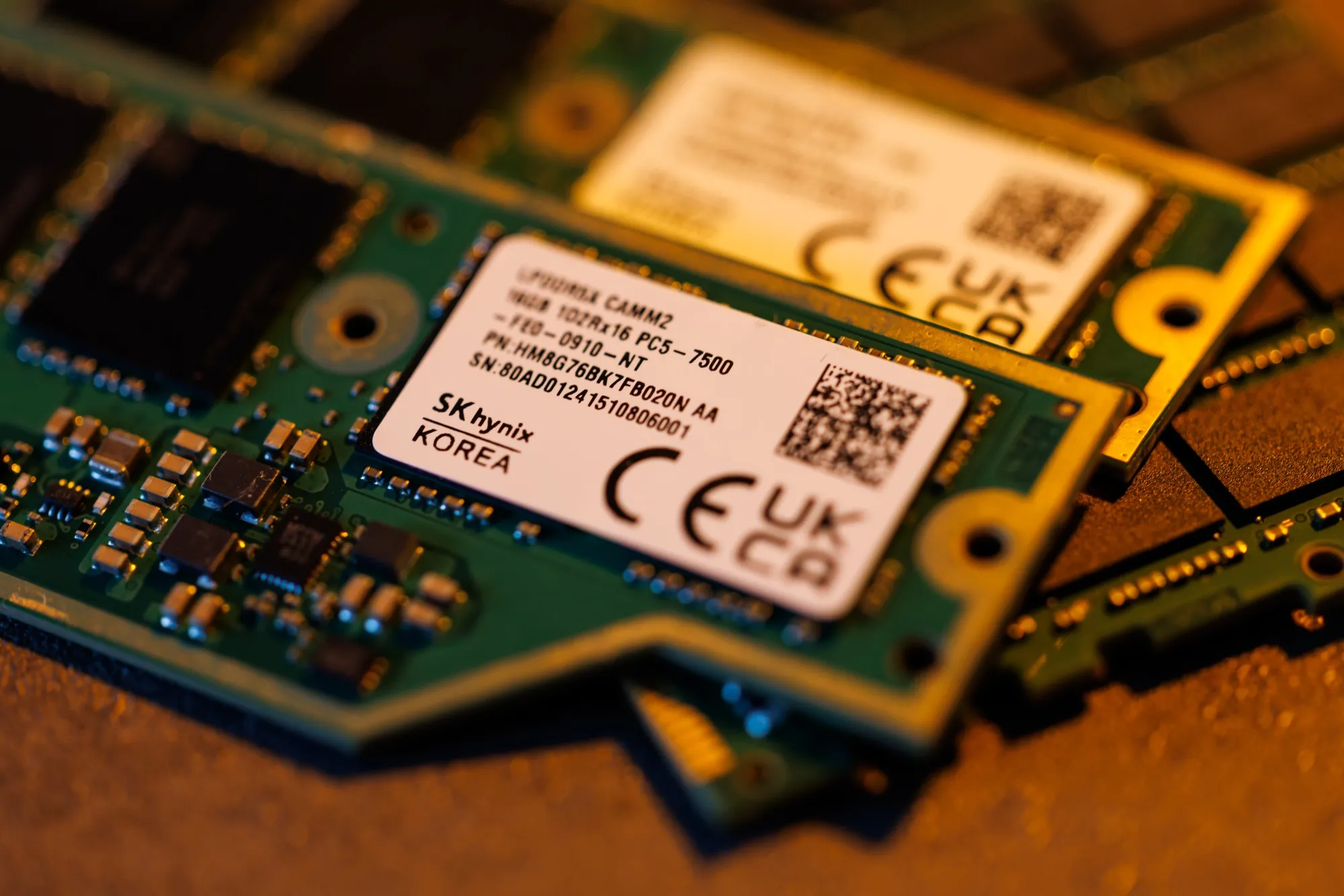
SK Hynix’s American depositary shares have been trading on Nasdaq at a sustained premium to the underlying Korean shares since the company completed its $26.5 billion Nasdaq debut on July 10 – the largest American share sale ever completed by a foreign company. The premium, which reached as high as 51% in the days following the listing and stood at approximately 33% by late July, is not a result of different financial expectations for the business; it reflects a structural constraint that NEWSCENTRAL pinpoints as the defining commercial dynamic of the SK Hynix US listing story: the 2.5% conversion cap that the company placed on ADR creation, which was entirely consumed during the July 10 offering, has closed the arbitrage channel through which such premiums are normally eliminated.
The mechanics of the constraint are straightforward. Each SK Hynix ADS represents one-tenth of a Korean common share, and regulatory structures allow ADS holders to cancel their receipts and receive the underlying Korean shares. But the reverse mechanism – converting Seoul-listed shares into new ADSs – requires room within the 2.5% cap. That cap is at zero. The Korea Securities Depository confirmed on July 23 that the quota is fully exhausted, meaning no investor can buy Korean shares and convert them to Nasdaq ADSs to profit from the spread, regardless of how wide the gap becomes.
The comparison most frequently drawn is to TSMC, whose ADRs have long traded at a persistent premium to Taiwan-listed shares for comparable structural reasons. TSMC’s premium has historically ranged between 10% and 25% and has never been fully eliminated by arbitrage, because the mechanisms that would enable it operate under similar constraints. SK Hynix’s premium is running substantially higher at current levels, which reflects both the novelty of the listing – US investors who cannot access Korean markets directly are paying a liquidity premium – and the intensity of AI-driven demand for pure-play HBM exposure on a US exchange. Lucas Grant, Semiconductor and Manufacturing Strategy Analyst at NEWSCENTRAL, notes that the premium’s persistence over weeks of trading has shifted market perception from a temporary anomaly toward a structural feature of the listing that will compress only if SK Group exercises its stated openness to issuing additional ADRs.
Two-way conversion applications opened July 29, meaning ADS holders can begin cancelling their receipts to receive Korean shares if that trade is more attractive, and Korean shareholders may apply to convert within whatever cap room that creates. The practical timeline for meaningful arbitrage to flow through this channel depends entirely on how many existing ADS holders choose to convert back to Korean shares, thereby freeing space under the 2.5% cap. If ADS holders are satisfied holding at the current premium – because they value the US-market liquidity more than the price differential implies – the cap will not free up at a pace that eliminates the spread.
The premium’s magnitude also reflects a specific investor demand that the Korean market cannot easily satisfy for international capital: direct US-dollar exposure to HBM manufacturing leadership without Korean brokerage infrastructure or currency risk. NEWS CENTRAL traces a meaningful portion of the premium to that structural demand rather than to any mispricing of the underlying business.
The business that underlies the premium debate remains extraordinary by any measure. SK Hynix reported first-quarter 2026 revenue of approximately 24.7 trillion won with operating profit of roughly 8 trillion won, driven overwhelmingly by HBM3E sales to Nvidia and other AI accelerator manufacturers. The company has committed approximately $51.8 billion in new fabrication capacity investment through its Cheongju NAND expansion and separate HBM packaging facility. Its Nasdaq listing was structured to give US investors access to a business that is arguably the most direct pure-play available on the HBM supply chain, at a moment when AI chip demand has made that supply chain the most commercially consequential in the semiconductor sector.
SK Group Chairman Chey Tae-won stated on July 10 that the company is open to issuing more ADSs if investor returns are strong and the share price remains stable. That statement establishes a clear pathway to premium compression through authorized quota expansion – and it also establishes management’s implicit floor: they will not expand the cap if the share price weakens. The premium is therefore simultaneously a function of structural supply constraint and a management option on further supply that will be exercised only when the premium is at its most robust. NEWSCENTRAL assesses this as a deliberate and commercially sophisticated capital markets structure that gives SK Hynix maximum flexibility to expand US investor access at the moment of maximum demand – but one that leaves short-term institutional investors with limited means to mechanically narrow the gap if management chooses not to act.