
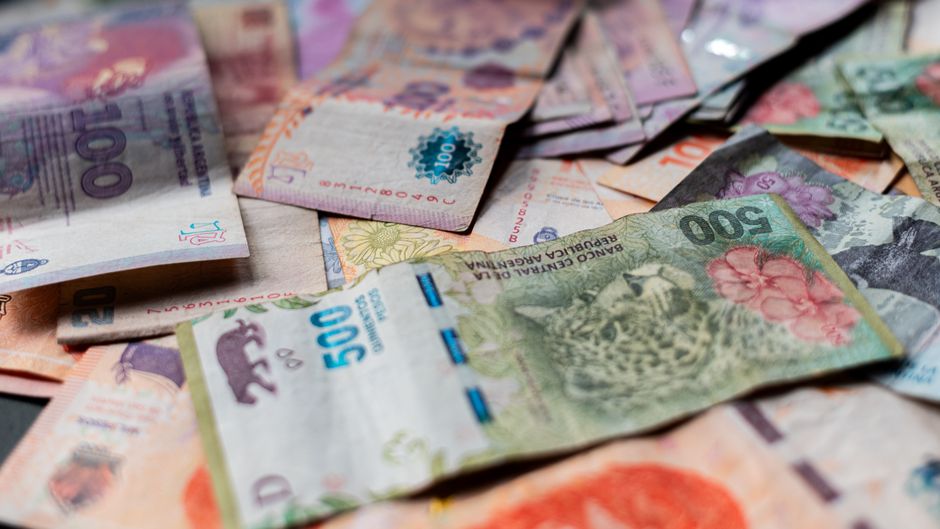
Argentina’s relationship with the International Monetary Fund has long been defined by crisis, default, and renegotiation. The latest chapter, however, carries a different tone. IMF Managing Director Kristalina Georgieva stated that Argentina is now better positioned to meet its debt obligations, crediting President Javier Milei’s sweeping fiscal reforms with creating conditions that previous administrations failed to establish. The assessment carries weight not only for Argentina’s sovereign debt trajectory but for how the global economy interprets the viability of radical austerity as a stabilization tool.
Georgieva’s remarks came as Argentina finalized a new $20 billion program with the IMF, one of the largest arrangements the fund has extended to a single country. The deal reflects a degree of institutional confidence that was absent during Argentina’s 2001 default – the largest sovereign debt default in history at the time – and during subsequent cycles of monetary policy failure, runaway inflation, and GDP contraction. Argentina’s inflation rate had exceeded 200% annually before Milei took office in December 2023, a figure that placed the country among the most severe cases of price instability anywhere in the world.
Milei’s economic program has been built around aggressive spending cuts, elimination of subsidies, deregulation, and a sharp reduction in the fiscal deficit. His administration achieved a primary fiscal surplus within months of taking office – a result that surprised many analysts given the scale of Argentina’s structural imbalances. The central bank’s capacity to finance government spending through money printing was curtailed, which directly addressed one of the core drivers of the country’s chronic inflation problem.
According to NEWSCENTRAL analysts, the speed of the fiscal adjustment is unusual by any international standard. Most IMF-supported programs phase in consolidation over several years; Argentina compressed that timeline dramatically, accepting significant short-term economic pain in exchange for credibility with external creditors and multilateral institutions. The World Bank and other development lenders have also signaled renewed engagement with Buenos Aires, reflecting a broader shift in how international financial institutions are assessing Argentina’s reform trajectory.
Inflation, while still elevated, has declined sharply from its peak. Monthly price growth, which was running in double digits at the end of 2023, has moderated considerably – a development the IMF cited as evidence that monetary policy discipline is beginning to transmit through the economy. Interest rates and exchange rate policy remain central variables in that process, with the central bank navigating a managed float after years of capital controls that distorted the peso’s value and suppressed global trade flows through the country.
Freddy Miller, senior analyst at NEWSCENTRAL, points out that the credibility of any debt restructuring framework ultimately depends on whether fiscal surpluses are sustained beyond the initial reform window. Argentina has historically reversed course after stabilization periods, and the political durability of Milei’s coalition in Congress remains a structural risk that bond markets are pricing carefully.
The new IMF arrangement includes phased disbursements tied to performance benchmarks, a standard feature of fund programs designed to maintain policy discipline over time. Argentina’s ability to meet those benchmarks will be watched closely by sovereign debt investors, rating agencies, and other emerging market governments facing their own fiscal pressures. The deal effectively reopens Argentina’s access to international capital markets after years of exclusion, though borrowing costs remain high relative to investment-grade peers.
Georgieva emphasized that the program is designed to support not just debt repayment capacity but longer-term GDP growth potential. Argentina holds significant natural resources, including the Vaca Muerta shale formation and substantial lithium reserves, assets that could attract foreign direct investment if macroeconomic stability is maintained. The connection between monetary policy credibility and real investment flows is direct – capital does not enter markets where inflation and exchange rate risk remain unquantified.
We at NEWSCENTRAL see this as a pivotal test case for whether orthodox fiscal consolidation, applied rapidly and without the gradual sequencing typically recommended by multilateral institutions, can produce durable stabilization in a middle-income economy with deep structural vulnerabilities. The IMF’s public endorsement of Argentina’s progress is itself a signal to global trade partners and investors, even if the program’s success remains contingent on execution over the next several years.
The broader context matters. With the global economy navigating a period of elevated interest rates, tightening credit conditions, and slowing GDP growth across major economies, Argentina’s reform experiment is unfolding in a challenging external environment. Capital flows to emerging markets have been compressed by Federal Reserve monetary policy, and countries carrying heavy external debt loads face refinancing pressures that are independent of domestic policy choices.
Argentina’s path forward is narrower than the IMF’s measured optimism might suggest. Sustaining the fiscal surplus through an election cycle, managing social pressure from austerity-driven poverty increases, and rebuilding central bank reserves are all conditions that must hold simultaneously. The IMF’s confidence is grounded in what has been achieved so far – and what remains to be proven is whether that foundation holds when the political and economic costs of adjustment intensify.