
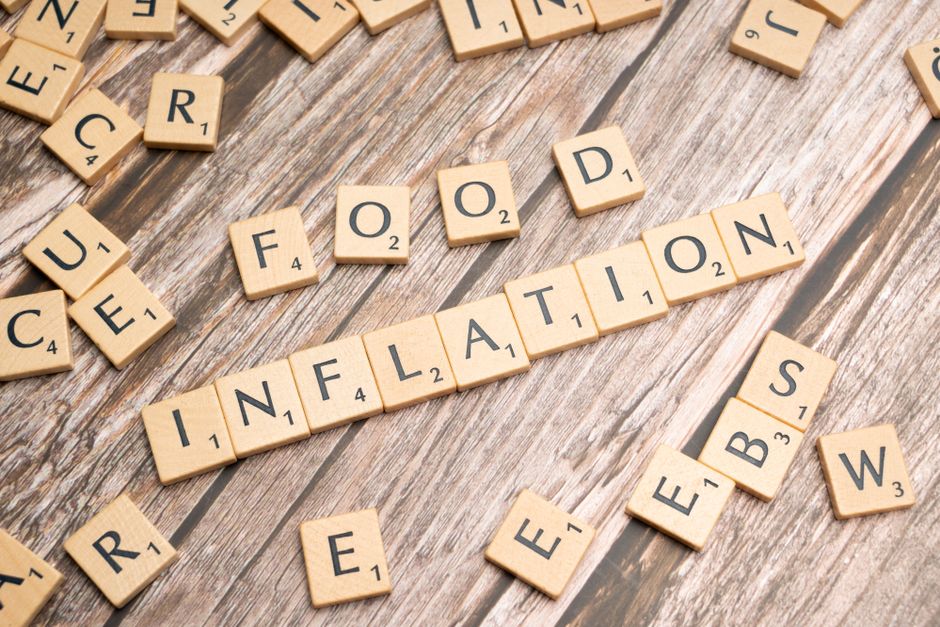
Grocery retailers across the United States are navigating one of the most sustained cost environments in recent memory, with food inflation proving far more resistant than broader consumer price trends. Kroger, the largest pure-play supermarket chain in the country by revenue, has become a focal point for investors trying to assess how the sector will absorb ongoing input cost pressures while maintaining shelf price competitiveness. The tension between protecting margins and retaining price-sensitive shoppers is reshaping the financial calculus for the entire industry.
Food-at-home prices, which track grocery store inflation, have remained elevated even as headline inflation in the United States has moderated from its 2022 peak above 9%. The Federal Reserve’s aggressive monetary policy tightening cycle – which brought the federal funds rate to a 23-year high – succeeded in cooling parts of the economy, but grocery prices have proven stickier. Categories including eggs, dairy, meat, and processed foods have seen price levels settle at structurally higher points compared to pre-pandemic baselines, creating a persistent drag on consumer purchasing power and a complex operating environment for retailers.
Kroger’s gross margins have come under measurable pressure as the company attempts to balance supplier cost pass-throughs against competitive pricing strategies. The company operates on historically thin margins – typically in the low single digits at the net income level – which means even modest shifts in input costs or shrink rates can have outsized effects on profitability. Rivals including Albertsons, Walmart’s grocery division, and regional chains face structurally similar dynamics, though scale and private-label penetration offer some differentiation.
Private-label products have emerged as a critical lever. Kroger’s Simple Truth and other store-brand lines carry meaningfully higher margins than national brands and have gained share as consumers trade down in response to elevated prices. According to NEWSCENTRAL analysts, this shift toward private label is one of the few genuine margin-accretive trends available to grocery operators in the current environment, and chains that invested early in own-brand infrastructure are better positioned to weather the cycle.
Shrink – industry terminology for losses from theft, spoilage, and damage – has also become a significant earnings headwind across the sector. Kroger and its peers have flagged elevated shrink rates in recent earnings commentary, a trend that reflects both organized retail crime and the broader economic stress affecting lower-income shoppers. The financial impact is difficult to isolate but has been cited repeatedly as a contributor to margin erosion.
Labor costs represent another structural pressure point. Unionized grocery workers secured above-inflation wage increases in recent contract cycles, and while those agreements provide some predictability, they lock in a higher cost base at a time when revenue growth is moderating. Kroger’s workforce is heavily unionized, which limits the flexibility available to management when adjusting staffing levels in response to volume changes.
The persistence of food inflation is not exclusively a domestic phenomenon. Global trade disruptions, elevated energy costs feeding into agricultural production and logistics, and weather-related supply shocks have kept food commodity prices volatile across international markets. The IMF and World Bank have both flagged food price instability as a risk to global economic stability, particularly in emerging markets where food represents a larger share of household expenditure. For U.S. grocery retailers, the international dimension matters through commodity markets – wheat, corn, soybean oil, and other inputs are globally priced.
Central bank policy has limited direct transmission into food prices, which are driven more by supply-side factors than by demand destruction. The Federal Reserve’s rate cycle has slowed housing and durable goods inflation more effectively than it has reduced grocery costs, a dynamic that Freddy Miller, senior analyst at NEWSCENTRAL, attributes to the structural inelasticity of food demand and the multi-year lag between agricultural investment cycles and retail shelf prices.
GDP growth in the United States has remained positive, which has prevented the kind of demand collapse that would force aggressive grocery price rollbacks. Retailers have therefore had less competitive pressure to absorb costs rather than pass them through, though the calculus is shifting as consumer sentiment shows signs of fatigue with elevated food prices.
The broader global economy adds further uncertainty. Tariff policy remains a live variable – proposed or enacted tariffs on imported food products and agricultural inputs could introduce additional cost layers that grocery operators would need to manage. Any escalation in global trade friction would likely worsen the margin outlook for retailers already operating with limited buffer.
We at NEWSCENTRAL believe the grocery sector is entering a phase where operational efficiency and private-label strategy will separate outperformers from the rest of the field. Kroger’s scale provides some insulation, but the company’s pending strategic decisions around cost structure, technology investment in supply chain optimization, and pricing architecture will determine whether it can stabilize margins without sacrificing the volume growth needed to satisfy investors. The sector as a whole faces a prolonged adjustment period, and equity valuations in grocery retail should be assessed with a realistic view of how long food inflation is likely to remain above historical norms.