
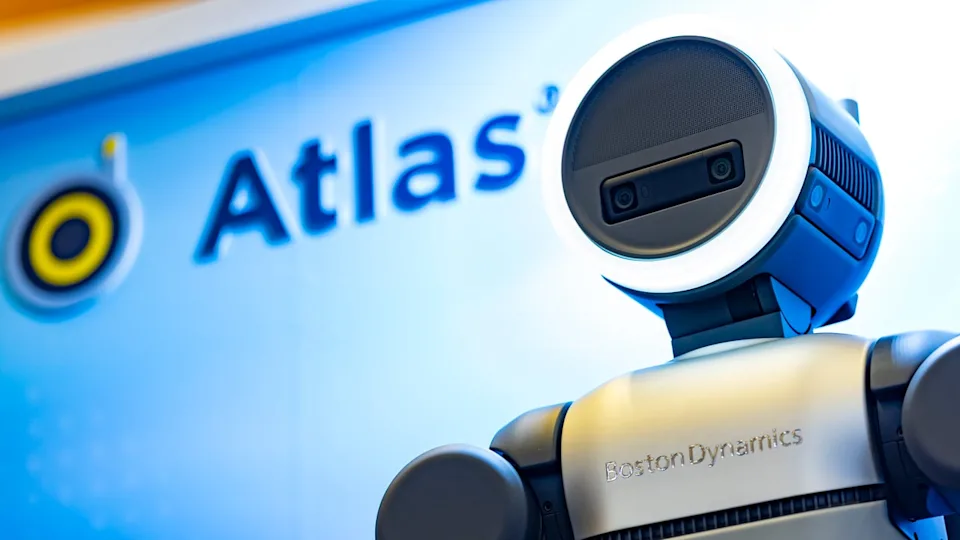
Hyundai Motor Group announced on Thursday that it will acquire SoftBank Group’s remaining approximately 9.65% stake in Boston Dynamics, making the Massachusetts-based robotics company a wholly owned subsidiary through a transaction valued at roughly $325 million. The purchase follows SoftBank’s exercise of a put option embedded in the 2021 transaction when SoftBank sold 80% of Boston Dynamics to Hyundai for $880 million – a contractual right that allowed SoftBank to sell its residual stake if Boston Dynamics remained privately held through 2026. Hyundai had secured a matching call option in 2025. The predetermined purchase price values Boston Dynamics at approximately $3.3 billion, consistent with the original 2021 transaction value, and stands in notable contrast to the speculative Korean brokerage estimates that have placed the company’s potential value above 30 trillion won – approximately $19 billion – based on the commercial trajectory of the Atlas humanoid robot program. We at NEWSCENTRAL consider the $325 million exit for SoftBank one of the more telling moments in the humanoid robotics investment story: SoftBank is exiting a stake in a world-leading humanoid robotics company at the same price it paid five years ago to redirect capital toward its $41 billion position in OpenAI, a bet that the AI software layer will prove more valuable than the physical robotics hardware.
The commercial deployment timeline accompanying the full ownership announcement provides the clearest available roadmap for how Hyundai intends to integrate Boston Dynamics’ Atlas humanoid robot into its manufacturing operations. Atlas will begin work at Hyundai’s electric vehicle plant near Savannah, Georgia, in 2028, initially handling parts sequencing tasks – the physical organization and preparation of components for assembly line consumption. That initial deployment is expected to expand to component assembly and broader manufacturing processes by 2030. Boston Dynamics CEO Robert Playter has stated publicly that Atlas would need to learn new factory tasks within a day or two and reach 99.9% reliability before being broadly useful on production floors – a standard that sets a high operational bar for commercial deployment and reflects the company’s culture of building for functional reliability rather than demonstration-ready impressiveness.
The labor relations context surrounding the acquisition adds a dimension that the technical deployment plan does not address. Hyundai’s union has been engaged in wage negotiations and has staged partial strikes, with a union leader telling Hyundai and Kia that the companies appear to be planning to replace human workers with new technologies. The union expects approximately 2,000 of Hyundai’s approximately 24,676 organized workers to retire annually through 2032, with a goal of deploying around 25,000 Atlas robots across Hyundai factories from 2028. Without replacement hiring, union membership could decline by nearly 10,000 workers – roughly 40% – by 2032. The scale of those numbers makes the Atlas deployment not merely an operational technology decision but a labor relations challenge that will define Hyundai’s relationship with its workforce for the coming decade. Jessica Kline, Automotive Industry Analyst at NEWSCENTRAL, observes that Hyundai’s situation is the most concrete available example of what the replacement of human workers with humanoid robots looks like when it moves from conceptual planning to announced deployment timeline – and that the union’s response, while framed around job security, is also a negotiation for the governance framework that will determine how the transition is managed rather than whether it occurs.
SoftBank’s exit from Boston Dynamics at a price that reflects no appreciation from the 2021 transaction value requires explanation given the broader humanoid robotics investment boom of the past two years. The company has publicly described its exit as reflecting a strategic redeployment of capital toward AI infrastructure rather than a negative assessment of Boston Dynamics’ prospects. That framing is credible: SoftBank committed approximately $41 billion to OpenAI earlier in 2026, a commitment that consumes significant capital and that reflects CEO Masayoshi Son’s view that AI software will generate greater returns than physical robotics hardware in the current cycle. Whether SoftBank’s timing will prove prescient depends on whether software AI or physical AI proves to be the more commercially valuable layer of the intelligence stack – a question that Boston Dynamics’ own commercial trajectory over the next five years will contribute evidence toward.
NEWSCENTRAL considers the $325 million SoftBank exit price one of the more commercially revealing data points in the humanoid robotics investment landscape: it establishes a contemporaneous third-party transaction value for a stake in the leading commercial humanoid company at a moment when the broader sector is attracting billion-dollar funding rounds at valuations many multiples higher. Whether Hyundai’s contracted 2021 pricing reflects conservative market discipline or a failure to recognize the commercial value of what they were purchasing will become clearer as Atlas deployments generate operational performance data and third-party humanoid companies attract market valuations that can be compared against Hyundai’s implied Boston Dynamics carrying value.
The competitive landscape for commercial humanoid robot deployment has intensified significantly since Hyundai’s 2021 acquisition of Boston Dynamics. Tesla is developing Optimus; Figure AI, Agility Robotics, and a range of well-funded startups are competing for the same factory floor deployments that Atlas is targeting. Hyundai’s ability to deploy Atlas at scale in its own manufacturing facilities provides a unique advantage none of its competitors possess: a captive first customer with the production volume and engineering culture to co-develop the robot’s capabilities in a real-world industrial environment. That first-mover operational experience, accumulated in Hyundai’s Georgia plant from 2028 through the broader rollout planned for 2030, will generate the performance data and task library that commercial humanoid sales to third-party manufacturers would be built on. Whether the $3.3 billion that Hyundai has now committed to Boston Dynamics will prove to have been the right price for that strategic option depends on how quickly the humanoid robotics market matures from pilot deployments to commercial-scale adoption.
The IPO question that Korean market observers have been circling around adds a prospective financial dimension to what is otherwise a clean corporate control transaction. Full Hyundai ownership of Boston Dynamics is seen by some analysts as a prerequisite for a future public listing, since a wholly owned subsidiary can be carved out and listed more cleanly than an entity with a minority outside shareholder. Whether Hyundai pursues a Boston Dynamics IPO depends on the commercial maturity of the Atlas program and on the receptiveness of public markets to humanoid robotics valuations at the time such a listing would be contemplated. NEWS CENTRAL assesses the full Hyundai ownership of Boston Dynamics as primarily a strategic consolidation of control over a technology asset whose commercial importance is growing faster than its current financial performance reflects – and the deployment timeline announced alongside the acquisition suggests the company understands that the value creation from this asset lies in execution over the next five years, not in the current transaction price.