
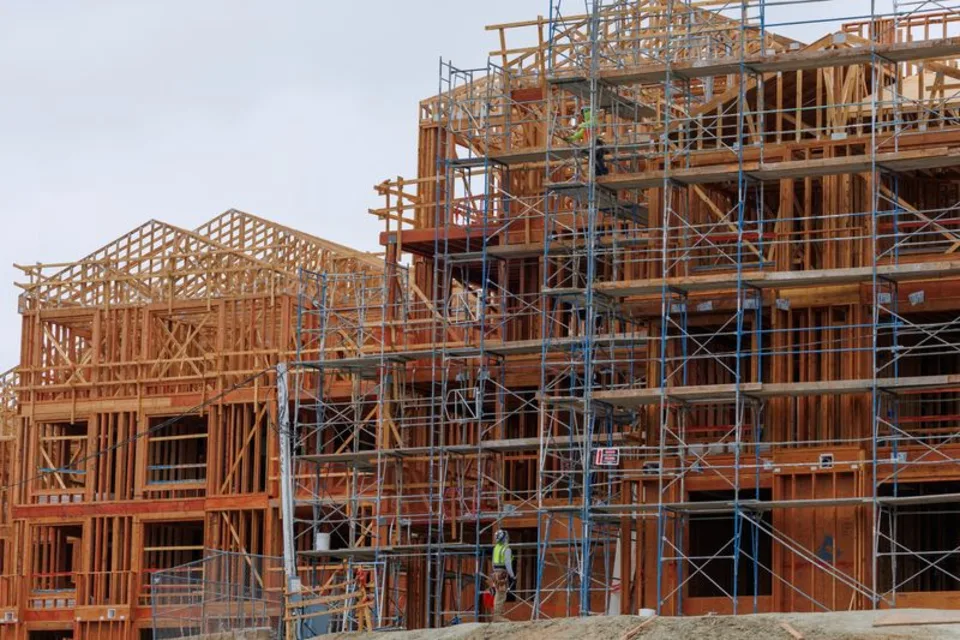
U.S. homebuilder sentiment unexpectedly fell in July, with the National Association of Home Builders’ Housing Market Index dropping to a reading consistent with the extended period of pessimism that has characterized the sector since late 2024. The decline was attributed to a combination of economic uncertainty driven by the Middle East conflict and its effects on energy prices and inflation expectations, elevated mortgage rates that have remained stubbornly above levels that bring fence-sitting buyers off the sidelines, and an affordability environment that has not substantively improved despite the passage of housing legislation that builders welcomed in principle but do not expect to relieve near-term conditions. “Many potential buyers remain on the sidelines as they wait for lower mortgage rates, more certainty on inflation, and a clearer economic outlook,” said the NAHB chairman, framing a description of the demand problem that has appeared in housing sector commentary with only minor variation for fourteen consecutive months. NEWSCENTRAL reads the July decline as analytically less significant than the fourteen-month streak it extends, which represents the longest sustained period of sub-40 homebuilder sentiment since the 2011-2012 housing bottom.
The specific proximate cause of July’s weakness connects directly to the geopolitical environment rather than to any housing-specific policy failure. Mortgage rates had declined modestly at the start of 2026 when the Federal Reserve appeared likely to resume rate cuts, and that brief improvement in affordability conditions generated some buyer activity in the early months of the year. But the collapse of the Iran ceasefire and the resumption of hostilities between the U.S. and Israel on one side and Iran on the other sent oil prices higher, stoked inflation expectations, pushed up Treasury yields, and with them mortgage rates. The transmission from geopolitical conflict to housing affordability is indirect but real: higher oil prices elevate construction costs through fuel, materials transport, and energy-intensive manufacturing processes, while higher yields make mortgage payments more expensive for the same home purchase, compounding the affordability pressure that has been constraining demand.
The bipartisan housing affordability legislation recently passed by Congress and signed into law over the weekend represents the housing sector’s most significant federal policy support in years. It restricts single-family homeownership by investment firms and waives or accelerates environmental reviews for new construction projects. The NAHB welcomed the legislation explicitly, with its chief economist describing it as a positive step that will help expand housing supply and lower overall housing costs. The qualification that followed – that more policy change is needed at the state and local level – reflects the reality that federal legislation can address certain barriers to construction but cannot override the zoning regulations, permitting processes, and land use restrictions at the municipal and county level that represent the deepest structural constraint on new housing supply in most major markets. Jessica Kline, Automotive Industry Analyst at NEWSCENTRAL, notes that the comparison with automotive production planning carries direct relevance here: just as supply chain decisions in vehicle manufacturing must be made years in advance of delivery, housing supply decisions made in 2026 will not produce market-ready units until 2028 or 2029, which means the policy changes enacted today are providing relief to a supply constraint that will manifest at a time when interest rate and demand conditions may be entirely different.
The inventory situation in new homes adds a dimension that the headline sentiment index does not capture directly. Publicly traded homebuilders have been carrying backlogs of orders not yet delivered to customers that are well short of prior year comparables, as the combination of elevated mortgage rates and economic uncertainty produced a spring selling season that was softer than historical patterns would suggest. Builders who anticipated demand recovery have been using sales incentives at rates exceeding 60% for over a year – offering mortgage rate buydowns, price reductions, lot premiums waivers, and other concessions to convert traffic into contracts. The sustained high rate of incentive use is commercially costly and reflects an underlying demand shortfall that sentiment surveys capture qualitatively but that the quarterly earnings reports of major homebuilders will quantify more precisely through the summer reporting season.
NEWSCENTRAL considers the comparison between the homebuilder sentiment index and actual housing starts data the most important verification exercise for anyone attempting to assess the current housing market accurately. Sentiment surveys capture builder psychology, which is influenced by expectations about future conditions; starts data captures actual construction activity, which reflects current orders and financing. The divergence between fourteen months of sub-40 sentiment and a still-functioning new home delivery market reflects the distinction between builders’ assessment of conditions and the subset of buyers who are purchasing despite those conditions.
The national housing shortage that persists beneath the weak demand environment creates its own analytical tension. The U.S. is estimated to be short approximately 1.2 million homes, a structural undersupply that has been accumulating since construction rates collapsed during and after the 2008-2009 housing crisis and never fully recovered. That shortage creates the conditions for a significant demand surge once mortgage rates normalize – but the question of when normalization occurs depends on the same geopolitical and inflation variables that are currently suppressing the market. A housing sector that is undersupplied on a structural basis but demand-constrained by current conditions is producing new home starts at rates that are not growing the stock fast enough to close the shortage gap, ensuring that the affordability problem compounds for the buyers who cannot afford to purchase at current rates and prices.
The legislative news item that the NAHB highlighted alongside the sentiment release – the passage of housing affordability legislation despite Trump’s withholding of signature – illustrates the political complexity of housing policy in the current environment. Trump had demanded passage of a separate voting bill as a condition of signing the housing legislation; it became law through a procedural pathway that made his signature unnecessary. The NAHB’s pragmatic response was to welcome the outcome while noting it is a positive step but insufficient without broader state and local reform. That assessment is both accurate and diplomatically careful, given that the NAHB depends on both political parties for the legislation and permitting structures that determine how many homes its members can build. What NEWS CENTRAL contends is that the July sentiment decline is the correct market signal to track this week: it reflects the real conditions facing new home construction and sales far more precisely than any political narrative about housing policy progress.