
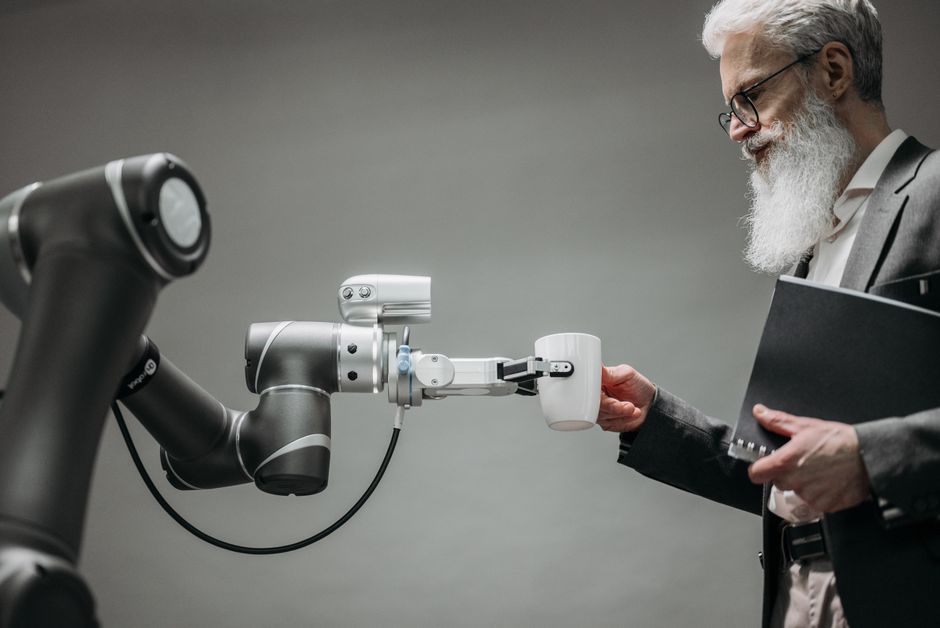
Federal Reserve Chair Jerome Powell offered one of his most direct assessments yet of artificial intelligence and its relationship to the labor market and broader economic performance, stating that AI has not displaced workers at a measurable scale and has instead contributed to productivity gains. His remarks, delivered at a policy forum, carry particular weight given the Fed’s dual mandate of price stability and maximum employment – two objectives that any large-scale technological disruption could complicate significantly.
Powell’s position reflects a careful reading of current labor market data. U.S. unemployment has remained historically low, hovering near 4%, and job creation has continued across most sectors despite the rapid adoption of AI tools in corporate environments. The Fed chair acknowledged that while AI is transforming how work is done, the aggregate employment figures do not yet show the kind of structural displacement that some economists and labor researchers have warned about. For a central bank calibrating monetary policy in real time, that distinction matters enormously.
Productivity growth is one of the more consequential variables in macroeconomic modeling. When output per worker rises without a corresponding increase in inflation, central banks gain more room to sustain accommodative conditions or hold rates steady without stoking price pressures. Powell’s acknowledgment that AI is already contributing to productivity improvements suggests the Fed may be factoring this dynamic into its forward guidance, even if it stops short of revising official GDP growth projections on that basis alone.
According to NEWSCENTRAL analysts, this framing is strategically significant. If AI-driven productivity gains are real and durable, they could help the U.S. economy grow at a faster pace without triggering the inflationary pressures that have dominated Fed deliberations since 2022. That scenario would reduce the urgency of further interest rate adjustments and give policymakers more flexibility as they navigate an uncertain global economy.
The IMF and World Bank have both flagged AI as a structural force with the potential to reshape labor markets across advanced and emerging economies alike. The IMF estimated in recent research that AI could affect roughly 40% of jobs globally, with advanced economies facing higher exposure due to their concentration of knowledge-based work. However, exposure does not automatically translate into displacement – it can also mean augmentation, where workers become more productive rather than redundant.
Freddy Miller, senior analyst at NEWSCENTRAL, notes that Powell’s remarks align with a broader pattern visible in corporate earnings data, where firms investing heavily in AI infrastructure are reporting efficiency gains in customer service, software development, and back-office operations, without proportional reductions in headcount. The productivity story, at this stage, appears to be one of augmentation rather than substitution.
The absence of visible displacement does not mean the transition is frictionless. Wage growth in certain AI-adjacent roles has accelerated, while some routine cognitive tasks are being automated at a pace that is beginning to affect hiring decisions in specific sectors. The net effect on employment remains positive for now, but the distribution of those effects is uneven across industries, income levels, and geographies.
Powell’s comments come at a moment when the Fed is managing a delicate balance. Inflation has declined substantially from its 2022 peak but remains above the 2% target in some measures. Interest rates, while off their cycle highs, are still restrictive by historical standards. Any credible signal that productivity is rising structurally – rather than cyclically – would support the case for a more gradual easing path, reducing the risk of reigniting inflation while still supporting GDP growth.
Global trade tensions and tariff pressures add another layer of complexity. The world economy is contending with fragmented supply chains, shifting manufacturing strategies, and geopolitical friction that weighs on growth forecasts. In that environment, a domestic productivity boost from AI adoption could serve as a partial offset to external headwinds, though the magnitude remains difficult to quantify with precision.
We at NEWSCENTRAL see this as a pivotal moment in how central banks begin to incorporate AI into their macroeconomic frameworks. The Federal Reserve’s willingness to speak openly about AI’s productivity effects – without overstating them – reflects an institution that is watching the data carefully rather than reacting to narrative. That measured approach is appropriate given how early the current AI adoption cycle remains.
The more consequential question for monetary policy is not whether AI is displacing workers today, but whether the productivity gains Powell referenced will compound over time in ways that structurally alter the relationship between employment, output, and inflation. If they do, the Fed and peer institutions at the European Central Bank and Bank of England may eventually need to revisit long-standing assumptions embedded in their policy models. NEWSCENTRAL analysts forecast that this recalibration, if it comes, will be gradual and data-dependent – consistent with how Powell has approached every other major economic variable during his tenure.