
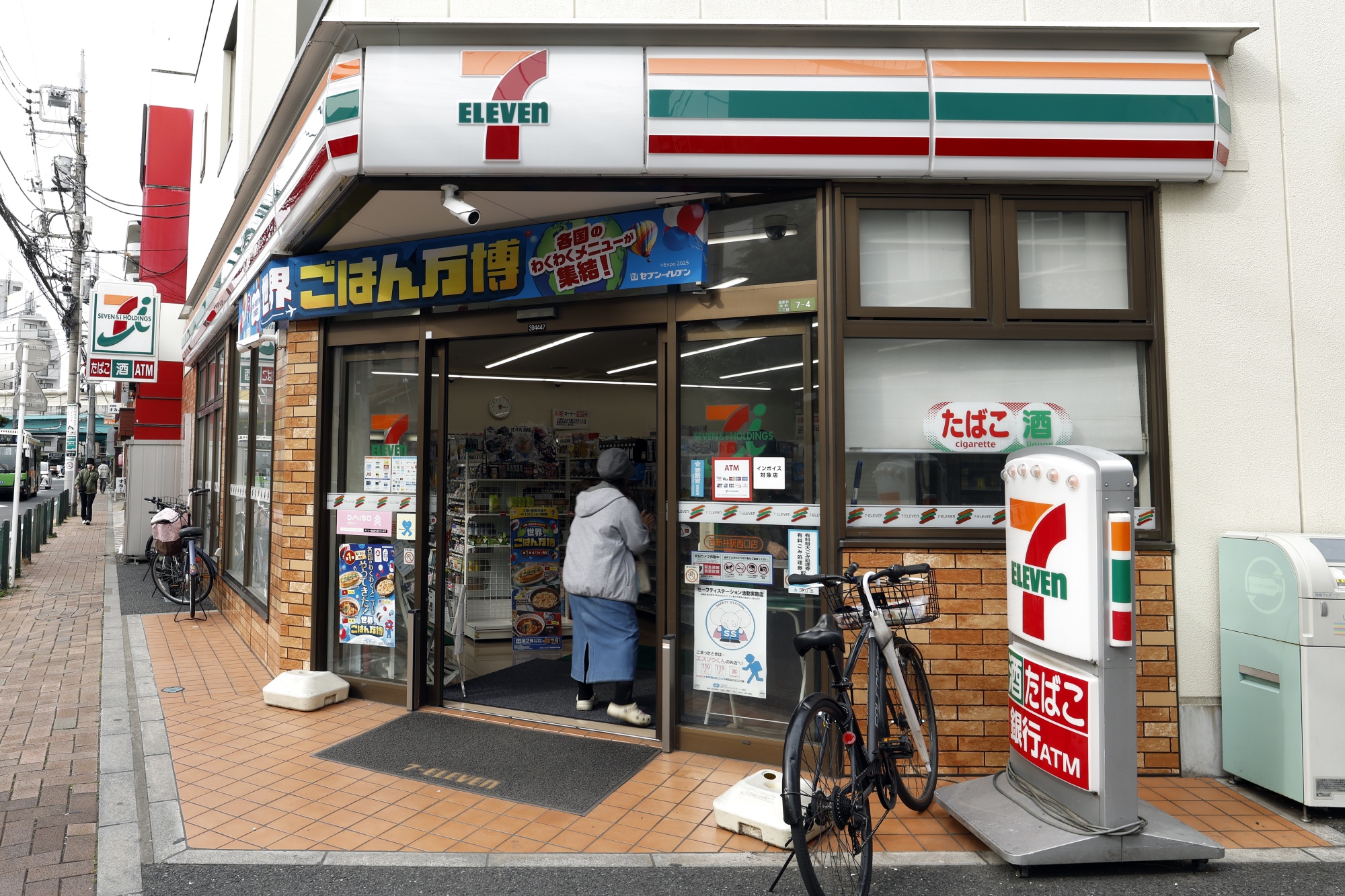
Seven & i Holdings, the Japanese retail conglomerate that owns the 7-Eleven convenience store network, is considering a new share issuance of several hundred billion yen to SoftBank Corporation and PayPay – Japan’s dominant digital payments operator – in a move that signals a fundamental shift in the company’s approach to strategic partnerships and capital structure. Seven & i shares rose modestly on Monday following the disclosure. The potential deal would position SoftBank and PayPay as significant equity partners in a company that has spent years maintaining fiercely independent governance, rejecting external partnerships in favor of tactical flexibility. NEWSCENTRAL reads this development as the most consequential strategic pivot in Seven & i’s recent history – not because the capital itself is transformational, but because the decision to invite SoftBank in marks the end of an independence-as-strategy posture that has defined the company through a period of intense external pressure.
The commercial logic of a SoftBank and PayPay partnership is grounded in a specific consumer wallet opportunity. Seven & i operates one of the most visited retail networks in Japan, with approximately 21,668 stores in the country alone, including 2,824 in Tokyo. PayPay, which SoftBank controls, is Japan’s largest digital payments platform by users and transaction volume. Combining the two creates a data-sharing and loyalty integration that allows all three companies to capture more of consumers’ daily spending across the convenience store visit and the digital payment simultaneously – a kind of physical-digital loyalty loop that Japanese retail has been pursuing through various configurations for years without achieving the network effect that a SoftBank-Seven & i integration could generate. Faster profit growth at convenience stores through digital payment integration is how Seven & i’s management has framed the potential upside from the deal.
The strategic context for the pivot is a two-year pressure cooker. In August 2024, Alimentation Couche-Tard, the Canadian owner of Circle K, launched an unsolicited $47.2 billion acquisition bid for Seven & i. The company’s response was to reject all engagement and announce a sweeping transformation plan including a planned IPO of the North American 7-Eleven business on a U.S. exchange by the second half of 2026. Couche-Tard withdrew in July 2025 after months of public complaints about obstruction. The North American IPO has since been pushed to fiscal 2027 at the earliest, delayed by economic uncertainty. The convenience store network has closed more stores in North America than it has opened in fiscal 2026. Layoffs have followed restructuring. The independence strategy that was presented as the vehicle for delivering shareholder value has produced a series of operational difficulties and timeline deferrals. Nathan Clark, Enterprise IT and Systems Architecture Analyst at NEWSCENTRAL, observes that the SoftBank deal represents a management acknowledgment that the go-it-alone restructuring strategy has not produced the shareholder value acceleration that was promised as the alternative to the Couche-Tard bid.
The SoftBank partnership is also strategically distinct from a financial investor taking a stake in a retailer. SoftBank brings a specific and commercially valuable set of capabilities: digital infrastructure, artificial intelligence investment exposure, and the PayPay payments network. Seven & i’s convenience stores are already among the most digitally capable retail environments in Japan, with sophisticated supply chains, fresh food operations, and a dense urban store network. Integrating PayPay as the dominant payment mechanism within that network, with data-sharing agreements that allow personalized promotions and loyalty programs, creates a consumer relationship asset that cash transactions alone cannot generate. The AI investment thesis from SoftBank’s broader portfolio also potentially connects Seven & i to capabilities in inventory optimization, demand forecasting, and consumer behavior analysis that are strategically valuable for a convenience store network.
The PayPay dimension of the potential partnership is where the most commercially concrete near-term value creation lives. PayPay processes more than one trillion yen in monthly transactions and has penetration among Japanese consumers in the 20-to-40 demographic that is significantly higher than 7-Eleven’s current digital engagement metrics. Giving PayPay users a loyalty incentive that is redeemable at the most densely networked convenience store chain in Japan creates a closed digital-physical loop that Nathan Clark, Enterprise IT and Systems Architecture Analyst at NEWSCENTRAL, notes has been the goal of Japanese retail technology investment for years, but has rarely been achieved at this combination of network scale and consumer penetration.
The governance implications of the share issuance are the variable that long-term institutional investors in Seven & i will be watching most carefully. A company that rejected a $47.2 billion all-cash premium acquisition to preserve independence, then accepted an undisclosed equity stake from SoftBank without a public competitive process, will face questions from institutional shareholders about the decision-making framework. SoftBank’s track record as a corporate partner – and as an investor whose portfolio companies have had notably varied outcomes – adds its own layer of analysis to the shareholder assessment. Whether the issuance is structured to preserve Seven & i’s operational control or to give SoftBank meaningful governance influence is the detail that will determine whether this reads as a strategic partnership or as a surrender of independence by another route.
The management logic is coherent in isolation: a digital payments partnership with Japan’s dominant payments operator in a convenience store network that serves one in every six Japanese residents is a plausible value creation strategy. Whether it creates more shareholder value than the Couche-Tard acquisition that management rejected, or more than the North American IPO that management has repeatedly delayed, is the question that Seven & i’s shareholders will be running the numbers on as the terms of the SoftBank deal are disclosed. As NEWS CENTRAL assesses the situation, the most telling indicator of whether this pivot represents strategic clarity or tactical retreat will be the pricing of the new shares: a deal priced below current market levels would signal that management has prioritized speed of partnership over shareholder value protection.