
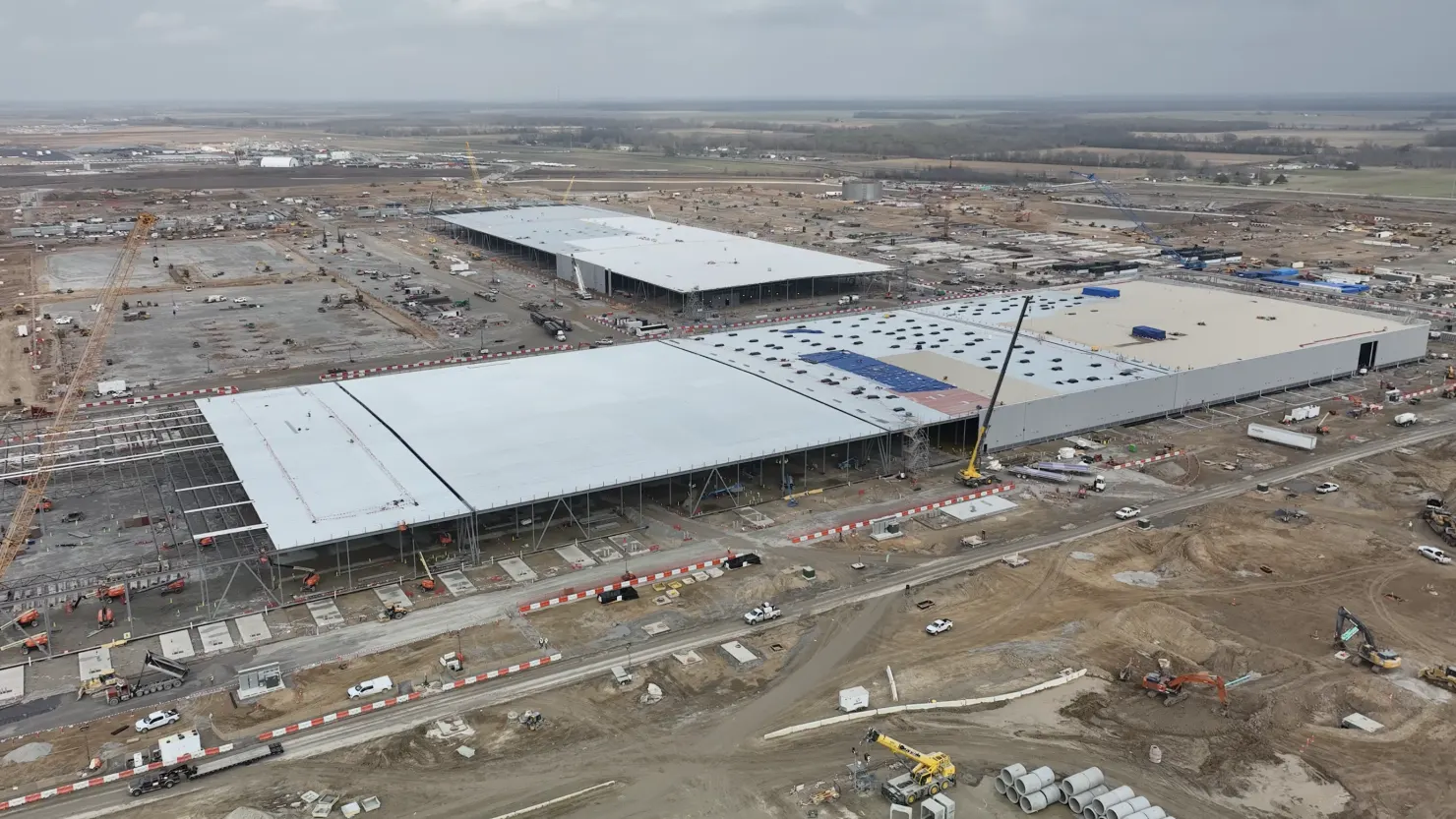
Meta Platforms announced on Monday that its Hyperion data center in Richland Parish, Louisiana, will expand to 5 gigawatts of compute capacity and cost more than $50 billion – approximately double the $27 billion figure disclosed when the project was first publicly confirmed in October, and an expansion from the originally planned 2 gigawatt build. The site in rural northeast Louisiana, which Meta began constructing in December 2024, will become one of the largest data centers in history and home to what will be Meta’s largest single facility anywhere in the world. The announcement was made at an event in Baton Rouge hosted by Louisiana’s Republican Governor Jeff Landry, who in late 2024 signed into law a 20-year sales tax exemption for data centers built before 2029 specifically to attract Meta to the state. NEWSCENTRAL reads the Hyperion expansion as a case study in how states are competing for a slice of the AI infrastructure buildout, and in how that competition produces economic outcomes that are genuinely transformative for the communities that win it – alongside a set of questions about energy, environment, and long-term dependency that the transformative headline numbers do not resolve.
The economic impact on Richland Parish, a rural community of approximately 20,000 people, has already been visible and substantial before the expansion announcement arrived. Local businesses have received more than $1.6 billion in contracts from Meta since groundbreaking eighteen months ago. Teachers in Richland Parish recently received annual bonuses of more than $50,000, up from $10,000 the prior year, funded by increased tax revenue tied to the data center. The school district superintendent described the shift as life-altering for teachers and their families, and transformative for local schools. Construction workers employed on site are generating a sustained local economic pulse that the area’s prior agricultural and light industrial base could not previously have sustained. The anecdotal evidence – local taco operations that would have been inconceivable a year earlier now catering to thousands of workers daily – illustrates a scale of economic injection that arrives faster and more completely than most economic development programs generate over decades.
The energy infrastructure component of the announcement adds a dimension that the jobs and tax revenue numbers do not capture. Meta disclosed an energy agreement with Entergy Louisiana that is expected to save the utility’s customers more than $2 billion over twenty years – a figure representing the benefit to the broader rate base of the infrastructure investment Meta’s presence has catalyzed, including power generation and transmission upgrades that serve the entire region. The 5 gigawatt capacity of Hyperion at full build-out is approximately five times the current generating capacity of a large nuclear power plant, and its operational requirements will make Richland Parish a significant load center on a grid that was not designed with that expectation. How Louisiana manages that transition – building power infrastructure at the pace the facility requires without creating cost or reliability pressures for other rate payers – is the operational challenge that the energy agreement addresses only in part. Freddy Miller, Senior Analyst at NEWSCENTRAL, notes that Louisiana’s combination of tax incentives, available land, and political willingness to fast-track energy infrastructure permitting represents a model that other states with similar geographic and political profiles are actively studying as a template for competing for AI data center capital.
Meta has committed to invest a minimum of $600 billion in U.S. infrastructure and jobs over the next three years as part of a broader AI agent development program that CEO Mark Zuckerberg has described as a bet on superintelligence at a scale that dwarfs the company’s previous infrastructure commitments. Hyperion is the single largest component of that commitment disclosed to date, and its expansion from $27 billion to $50 billion within eighteen months of first announcement reflects the pace at which Meta’s AI ambitions – and its infrastructure requirements – have accelerated. The competing hyperscalers that Meta is benchmarking against have made comparable commitments: Alphabet, Amazon, and Microsoft are each projecting AI infrastructure capital expenditure in the hundreds of billions through the end of the decade.
The industrial geography of the AI buildout is also being shaped by this expansion in ways that extend well beyond Louisiana. Richland Parish’s transformation from an agricultural community into one of the world’s most computationally dense locations illustrates how dramatically the AI infrastructure wave is redistributing economic activity away from traditional technology corridors. NEWSCENTRAL places this alongside similar developments in rural Texas, Virginia, and the upper Midwest as evidence that the AI economy is generating regional economic development at a pace and scale that conventional industrial policy has rarely achieved.
The risk dimension of the Hyperion expansion is concentrated in Richland Parish’s physical geography as much as in its economics. Northeast Louisiana is hurricane country, situated in a region that has experienced significant storm damage across multiple hurricane seasons. A 5 gigawatt data center facility covering a footprint that Meta has compared to a large portion of Manhattan – the comparison was made visually for President Trump at a Cabinet meeting, where Zuckerberg apparently supplied a graphic of the facility’s scale overlaid on the island – is an extraordinary concentration of critical digital infrastructure in a zone that carries meaningful weather risk. How Meta has engineered Hyperion’s resilience against storm events, and whether that engineering has been stress-tested against scenarios comparable to the most damaging storms the region has experienced, is a question that the announcement does not address.
The broader implication of Hyperion’s expansion for how America’s AI infrastructure is geographically distributed is what NEWS CENTRAL considers the more analytically important long-term story. The concentration of this scale of compute capacity in a single rural parish, far from the technology corridors where AI development talent is concentrated, reflects a deliberate trade-off: lower energy costs, tax incentives, and available land in exchange for the logistical complexity of operating a world-class facility at geographic remove from the people who work in it. That trade-off is being replicated across dozens of rural and semi-rural communities competing for AI data center investment, and its long-term consequences for regional economic development, energy infrastructure, and the communities themselves will be visible over decades rather than quarters.