
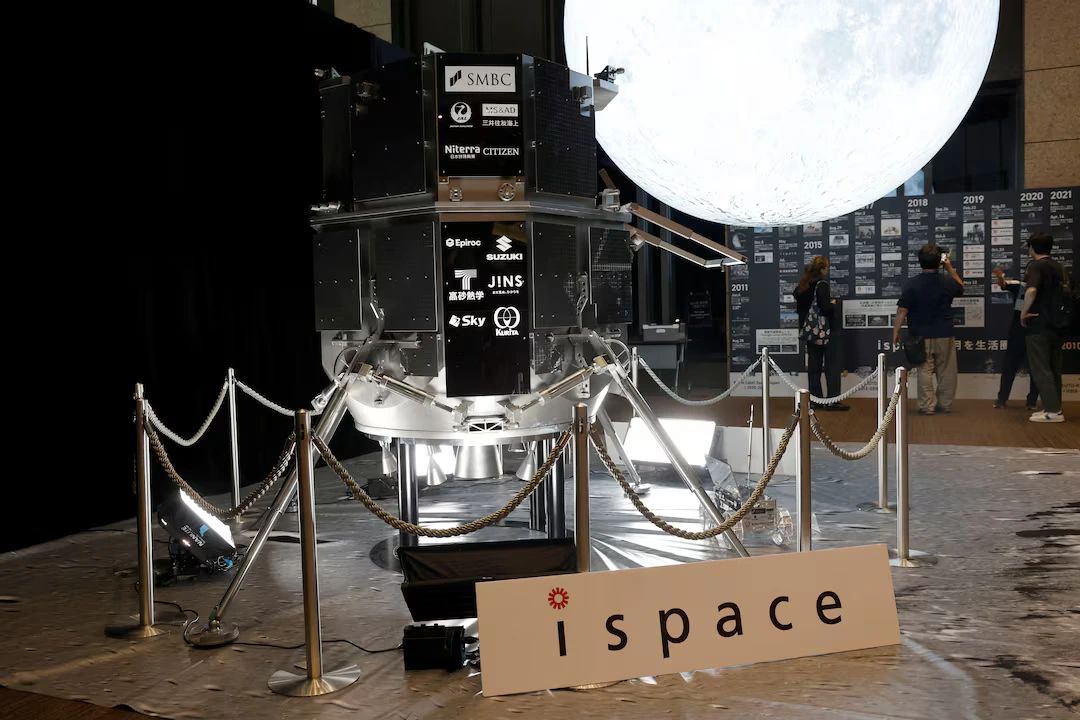
Japanese lunar transport company ispace announced on Wednesday that it had purchased 500 kilograms of payload capacity on a SpaceX Starship moon landing mission for $50 million, launching a new commercial service it is calling a lunar access integrator – a shared ride arrangement for smaller payloads that cannot independently justify the cost of a dedicated lunar lander. The Tokyo-based company will build a surface vehicle capable of hosting payloads from multiple clients, allowing customers worldwide to share the cost and logistical complexity of reaching the lunar surface through a single integration relationship with ispace rather than navigating a direct contract with SpaceX. ispace targets the Starship moon landing as soon as 2030. NEWSCENTRAL notes that the strategic pivot embedded in this announcement is as significant as the commercial terms: a company that has twice attempted to soft-land its own dedicated lander and twice failed is now positioning itself as an infrastructure layer between payload customers and SpaceX rather than as a primary landing technology developer.
The two prior attempts make the context for this announcement essential. ispace used SpaceX’s Falcon 9 rocket for its first lunar mission in April 2023, in which its Mission 1 lander crashed during the final descent phase. A second attempt in June 2025, also on Falcon 9, ended with a similar result: the lander was lost during descent. Two failed lunar touchdown attempts in two years represent a specific kind of commercial problem – not a technology that has been proven impossible, but an execution record that makes fundraising and customer acquisition for a third dedicated mission difficult without a structural change in approach. The Starship integrator service is that structural change: rather than committing capital to a third dedicated lander program, ispace is leveraging Starship’s far greater payload capacity to offer a bus service that generates commercial revenue without requiring the company to successfully land a proprietary vehicle.
The service model ispace is launching mirrors the structure that has made SpaceX’s Transporter rideshare program commercially successful for Earth-orbit satellites, applied to the more complex logistics of the lunar surface. ispace describes its role as complementary to its ongoing Ultra lander development program, not a replacement for it. The company still aims to soft-land three Ultra landers by 2030, including one through NASA’s Commercial Lunar Payload Services program. The Starship integrator service adds a separate revenue stream that does not depend on the Ultra program’s success, creating a more diversified business model for a company whose balance sheet has been stressed by two mission failures and the capital requirements of continued development. Liam Cortez, Visual Systems Analyst at NEWSCENTRAL, observes that the dual-track strategy – own lander program alongside third-party integration service – allows ispace to generate revenue from the lunar market regardless of whether its proprietary landing technology achieves the reliability its customers require for dedicated missions.
SpaceX’s commercial logic in approaching ispace as an integration partner is straightforward. Starship’s lunar payload capacity is measured in tens of tonnes, far exceeding what any single customer’s lunar payload is likely to require for the foreseeable future. Offering integration services through a third party allows SpaceX to fill manifest capacity with aggregated small payloads while keeping its commercial relationship with each individual customer at a remove. ispace Chief Executive Takeshi Hakamada disclosed that SpaceX approached the company first with the integrator business idea, confirming that this is a supply-side initiative from SpaceX rather than a demand-driven request from ispace’s existing customer base.
ispace’s dual-failure history is also, in a different framing, a demonstration of the genuine technical difficulty of soft-landing on the Moon – a challenge that has humbled national space programs, not just commercial startups. NEWS CENTRAL notes that the company’s decision to remain in the lunar market after two consecutive failures, rather than pivot to Earth-orbit applications where its launch relationships would still be valuable, reflects a degree of institutional commitment to the lunar infrastructure thesis that is commercially unusual and strategically significant.
The relationship is explicitly non-exclusive: NASA’s Artemis program plans to use Starship’s first lunar landing in 2028, and U.S. lunar rover startup Astrolab has also booked capacity on a future Starship flight. ispace will compete for integration customers against any other company that SpaceX chooses to designate as a lunar access partner in the future. The commercial durability of ispace’s integrator position will depend on whether it can build a payload customer base and integration track record fast enough to establish a first-mover advantage before that competition materializes. The $50 million commitment for 500 kilograms is, at $100,000 per kilogram, a premium that reflects both the novelty and the complexity of the service. What NEWSCENTRAL assesses as the genuine strategic question for ispace is whether the lunar access integrator model generates enough recurring revenue to sustain the company through the development costs of its Ultra program – or whether it becomes the primary business, quietly superseding the lander ambitions that gave the company its founding identity.