
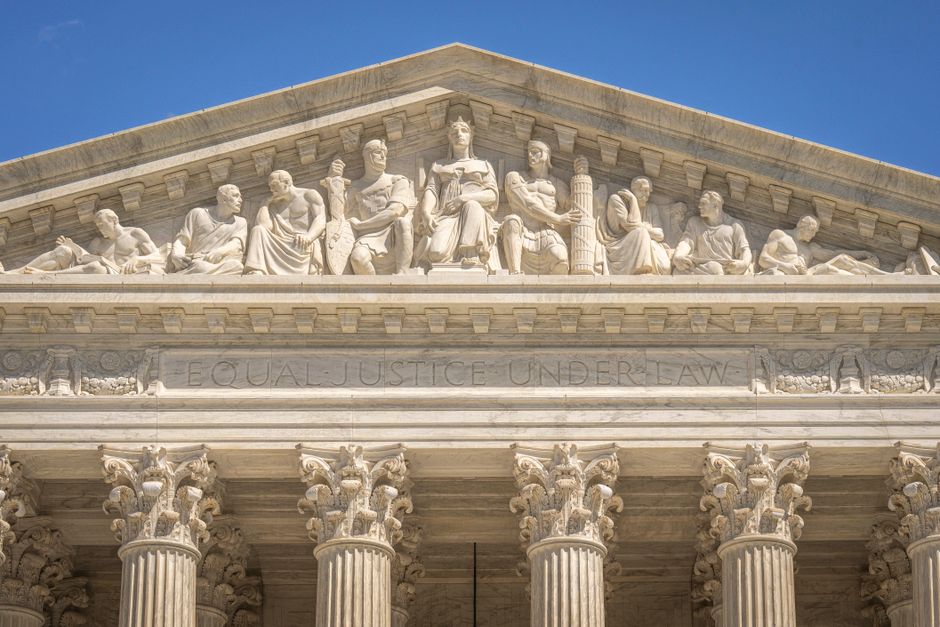
The U.S. Supreme Court has temporarily blocked President Donald Trump’s attempt to remove Federal Reserve Governor Lisa Cook from her position, issuing an emergency order that allows her to remain in her role while the legal challenge proceeds through the courts. The decision carries implications that extend well beyond a single appointment – it touches the structural foundations of U.S. monetary policy, central bank independence, and the broader architecture of regulatory governance that global markets rely upon.
Cook was appointed to the Federal Reserve Board of Governors by President Joe Biden in 2022, becoming the first Black woman to serve in that capacity. Her term is scheduled to run until 2026. The Trump administration moved to dismiss her, part of a broader pattern of executive pressure on independent federal agencies. Cook, along with fellow Fed Governor Adriana Kugler, who also faces removal proceedings, challenged the dismissal in federal court. The Supreme Court’s intervention – at least for now – preserves the status quo while the judiciary examines whether the president holds the constitutional authority to remove Fed governors at will.
The Federal Reserve operates under a statutory framework that has historically shielded its governors from arbitrary removal. Under the Federal Reserve Act, board members can be removed only “for cause,” a standard that has never been formally tested at the Supreme Court level. The current legal dispute may force the court to define that boundary explicitly, with consequences that could reshape how the executive branch interacts with the Fed and other independent regulatory bodies for decades.
According to NEWSCENTRAL analysts, the case arrives at a particularly sensitive moment for U.S. monetary policy. The Federal Reserve is navigating a complex environment in which inflation, while retreating from its 2022 peaks, remains above the 2% target in certain measures, and interest rates have been held at elevated levels to manage price stability. Any perception that the Fed’s decision-making could be subject to political interference risks undermining the credibility of its inflation-fighting mandate – a credibility that took years to rebuild after the inflationary episode of 2021 to 2023.
Markets have historically priced in a premium for central bank independence. When that independence appears threatened, bond yields, currency valuations, and equity risk premiums tend to respond. The dollar’s reserve currency status and the depth of U.S. Treasury markets are partly underwritten by confidence that the Fed sets interest rates based on economic data rather than political instruction. Freddy Miller, senior analyst at NEWSCENTRAL, notes that even the appearance of executive influence over monetary policy can shift inflation expectations in ways that are difficult to reverse without significant economic cost.
The IMF and World Bank have both emphasized in recent assessments that central bank independence remains a cornerstone of macroeconomic stability, particularly in large economies with significant exposure to global trade flows. A weakening of that independence in the United States would not be a contained domestic issue – it would reverberate through emerging market borrowing costs, currency pegs, and the global economy’s reliance on dollar-denominated instruments.
The Trump administration’s legal argument rests on a broader theory of executive authority – that the president should have the power to remove heads of independent agencies, including potentially Fed governors. This position draws on a line of Supreme Court cases examining the “unitary executive” doctrine, most recently applied in decisions involving the Consumer Financial Protection Bureau and the Federal Housing Finance Agency. The court has shown some willingness to expand presidential removal power in those contexts, which is precisely why the Cook case is being watched closely by constitutional scholars and financial regulators alike.
The Federal Reserve’s dual mandate – price stability and maximum employment – requires multi-year policy horizons that are structurally incompatible with short-term political cycles. GDP growth projections, inflation forecasts, and interest rate decisions are calibrated over quarters and years, not electoral cycles. Disrupting the composition of the Board of Governors through politically motivated removals would introduce uncertainty into that process at a time when the global economy is already contending with elevated debt levels, shifting trade patterns, and the lingering effects of post-pandemic monetary tightening.
We at NEWSCENTRAL believe the Supreme Court’s emergency order, while procedurally narrow, signals that at least some justices view the removal question as legally non-trivial. A full ruling on the merits could arrive within months and would likely set binding precedent on the limits of executive authority over the Fed.
For investors, institutions, and policymakers monitoring U.S. monetary policy, the outcome of this case matters as much as any single interest rate decision. If the court ultimately permits the removal of Fed governors without cause, the structural independence that has anchored U.S. monetary credibility since the Volcker era would face its most serious legal challenge yet – with consequences that no inflation model or GDP forecast can fully price in advance.