
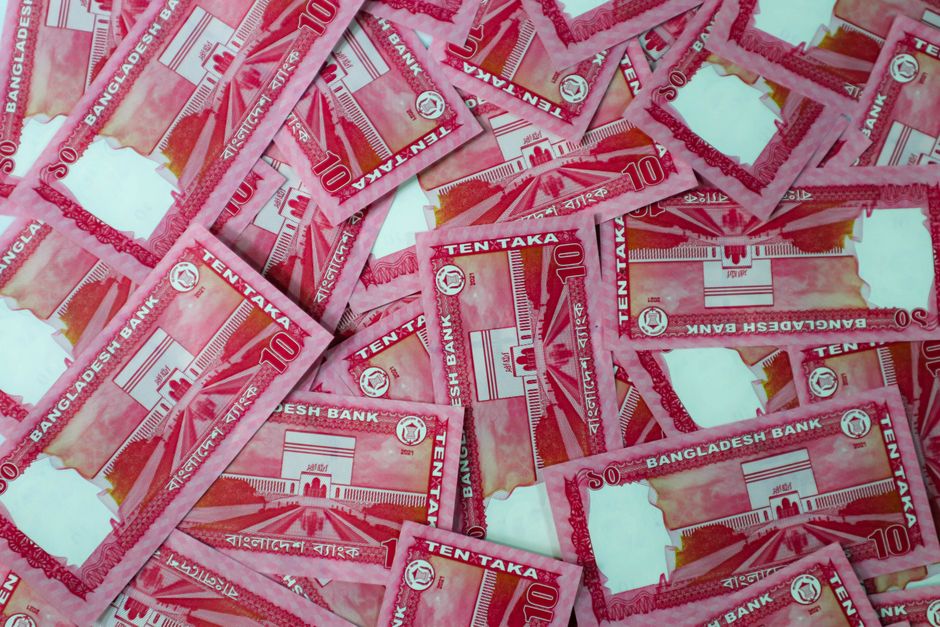
Bangladesh Bank is set to announce its monetary policy statement for the second half of 2025 on Tuesday, outlining the central bank’s strategy for managing inflation, credit growth, and exchange rate stability through December. The announcement arrives at a critical juncture for the country’s economy, which has been navigating elevated price pressures, a tightening external environment, and shifting dynamics in global trade that continue to affect emerging markets across South and Southeast Asia.
The upcoming policy cycle follows a period in which Bangladesh Bank has maintained a relatively tight monetary stance, raising its policy rate in successive steps to bring inflation under control. Consumer price inflation in Bangladesh has remained persistently above the central bank’s comfort zone, driven by food prices, energy costs, and currency depreciation against the US dollar. The taka has faced sustained pressure, partly reflecting the broader dollar strength that followed the Federal Reserve’s extended cycle of interest rate increases, which reshaped capital flows across developing economies.
Bangladesh’s headline inflation has hovered in the double-digit range for much of the past year, a level that has eroded purchasing power and placed strain on lower-income households. The central bank has responded by tightening monetary policy, but the transmission mechanism in Bangladesh’s financial system remains uneven, with a significant portion of economic activity still operating outside the formal banking sector. Freddy Miller, senior analyst at NEWSCENTRAL, notes that in economies with structural informality, rate hikes tend to compress formal credit more than they reduce actual inflationary pressure, which creates a difficult trade-off for policymakers trying to balance growth and price stability.
The IMF and World Bank have both flagged inflation management as a priority for Bangladesh in their recent assessments of the country’s macroeconomic outlook. The IMF, which extended a $4.7 billion loan program to Bangladesh in 2023, has tied disbursements to reform benchmarks that include exchange rate flexibility and fiscal consolidation – conditions that add another layer of complexity to the central bank’s room for maneuver. According to NEWSCENTRAL analysts, the interaction between IMF conditionality and domestic monetary policy is one of the more underappreciated constraints shaping Tuesday’s announcement.
GDP growth in Bangladesh has remained relatively resilient compared to many peers, supported by the ready-made garment sector, which accounts for the bulk of the country’s export earnings. However, global trade headwinds, including softening demand in key markets such as the European Union and the United States, along with the potential impact of new tariff regimes being discussed in Washington, represent a material risk to export revenue in the second half of 2025. A slowdown in export receipts would further complicate the foreign exchange position and limit the central bank’s ability to defend the taka without drawing down reserves.
Bangladesh Bank has been gradually moving toward a more market-oriented monetary policy framework, including the adoption of a crawling peg exchange rate mechanism introduced in 2024 as part of its IMF-backed reform agenda. The new monetary policy statement is expected to reaffirm the central bank’s commitment to this framework while potentially adjusting the policy rate corridor depending on the trajectory of inflation data and reserve adequacy. We at NEWSCENTRAL see this as a pivotal test of institutional credibility – markets and multilateral lenders will be watching whether the central bank holds its reform course or responds to political pressure for easier credit conditions ahead of a challenging economic period.
The broader global economy context matters here. The Federal Reserve’s own monetary policy pivot – moving from aggressive tightening toward a more cautious, data-dependent posture – has provided some relief to emerging market central banks that were previously forced to shadow Fed rate decisions to prevent capital outflows. If the Fed proceeds with rate cuts later in 2025, as many analysts anticipate, Bangladesh Bank would gain additional flexibility to ease without triggering significant currency depreciation. That scenario, however, is not guaranteed, and the central bank cannot afford to front-run a Fed pivot that may be delayed by sticky inflation in the United States.
In our view at NEWSCENTRAL, the July-December monetary policy statement will need to accomplish several things simultaneously: signal continued commitment to inflation reduction, reassure the IMF and World Bank that reform benchmarks remain on track, and avoid tightening so aggressively that credit to productive sectors contracts sharply and GDP growth undershoots projections. Bangladesh’s growth model depends heavily on private sector credit expansion, particularly for small and medium enterprises in the garment supply chain and in domestic manufacturing. Excessive monetary tightening risks triggering a credit crunch that could push the economy toward a growth slowdown even if it does not meet the technical definition of a recession.
The policy announcement on Tuesday will be closely read not only by domestic banks and businesses but also by foreign investors and development finance institutions assessing Bangladesh’s macroeconomic trajectory. The credibility of the central bank’s communication – how clearly it articulates its inflation target, its exchange rate assumptions, and its growth outlook – will be as consequential as the rate decision itself. NEWSCENTRAL analysts forecast that the degree of transparency in Tuesday’s statement will serve as a leading indicator of Bangladesh Bank’s institutional maturity at a moment when the country’s economic management is under sustained international scrutiny.