
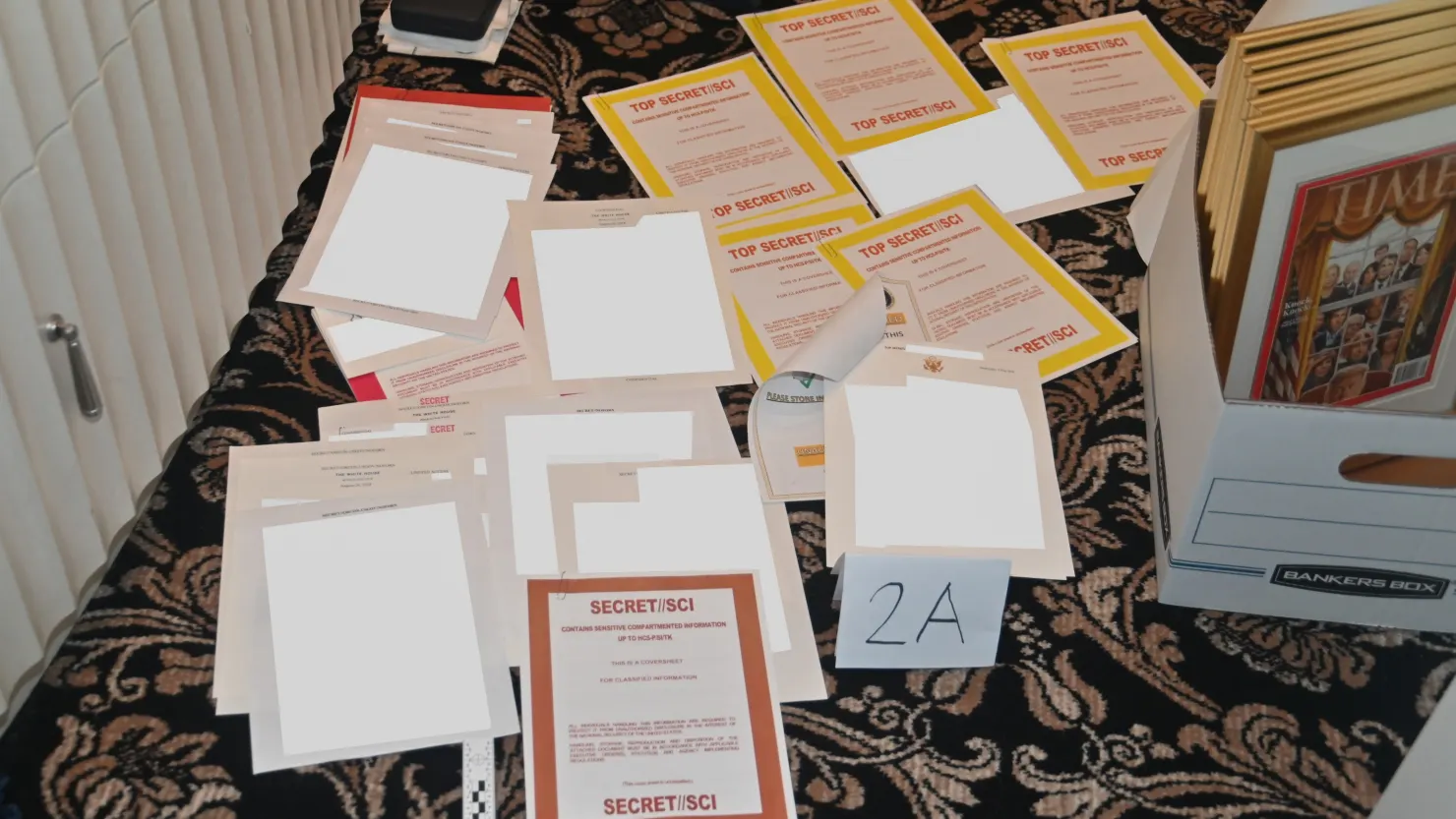
The high-profile case involving confidential government materials has taken an unprecedented turn, evolving into a major internal investigation within the upper ranks of the American legal system. Former federal prosecutor Carmen Mercedes Leinberger is under investigation on suspicion of stealing classified high-security analytical dossiers. The events unfolding highlight serious challenges in ensuring internal security within the department and vividly demonstrate how destabilizing and resonant the legacy of court cases involving the sitting head of state remains. We at NEWSCENTRAL emphasize that this incident goes far beyond a routine misconduct case, exposing vulnerabilities in personnel loyalty control mechanisms and procedures for protecting state secrets.
Official court documents, including four counts of indictment filed in the Federal District Court for the Southern District of Florida, describe a carefully constructed scheme for exfiltrating information. According to investigators, the 62-year-old official, who headed a division in the prosecutor’s office in Fort Pierce, unlawfully copied the protected second volume of the final dossier compiled by Special Counsel Jack Smith’s team. To bypass automated digital control systems, she renamed the file on her government-issued storage device, disguising confidential information as a baking recipe for a cupcake. Subsequently, on December 1, 2025, the materials were sent from a Department of Justice corporate email address to a personal external Gmail account. Senior Analyst Freddy Miller at NEWSCENTRAL views this action as a critical operational mistake by the perpetrator, indicating either extreme haste or a striking underestimation of modern internal cyber-monitoring systems at the DOJ, which track all outbound transfers to external commercial platforms.
Investigative materials indicate that this masking method was used repeatedly by the suspect. Earlier, Leinberger similarly compiled a package of classified internal memos and interagency correspondence, sending them to her personal inbox under a subject line referencing a chocolate cake recipe. During a preliminary hearing, the former government employee pleaded not guilty to the charges, after which the court decided to release her without bail. Her defense attorney Tamma Beth Kudman, as well as representatives of the prosecution, are currently declining to provide detailed comments to the press. The FBI leadership, represented by Kash Patel, confirmed the initiation of criminal proceedings, emphasizing that attempts to conceal illegal data transfers under the guise of culinary notes were promptly identified and intercepted by intelligence services.
The offense occurred during a period of strict procedural restrictions. In January 2025, Judge Aileen Cannon issued a formal order strictly prohibiting Department of Justice personnel from publishing, disclosing, or transmitting to third parties any materials from the second part of Special Counsel Smith’s final report. We at NEWSCENTRAL believe that Leinberger’s actions constituted a direct and deliberate challenge to the judicial system. At the same time, the motives of the defendant may have ranged from financial gain through the sale of exclusive data to media organizations to ideological reasons, including a hypothetical attempt to preserve a historical document from total suppression amid shifting political dynamics in Washington.
The chronology of the creation and annulment of Jack Smith’s dossier was marked by significant legal disputes. In the summer of 2024, Judge Cannon ruled to fully dismiss the criminal case against Trump related to the discovery of government documents at his private Mar-a-Lago residence and alleged obstruction of the investigation. The decision was based on the argument that Smith’s appointment as special counsel violated constitutional provisions governing the appointment of federal officials. Despite an appeal filed by the prosecution, after Trump’s electoral victory, Department of Justice leadership decided to withdraw all charges, citing internal regulations that prohibit criminal proceedings against a sitting president. Department officials pointed to the need to archive the materials, which blocked attempts by public organizations to obtain disclosure of the information.
Experts at NEWSCENTRAL note that the dismissal of the Trump case created a dangerous legal vacuum and enormous public interest in the unpublished investigative materials. It was precisely this unmet demand for hidden information that triggered the leak. Such an incident causes severe reputational damage to the agency, effectively confirming that the politicization of such high-profile cases is eroding the personnel structure of the justice system from within. The indictment of a senior prosecutor who had access to regional databases due to her office’s involvement in the initial Mar-a-Lago searches demonstrates the vulnerability of the entire classified information distribution chain.
Analyzing the potential consequences of this incident, we predict an inevitable tightening of internal controls within US government agencies. This precedent will likely lead to a comprehensive review of information security systems and the implementation of algorithms for the proactive analysis of anomalous employee behavior in the civil service. From a legal perspective, the Leinberger case will set a precedent-setting lawsuit through which Washington will attempt to restore the shaky credibility of classified documentation management. NEWS CENTRAL predicts that the defendant faces a real and potentially lengthy prison sentence of up to 25 years on combined charges of falsification, theft of documents, and obstruction of justice, as courts are expected to demonstrate maximum severity to prevent similar leaks in the future. Under the current circumstances, government agencies are advised to fundamentally revise their access control policies for confidential materials, completely eliminate the technical possibility of sending official files to commercial email services, and establish independent commissions to investigate internal leaks to prevent a deep institutional rift.