
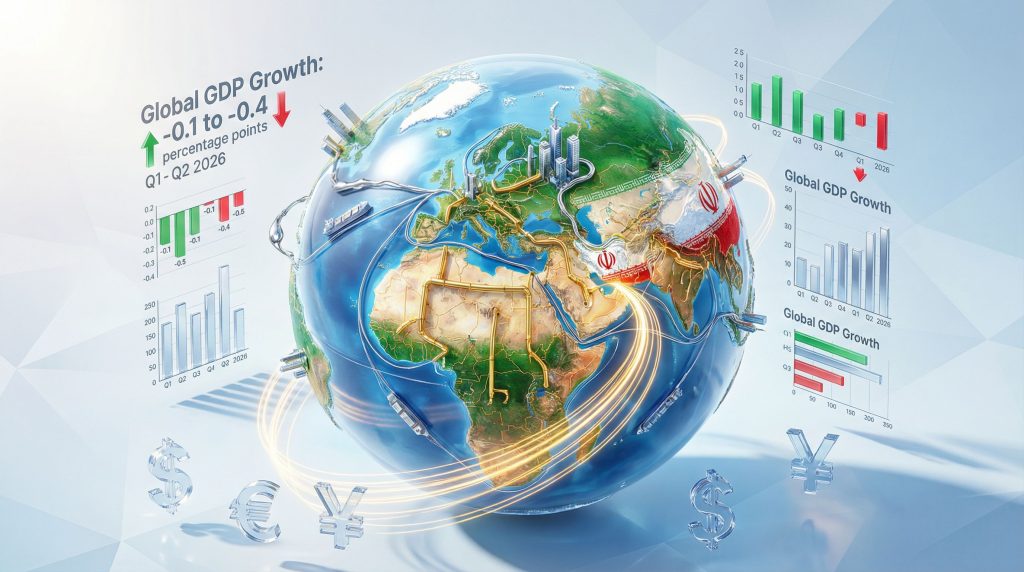
The global economy is facing increasing pressure as countries attempt to simultaneously stimulate growth and control inflation. At NEWSCENTRAL, we note that in conditions of high debt levels and market instability, large and prolonged fiscal stimulus without clear targeting can exacerbate inflation and force central banks to raise interest rates more aggressively. Recent data indicate that in several developed and emerging countries, spending on stimulus programs already exceeds 6% of GDP. We believe that this combination increases financial risks and requires a rigorous analysis of the effectiveness of government expenditures.
Pablo Hernández de Cos, Head of the Bank for International Settlements, warns that large and prolonged stimulus measures may threaten financial stability. We see this as a signal for countries with high debt burdens: a significant portion of debt obligations is serviced through non-bank financial institutions, including hedge funds and investment companies with high leverage. This makes the system more sensitive to market fluctuations and external economic shocks.
Additional pressure is coming from disruptions in Middle Eastern energy markets. At NEWSCENTRAL, we forecast that rising oil and gas prices will accelerate inflation, especially in importing countries. Freddy Miller, Senior Analyst, notes that in such conditions, short-term and targeted fiscal support measures help reduce the negative impact on consumers and businesses without creating debt overload. Moreover, aligning budget expenditures with new energy initiatives reduces the economy’s vulnerability to instability in traditional markets.
An analysis of global fiscal practices shows that countries implementing time-limited and targeted measures exhibit lower growth volatility and greater resilience to external shocks. At NEWSCENTRAL, we emphasize that transparency and control of spending programs increase investor confidence and reduce systemic instability risks. Excessive debt without oversight can become a source of crises, particularly when the share of external borrowing is high.
We also see that coordination between fiscal and monetary policy is becoming increasingly crucial. Countries capable of managing expenditures through short-term and targeted programs maintain economic activity and market confidence even amid global uncertainty. We forecast that effective debt management and a rational expenditure structure will become decisive factors in the economy’s resilience to external fluctuations.
Thus, at NEWS CENTRAL, we see an opportunity for countries to strengthen financial stability and minimize inflationary risks. It is recommended to focus on short-term, targeted, and transparent spending programs, control debt exposure through non-bank financial structures, and adapt the budget to the dynamics of energy and commodity markets. Such a strategy will help ease pressure on interest rates, support economic growth, and maintain investor confidence even in an unstable global economic environment.