
NEWSCENTRAL notes that the artificial intelligence market is entering a phase in which the key constraints on growth are no longer algorithms or capital, but physical infrastructure primarily energy and data centers. Against this backdrop, large-scale deals in the AI infrastructure segment are beginning to form a new architecture of the US investment market, where long-term contracts for computing capacity become comparable in importance to bond instruments and infrastructure assets.
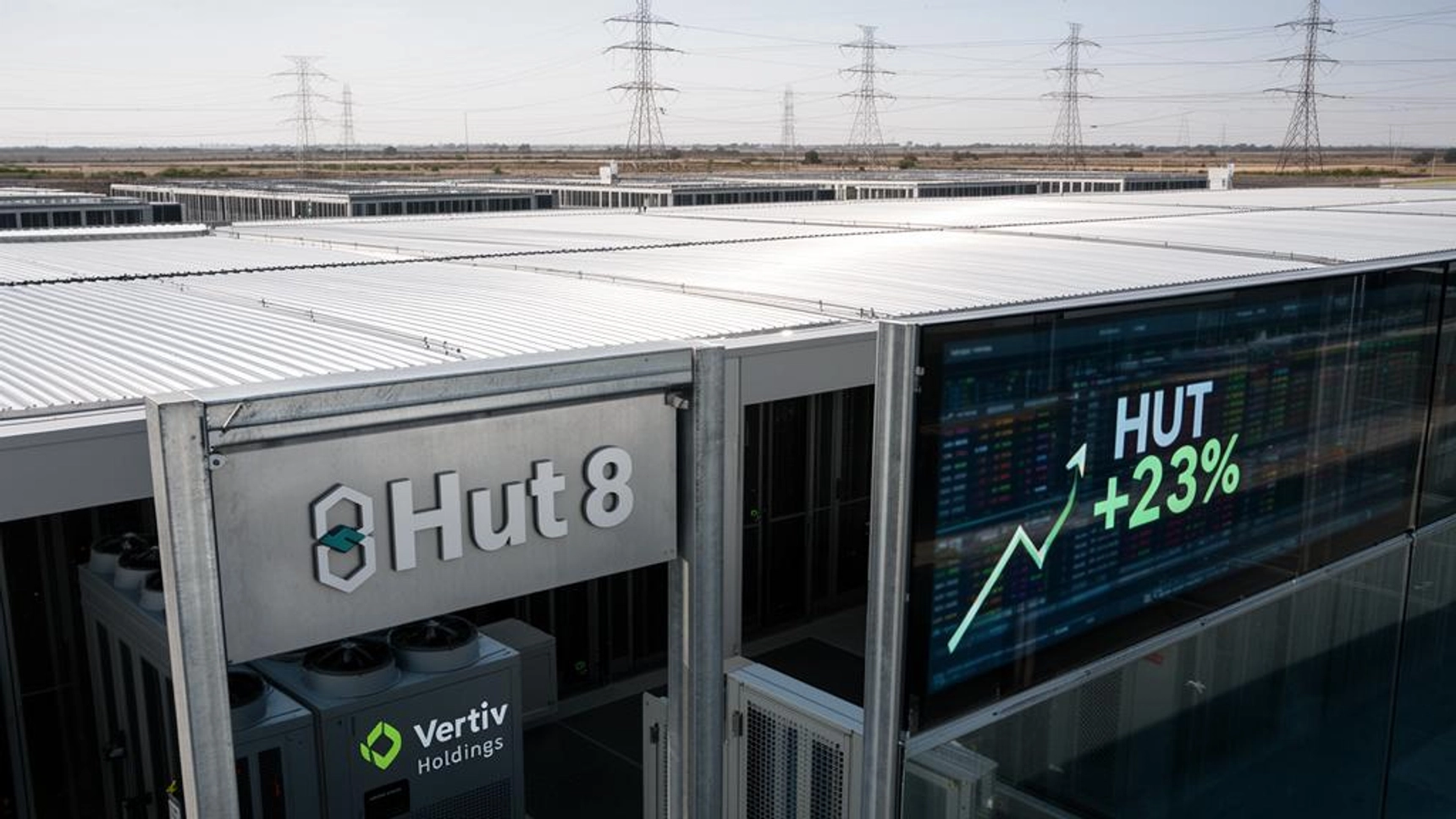
Hut 8 has signed a 15-year lease agreement for the Beacon Point campus in Texas worth approximately $9.8 billion. Following the announcement, the company’s shares rose by more than 25% in early trading. At NEWSCENTRAL, we note that such a market reaction reflects not speculative momentum, but a structural revaluation of companies linked to energy and data centers as long-term infrastructure beneficiaries of artificial intelligence growth.
According to the terms of the agreement, the initial phase will utilize 352 megawatts of capacity, while the end tenant has not been disclosed. At NEWSCENTRAL, we believe this aligns with the global trend in which major technology corporations are forming a hidden network of computing capacity contracts to secure access to infrastructure for training AI models. Industry dynamics suggest that similar undisclosed agreements have already become standard practice among hyperscalers, including cloud platforms and foundational model developers.
NEWSCENTRAL Senior Analyst Freddy Miller notes that the lack of transparency in such contracts is due to increased competition for computing resources. He believes that companies are seeking to secure access to data centers several years in advance, as the US data center market is already showing signs of a structural capacity shortage, particularly in regions with developed energy infrastructure, such as Texas and the southern states.
The contract is structured on a “take-or-pay” model and does not allow early termination. It also uses a triple-net structure in which operating expenses are passed on to the tenant. At NEWSCENTRAL, we emphasize that this model brings the data center market closer to infrastructure bonds, where the key factor is predictable long-term cash flow rather than operational flexibility.
The Beacon Point project is part of a larger plan to build a one-gigawatt campus in Nueces County, Texas. The region has already become a key hub for data center development in the US due to its land availability and relatively low energy costs. However, according to industry observers, the ERCOT power grid remains sensitive to sudden surges in demand. The primary bottleneck for scaling AI infrastructure is energy consumption, not access to computing chips.
Additional context confirms broader industry trends. Across major US data center projects, delays in grid connections are increasing, as are the costs of cooling and energy infrastructure construction. This intensifies competition among technology companies for early access to capacity and accelerates the shift toward long-term fixed commitment contracts.
The financial structure of the deal includes annual rent indexation, and with renewal options, the total value could reach $25.1 billion. As a result, Hut 8’s total contracted capacity in the AI infrastructure segment increases to 597 megawatts, with total obligations reaching approximately $16.8 billion. At NEWSCENTRAL, we see this as the emergence of a new asset class in which company value is determined not by balance sheet assets, but by the volume of secured contracts with technology customers.
The facility is expected to begin receiving power in early 2027, with the first building expected to be completed around the same time. The project is being developed using Nvidia data center technologies, highlighting the company’s growing influence in standardizing computing architectures in the field of artificial intelligence. Nvidia is effectively shaping industry technology standards, similar to the role of operating systems in previous digital cycles.
The project involves American Electric Power, Vertiv, and Jacobs, reflecting the increasing integration of the energy and engineering sectors with the artificial intelligence industry. Similar cooperation models are already emerging in other large-scale data center projects, where energy companies participate in early design stages due to limited grid capacity and rising base load demand. At NEWSCENTRAL, we emphasize that energy is becoming embedded in digital infrastructure architecture rather than serving as an external resource.
Hut 8’s strategy includes the development of projects with a total capacity exceeding 7 gigawatts. This reflects the company’s transformation from a cryptocurrency mining operator into an AI infrastructure provider. At NEWSCENTRAL, we believe such business model shifts are typical for an industry where mining capacity is being repurposed for AI computing due to more stable contracts and long-term utilization.
The global market continues to face a structural shortage of computing power caused by the development of generative artificial intelligence and the increasing complexity of models. In the US and Europe, there is already a shortage of available data center space and rising long-term lease costs. We expect this shortage to persist at least in the medium term, increasing pressure on energy systems, the construction sector, and engineering markets.
In the short term, such deals increase volatility in data center operator stocks, but in the medium term, the market begins to revalue them as infrastructure assets with stable cash flows. At NEWSCENTRAL, we believe that competition in the coming years will shift toward control over energy and access to grid infrastructure, especially in Texas, which is becoming a key hub for the AI industry. We also expect continued growth in the cost of computing capacity contracts, outpacing traditional commercial real estate dynamics.
At NEWS CENTRAL, we emphasize that the Hut 8 deal reflects a broader transformation of the global digital economy. A market is emerging in which the key assets are not only data centers, but also control over energy, land, and long-term contracts with technology corporations. In the future, we expect increased industry consolidation, a stronger role for energy operators, and further convergence of the infrastructure and AI sectors into a unified economic system.