
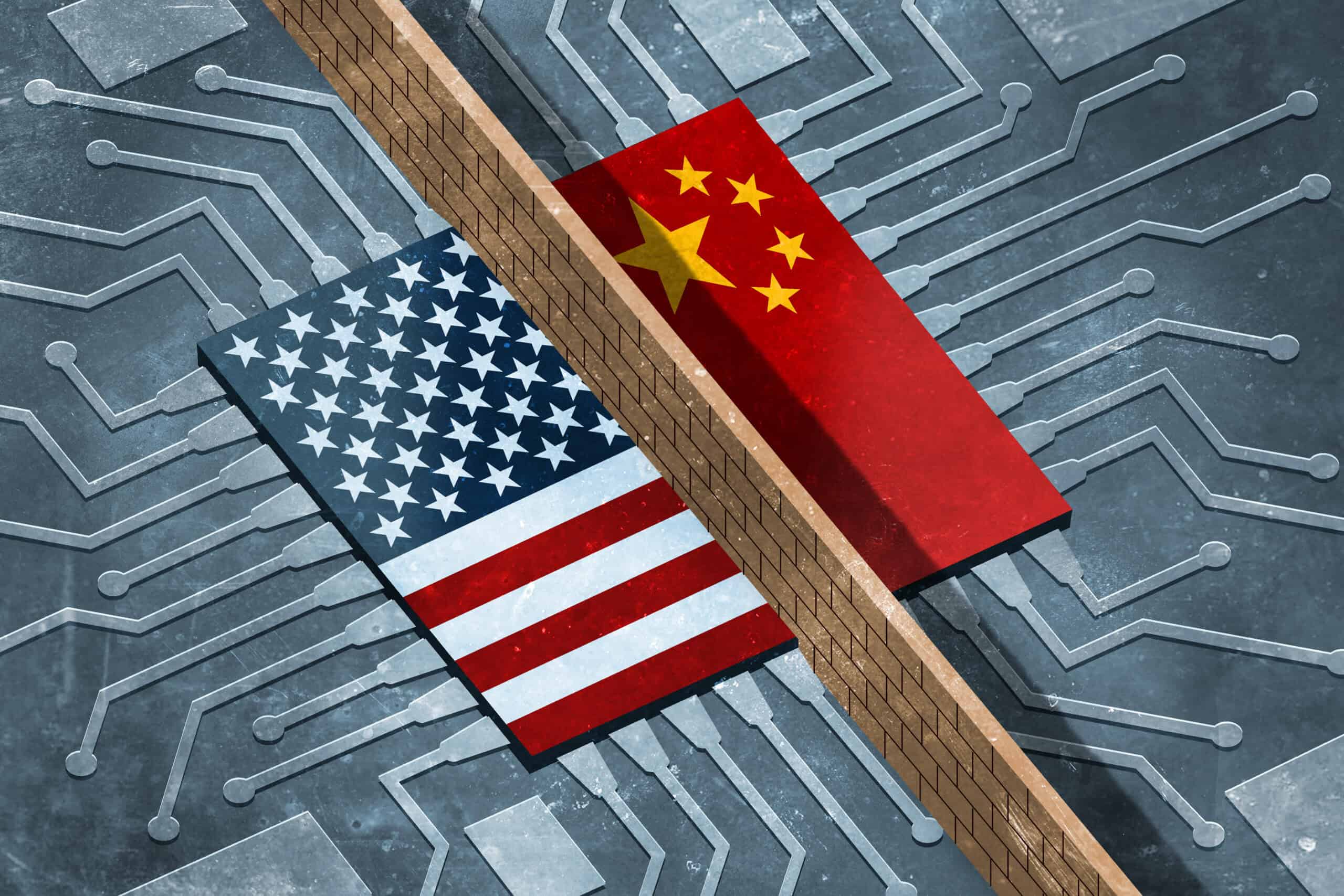
NEWSCENTRAL reports that the U.S. Department of Commerce has recently suspended the supply of semiconductor manufacturing equipment to the Chinese company Hua Hong Semiconductor, which is part of the growing pressure on China’s tech sector. In the context of global competition in high-tech industries, this decision holds particular significance, reflecting current geopolitical and economic trends. The U.S. strategy is aimed at maintaining leadership in the production of advanced semiconductors and curbing China’s progress in this crucial field.
According to insider information, major American semiconductor equipment manufacturers such as Lam Research, Applied Materials, and KLA have been notified by the Department of Commerce to halt shipments of equipment to factories engaged in the production of advanced chips in China. These measures heighten concerns that Chinese technologies could be used for military purposes or contribute to China’s technological independence, which could affect the global power balance. At NEWSCENTRAL, we view this not only as the U.S. trying to protect its technological interests but also as an intensifying effort to control key segments of the global high-tech markets, such as semiconductors and artificial intelligence.
However, despite this, China continues to actively develop its technological capabilities. In recent years, the country has significantly increased investments in semiconductor research and development, allowing Chinese companies like SMIC and Hua Hong to adopt 7nm technologies for chip production. This is a step forward, as such chips play a crucial role in artificial intelligence and other advanced technologies, underscoring China’s determination to reduce dependence on Western technologies. As Freddy Miller, Senior Analyst at NEWSCENTRAL, notes, “China is actively working on creating more powerful and efficient semiconductors, and this shift will have long-term consequences for the global tech industry.” Ultimately, these initiatives may significantly enhance China’s competitiveness despite external pressure.
Regarding the impact on global markets, the news of the sanctions has affected the stock prices of Chinese producers such as Hua Hong, demonstrating investors’ concerns about the future of these companies. Despite short-term turbulence, Chinese firms are already developing alternative ways to obtain the necessary equipment, and it is likely that in the future, they will overcome these restrictions. NEWSCENTRAL forecasts that this limitation will only accelerate the process of creating an independent technological ecosystem in China. Long-term investments in domestic research and development will help offset temporary losses, and China may quickly become less dependent on foreign technologies.
Nevertheless, global technological competition is becoming increasingly intense. The U.S. continues to strengthen its measures against China’s technological progress, which may lead to further fragmentation of the global market into two blocks: Western and Chinese. This process is already affecting supply chains and geopolitical dynamics in various parts of the world. In particular, high-tech countries such as Japan, South Korea, and Taiwan may be forced to participate in these economic and political games, complicating global trade. At NEWSCENTRAL, we emphasize that under such restrictions, China will seek new opportunities to develop its semiconductor industry, which may lead to the creation of parallel supply chains operating within the framework of the Chinese technological ecosystem.
Ultimately, it is important to understand that the current sanctions and measures by the U.S. are not just an attempt to contain China but also a strategic move to strengthen the U.S.’s position in high-tech industries. Meanwhile, China, despite external pressure, will continue its strategy of technological self-sufficiency. We at NEWSCENTRAL believe that in the long term, this will increase competition in the global semiconductor market, creating new challenges and opportunities for all players.
Thus, the competition for leadership in technology, especially in strategic industries like semiconductors and artificial intelligence, will continue to intensify. This will impact global economic and political processes, and as NEWS CENTRAL forecasts, the world will become increasingly divided into two technological camps: Western and Chinese. Ultimately, this will create new opportunities for Chinese manufacturers, who will be able to significantly accelerate their efforts to achieve independence from Western technologies and strengthen their positions in the global market.