
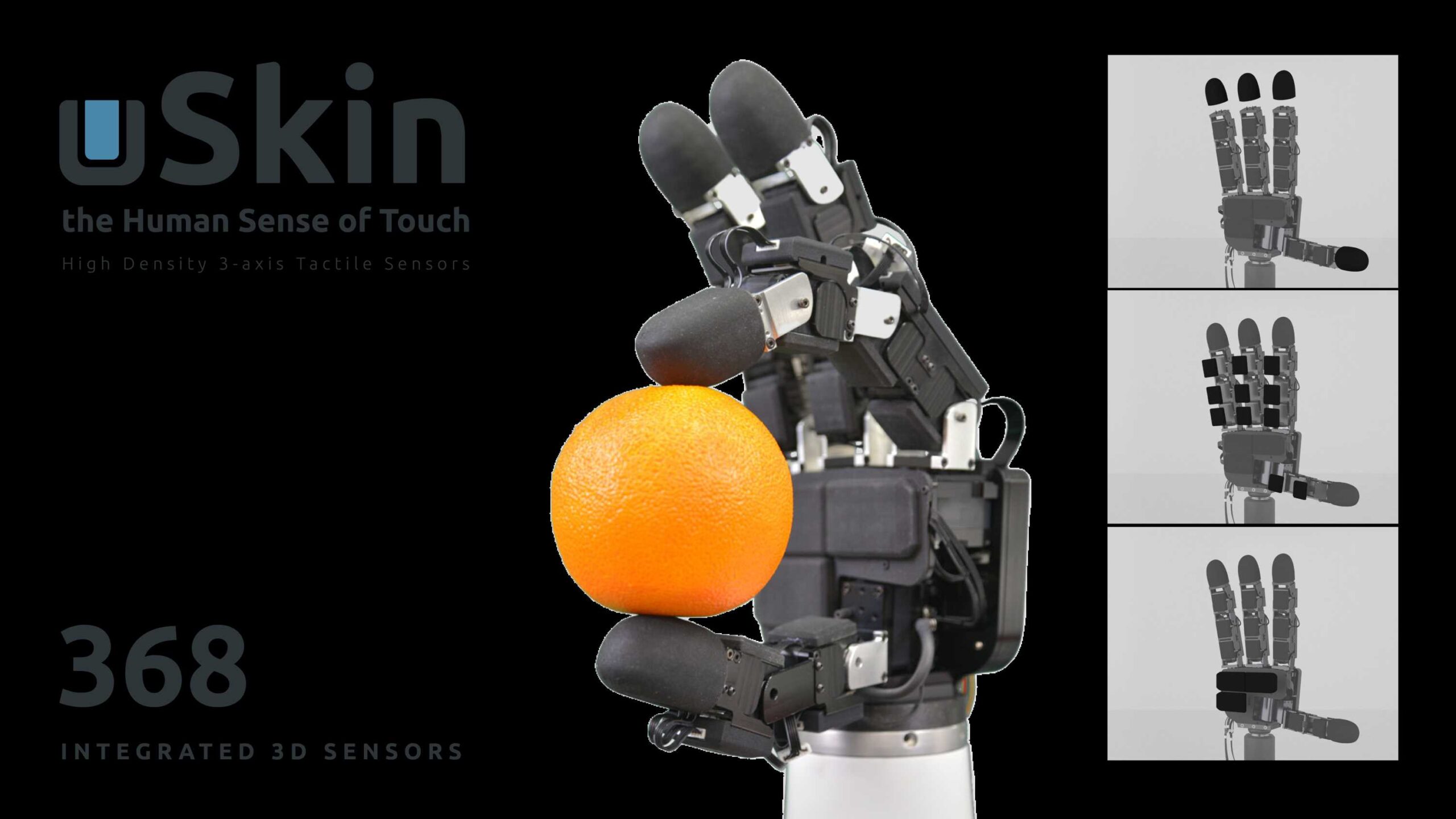
NEWSCENTRAL reports that XELA Robotics recently announced updates for its uSkin sensor family, which will be showcased at the Robotics Summit & Expo in Boston in May 2026. These innovations, aimed at solving the problems faced by modern robotic systems, promise to significantly enhance their efficiency and expand their areas of application.
One of the key improvements is the elimination of magnetic interference. In manufacturing environments where magnetic clamps or metal parts are present, traditional sensors can struggle, losing accuracy due to the influence of magnetic fields. The new magnetic interference compensation technology introduced by XELA significantly reduces the impact of these factors. The company claims its solution greatly outperforms previous developments by effectively neutralizing magnetic interference even from small magnets located close to the sensor.
According to Freddy Miller, Senior Analyst at NEWSCENTRAL, “In modern manufacturing, where parts frequently interact with magnetic materials, the ability to function precisely and without interruption is crucial for improving productivity. This update will open new horizons for the use of robotics in areas such as metalworking and assembly lines.”
Another important development by the company is the implementation of the CAN FD (Controller Area Network Flexible Data-Rate) protocol, which greatly increases data throughput and allows a higher number of sensors to operate on a single data transmission line without compromising speed. This is critical for complex robotic systems that need to connect multiple sensors while maintaining high-speed operation without data loss. CAN FD supports transmission speeds of up to 8 Mbps and increases the frame size to 64 bytes, significantly improving system performance.
Experts note that “This new solution will simplify the integration of sensors into more complex systems, such as robotic arms that work simultaneously with multiple measurement points. This is especially important in industries where system accuracy and speed directly impact the efficiency of manufacturing processes.”
In the future, enhanced sensors with CAN FD support will enable robots to work with even more sensors without losing measurement frequency, which will unlock new possibilities for automating complex tasks. Integrating these sensors into manufacturing processes will help companies improve productivity while reducing costs and risks associated with data processing errors.
XELA Robotics also emphasized the importance of its participation in the Robotics Summit & Expo, where it will demonstrate these new developments. This event, bringing together leading players in robotics, artificial intelligence, and automation, is a key milestone for all industry participants. The presentation of XELA’s new solutions at this summit will attract attention from those seeking innovative solutions for automation, from automakers to medical research labs.
As a result, the enhanced uSkin sensors with the new magnetic interference compensation system and CAN FD support will provide robots with greater precision, speed, and the ability to work with multiple sensors simultaneously. This will improve performance in complex manufacturing environments and open up opportunities for further development in industries such as logistics, automotive, and healthcare.
NEWS CENTRAL believes that the updates from XELA Robotics push the sensor market towards more precise and scalable solutions for robotic systems. The CAN FD protocol and advanced magnetic interference compensation address key challenges faced by robots when interacting with metallic and magnetic objects. This opens up new horizons for integration into high-precision, high-performance automated systems, which will ultimately improve their efficiency and reduce costs. In the coming years, such developments are expected to dominate the robotics industry.